What Is Neuroplasticity — And Why Psychiatry Has Been Getting It Wrong
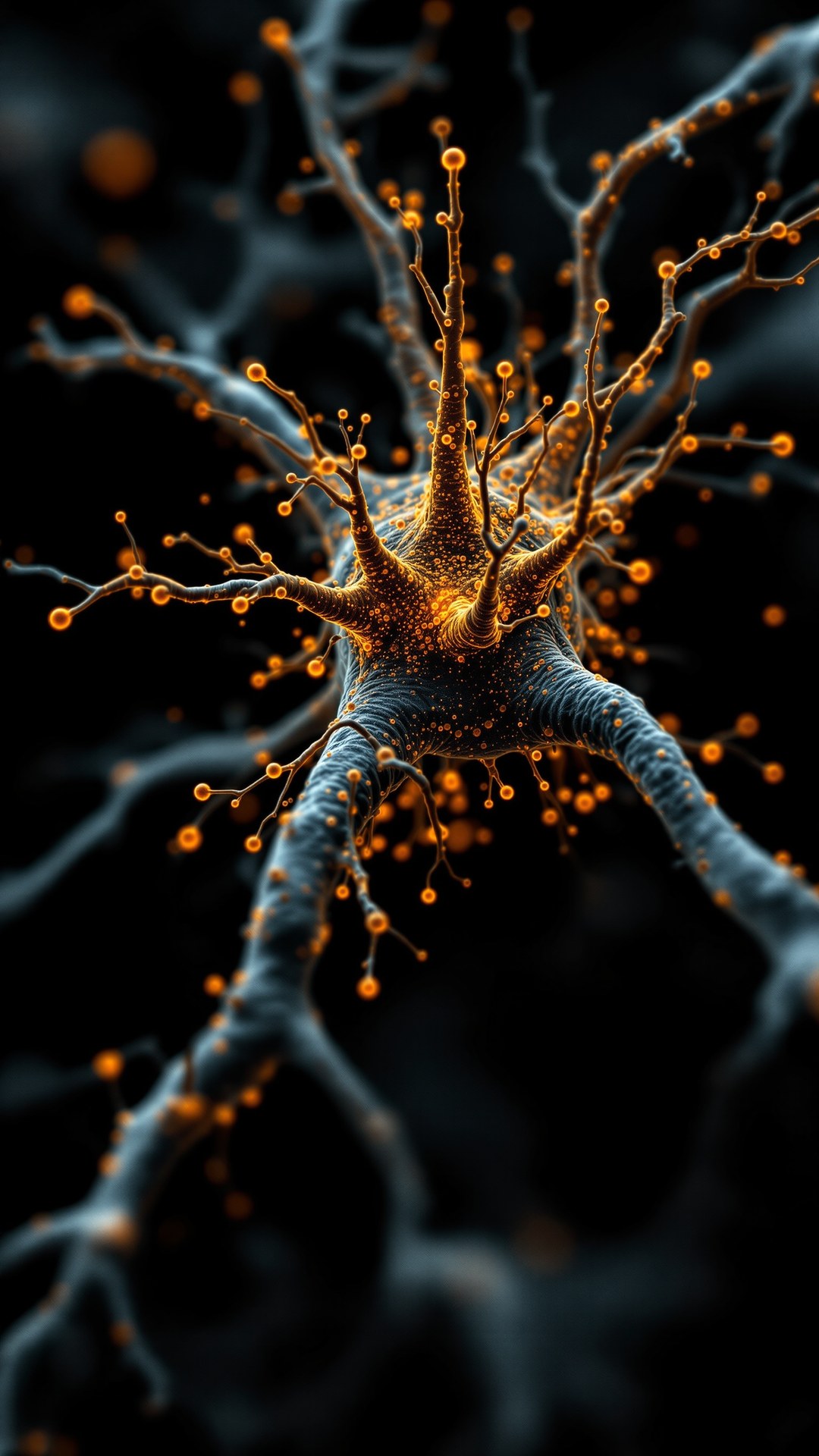
Neuroplasticity refers to the brain's ability to change — to form new synaptic connections, reorganise existing circuits, and structurally adapt in response to experience, learning, or treatment. It is the biological substrate of recovery: without plasticity, a brain locked in depression or trauma cannot update its own patterns regardless of how much insight, therapy, or pharmacological adjustment it receives.
The problem is that the conditions psychiatry most needs to treat — major depression, PTSD, OCD, chronic grief, addiction — are all characterised by reduced neuroplasticity. Chronic stress shrinks the hippocampus. Depression reduces BDNF levels and decreases dendritic branching in the prefrontal cortex. Trauma creates rigid attractor states in the amygdala that resist updating. In each case, the pathology is partly architectural: the brain has become physically less capable of change.
Conventional antidepressants — SSRIs, SNRIs — do eventually promote some neuroplastic effects through indirect serotonergic mechanisms, but the timeline is weeks to months and the structural effects are modest. This is widely believed to be why antidepressants work slowly, work only partially, and stop working when discontinued. They do not rebuild the architecture. They adjust the chemistry within a compromised structure.
The core hypothesis now driving psychedelic neuroscience: Psilocybin does not merely adjust brain chemistry — it opens a window of structural neuroplasticity lasting days to weeks, during which the brain can physically rebuild connections it had lost. Psychotherapy conducted within this window is building on fresh neural scaffolding.
Psychoplastogens: David Olson's Framework That Changed Everything
In 2018, David Olson's lab at the University of California Davis published a study in Cell Reports that would reframe the entire field. Using cortical neuron cultures and rodent models, Olson and colleagues demonstrated that psilocybin — along with other serotonergic psychedelics — dramatically promoted neuritogenesis (growth of neural projections), spinogenesis (formation of dendritic spines), and synaptogenesis (formation of synapses). The magnitude of structural change exceeded what was seen with ketamine, the only rapid-acting antidepressant in clinical use.
The implications were stark. If the therapeutic effects of psychedelics were tied to structural neuroplasticity rather than just the acute subjective experience, then a new class of neurotherapeutics was possible — compounds Olson called psychoplastogens: rapid, potent promoters of neural structural change, with antidepressant effects that could outlast their acute pharmacology by weeks.
This also proposed an answer to one of psychedelic research's most persistent puzzles: why do the clinical benefits last so long after a single session? Traditional drugs require continuous dosing because they produce no lasting structural change. Psilocybin, as a psychoplastogen, rebuilds the scaffolding — and scaffolding, once built, does not require the original builder to remain present.
What Olson's Lab Found in 2018 (Ly et al., Cell Reports)
Rat cortical neurons exposed to psychedelics showed a dramatic increase in dendritic complexity — longer dendrites, more branching, higher spine density. The effect required the 5-HT2A receptor and was blocked by ketanserin (a 5-HT2A antagonist). Importantly, the plasticity-promoting effects occurred at sub-hallucinogenic doses, raising the possibility that structural neural renovation and psychedelic experience could be partially dissociated — a finding with significant implications for treatment tolerability.
Precisely-Dosed Psilocybin Mushroom TreatsOOTW Psilocybin Mushroom Treats
Precisely-dosed, lab-tested, quality psilocybin mushroom treats — crafted for daily ritual, neural support, and sustained clarity. Journal readers: 10% off your first order with code JOURNAL10 (applied automatically at checkout).
Claim 10% Off →The TrkB-mTOR Cascade: How Psilocybin Builds New Brain
In 2023, Alex Bhattacharya and colleagues published a landmark study in Nature identifying a completely unexpected mechanism: psilocybin directly binds the TrkB receptor — the primary receptor for BDNF (brain-derived neurotrophic factor) — independent of the 5-HT2A serotonin receptor. This was not predicted by the existing pharmacological model and represented a fundamental revision of how psilocybin was understood to act.
BDNF is often called "fertiliser for the brain." It is the key signalling molecule for neuronal growth, survival, and synaptic strengthening. TrkB activation triggers a cascade through the mTOR (mechanistic target of rapamycin) pathway — a master regulator of cell growth and protein synthesis — that directly drives the production of synaptic proteins and the structural changes observed in dendritic spine studies.
The sequence looks like this:
Psilocybin → TrkB activation → BDNF-like signalling → mTOR pathway → synaptic protein synthesis → dendritic spine growth → new synaptic connections
Crucially, when researchers blocked mTOR with rapamycin, the antidepressant-like behavioural effects of psilocybin were abolished in rodent models — even though the psychedelic experience was unchanged. This provided direct evidence that the therapeutic effects are mechanistically downstream of neuroplasticity, not of the subjective experience itself.
What This Means Clinically
The TrkB finding has immediate clinical implications. BDNF is reduced in depression, PTSD, and chronic stress. By directly activating TrkB, psilocybin bypasses the upstream signalling failures that prevent BDNF from doing its job in the depressed brain. It is a direct key to the door that illness has been locking shut.
The Yale Study: Seeing Neuroplasticity Happen in Real Time
Shao et al. (2021) remains the most direct structural evidence for psilocybin's neuroplastic effects. Using two-photon microscopy — a technique that allows visualisation of individual dendritic spines in living brain tissue — the team tracked frontal cortical neurons in mice before and after psilocybin administration.
The results were striking in two ways. First, the magnitude: a 10% increase in dendritic spine density within 24 hours, concentrated in the medial frontal cortex — a region governing executive function, emotional regulation, and cognitive flexibility. Second, the durability: unlike the acute effects of the drug, which clear within hours, the structural changes were still measurable one month later. The brain had genuinely been rebuilt.
The team also conducted behavioural tests and found that mice subjected to chronic stress — which normally produces anhedonia, learned helplessness, and reduced dendritic branching — showed reversal of both the behavioural deficits and the structural atrophy following psilocybin. The stress-damaged brain had been repaired.
The window matters: Imaging revealed that spine formation was most active in the 24–72 hours after psilocybin administration. This period — when the brain is in maximum structural flux — is likely when psychedelic-assisted psychotherapy is most effective. Integration work conducted in this window is working with newly forming connections, not just reorganising old ones.
OOTW Spirit Guide
Set. Setting. Dose. Integration. The questions you can't bring to your doctor — answered by an AI grounded in every peer-reviewed paper, protocol, and ceremony manual. Private, sober, always there.
Talk to the Spirit Guide → A Sacred 5-MeO-DMT Ceremony · MiamiJoin the OOTW Sacrament
The oldest prayer, remembered — the gentle dissolving of the self into light, held in ceremony by a master facilitator. Sit with our community first: a free, live weekly circle on Zoom. No commitment, simply a conversation.
Join the Weekly Circle →Neuroplasticity as the Unifying Mechanism
One of the most striking features of the neuroplasticity hypothesis is how elegantly it unifies what had previously seemed like disparate clinical findings across different conditions.
In depression, chronic stress atrophies prefrontal dendritic arbors. Psilocybin rebuilds them. In PTSD, traumatic memories are consolidated in rigid, over-generalised fear circuits that resist extinction. Neuroplasticity opens the window for fear memory reconsolidation and extinction learning. In addiction, repeated drug exposure entrenches craving circuits and reduces prefrontal control. Psilocybin restores prefrontal-limbic connectivity. In grief and eating disorders, rigid cognitive patterns prevent the updating of identity and relationships. New dendritic architecture allows new self-representations to form.
In each case, the illness is partly a plasticity failure. Psilocybin is, above all else, a plasticity restoration intervention — the most potent one discovered in decades of psychiatric research.
The Integration Window: Why Timing Is Everything
Understanding neuroplasticity reframes the entire logic of psychedelic-assisted therapy. The session is not the treatment. The session is the opening of a biological window. What happens inside that window — in the days and weeks of heightened plasticity that follow — determines the durability of the outcome.
This explains several previously puzzling observations from clinical trials: why participants who receive integration therapy show substantially better outcomes than those given psilocybin alone; why the quality and depth of therapeutic processing in the post-session period predicts long-term remission; and why psilocybin administered without any intentional therapeutic context produces smaller and less durable effects.
The brain, in the plasticity window, is in a state of structural openness. Neural representations that have been calcified by years of illness can be revisited, reprocessed, and literally rebuilt in a new architecture. The therapeutic task is not to create that opening — psilocybin does that — but to fill it with experiences, relationships, and insights worth encoding into the new structure.
Where the Science Is Going
Several frontiers are now active. Olson's lab is developing non-hallucinogenic psychoplastogens — molecules that promote structural plasticity through TrkB and mTOR without producing the full psychedelic experience. If successful, these could be taken continuously, opening a therapeutic window for populations where supervised psychedelic sessions are impractical.
Neuroimaging protocols are being refined to directly measure dendritic complexity and synaptic density in human patients before and after psilocybin treatment, moving beyond behavioural proxies to structural biomarkers. The FDA's Breakthrough Therapy designations for psilocybin in treatment-resistant depression and major depressive disorder reflect the regulatory recognition that this mechanism is distinct, rapid, and clinically significant in ways that conventional antidepressants are not.
The deeper scientific question — whether the hallucinogenic experience is necessary, complementary, or separable from the neuroplastic mechanism — remains one of the most consequential open questions in the field. The answer will determine whether future psychiatric medicine looks more like a supervised journey or a daily pill. For now, the evidence favours the journey — not merely for philosophical reasons, but because the subjective depth of the experience appears to correlate with the therapeutic outcomes that matter most.
The brain that emerges from a well-supported psilocybin experience is not the same brain that entered it. That is now demonstrably true at the level of individual neurons, individual spines, individual synapses. What we build in the window we are given — that remains, as always, the human part of the work.
Precisely-Dosed Psilocybin Mushroom TreatsBring the Science Home
Every article here is the why. OOTW's ceremony-ready mushroom confectioneries are the how — precision-crafted to carry the medicine into your daily practice. Journal readers: 10% off your first order with code JOURNAL10 (applied automatically at checkout).
Claim 10% Off →