Psychedelics & Chronic Pain
Chronic pain is increasingly understood as pain the brain keeps generating after the injury is gone - and that is exactly the kind of stuck pattern psychedelics may be able to reset. This deep dive covers the neuroscience: how 5-HT2A agonism engages descending pain control and 'resets' maladaptive brain connectivity (Castellanos et al., 2020), how psilocybin drives BDNF-TrkB synaptic plasticity and lowers neuroinflammation, and what the early human evidence shows in cluster headache (Schindler et al., 2022), phantom-limb pain (Ramachandran et al., 2018) and fibromyalgia.
Psychedelics & Time Perception
Under a psychedelic, minutes can stretch into hours and the present moment can swell until it swallows past and future whole. This deep dive covers the neuroscience of why: how psilocybin measurably distorts the brain's internal clock (Wittmann et al., 2007), why your sense of time is built from the felt signals of your own body - interoception in the insula (Wittmann, 2013), how ego dissolution and a quieted default mode network let the 'now' expand into timelessness, and why this warping of time may be part of how psychedelics heal.
The Mystical Experience
The single strongest predictor of whether a psychedelic session heals is not the dose - it's whether the person has a mystical-type experience. This deep dive covers the neuroscience: the landmark Griffiths (2006) trial where psilocybin occasioned experiences rated among the most meaningful of a lifetime, the MEQ30 that measures unity, sacredness, transcendence of time and ineffability (Barrett et al., 2015), how the intensity of that experience predicts therapeutic outcome in depression and addiction (Roseman et al., 2018), the DMN and entropic-brain substrate, and the live debate over whether the felt experience is truly necessary (Olson, 2021).
Psychedelics & Music
Why is there always a curated playlist in psychedelic therapy? Because music is a co-therapist. This deep dive covers the neuroscience of why sound steers the journey: how LSD enhances the emotional response to music (Kaelen et al., 2015), how it deepens music-evoked mental imagery via the parahippocampus (Kaelen et al., 2016), why patients describe music as 'the hidden therapist' that carries and guides them (Kaelen et al., 2018), how the open, DMN-quieted brain becomes exquisitely sensitive to musical emotion, and how playlists are engineered as an emotional arc.
Psychedelics, BDNF & Psychoplastogens
Psychedelics may heal by physically rewiring the brain. This deep dive covers the molecular engine: how a single dose grows new dendritic spines and synapses in the cortex (Ly et al., 2018), the BDNF-TrkB-mTOR pathway that acts like fertilizer for neurons, why this plasticity requires 5-HT2A and vanishes when BDNF is blocked, the atrophy hypothesis of depression, David Olson's concept of psychoplastogens, and the breakthrough non-hallucinogenic analog tabernanthalog that promotes rewiring without the trip (Cameron et al., 2020).
Psychedelics & Fear Extinction
Fear extinction is how the brain learns that a threat is now safe - the exact process that trauma therapy tries to rebuild. This deep dive covers how psychedelics supercharge it: how low-dose psilocybin sped the extinction of conditioned fear in mice (Catlow et al., 2013), how MDMA robustly enhanced fear extinction through BDNF signaling in the amygdala (Young et al., 2015), how extinction is new learning rather than erasure, the difference between extinction and memory reconsolidation, and why the drug opens a plasticity window while the therapy does the actual healing.
Psychedelics & the Immune System
Psychedelics don't just act on the mind - they may be some of the most potent anti-inflammatory molecules ever measured. This deep dive covers the surprising immune side of the 5-HT2A receptor: how the psychedelic (R)-DOI blocks inflammation at picomolar doses (Nau & Nichols, 2013), why the anti-inflammatory effect works far below the dose that alters perception, how psilocybin, LSD and DMT calm neuroinflammation, microglia and cytokines like TNF-alpha and IL-6, and why this may be a hidden mechanism behind their antidepressant power - and a route to non-hallucinogenic medicines.
The Entropic Brain
Why does a psychedelic loosen the self, spark insight, and lift depression? One elegant theory ties it all together: the entropic brain. This deep dive explains Robin Carhart-Harris's idea that the richness of consciousness tracks the entropy - the disorder - of brain activity, that normal waking life sits just below 'criticality' in a tight, orderly band, and that psychedelics push the brain up toward the critical edge between order and chaos. Covers the low-entropy rigidity of depression, OCD and addiction, the REBUS 'relaxed beliefs' model, ego dissolution, and why shaking the snow globe can heal.
Psychedelics & Creativity
Do psychedelics make you more creative? The myth is huge - and the science is more careful than the legend. This deep dive covers the landmark 1966 study where engineers and architects solved months-old problems on mescaline (Harman & Fadiman), what modern double-blind microdosing trials actually found (a subtle boost to the originality of divergent thinking, but not to convergent problem-solving), the mechanism - a looser, higher-entropy brain that reaches for distant associations - and the honest limits, including the enormous placebo and expectancy effect.
The Gut-Brain Axis
Most of the body's serotonin isn't in the brain - it's in the gut, made by an enteric nervous system so complex it's called the 'second brain.' Psilocybin is a serotonin agonist, and serotonin receptors line the gut too, which means a psychedelic acts on the belly as much as the head. This deep dive covers the gut's 90-95% of body serotonin, the vagus nerve superhighway, how the microbiome ('the psilocybiome') may shape 5-HT2A density and your response, why gut inflammation is tied to depression, and what the butterflies, nausea and 'la purga' are really telling us.
The Neuroscience of the Afterglow
For days or weeks after a psychedelic experience, many people feel lighter, calmer, more open and more connected - a subacute period researchers call the 'afterglow.' It is not just a good mood. This deep dive covers what the afterglow actually is, the evidence that positive affect and reduced anxiety can persist up to a month after a single high dose of psilocybin (Barrett & Griffiths, 2020), the leading mechanism - a window of heightened neuroplasticity and a reopened 'critical period' whose length tracks the drug (Nardou et al., 2023) - and why clinicians treat this window as the real work of psychedelic therapy.
The Genius of Ayahuasca
Swallowed on its own, DMT does nothing - the gut enzyme MAO destroys it before it can reach the brain. Ayahuasca solves that with a second plant: the Banisteriopsis caapi vine carries harmala alkaloids that switch the enzyme off, so the DMT in the chacruna leaf survives and becomes orally active. This deep dive explains the two-plant pharmacology (DMT + reversible MAO-A inhibitors), why oral DMT is normally inert, how ayahuasca modulates the brain's default mode network, the rapid antidepressant signal from a randomized placebo-controlled trial (Palhano-Fontes 2019), and the real safety issues - serotonin syndrome, drug interactions, and 'la purga.'
Psychedelics & Personality
Psychologists long held that personality is essentially fixed after age 30. Then a landmark study found that a single high-dose psilocybin session could measurably and durably raise one core trait - Openness - but only in people who had a genuine mystical experience. This deep dive covers the Big Five, MacLean's 2011 finding (Openness still elevated more than a year later), the personality shifts seen in depression patients (Erritzoe 2018), why the Openness change survives the 'they just got less depressed' objection, how a trait can change at all, and the honest limits of the evidence.
The 5-HT1A Receptor
If the 5-HT2A receptor is the accelerator of the psychedelic experience, the 5-HT1A receptor is the brake. It is serotonin's calming switch - inhibitory where 5-HT2A is excitatory, and the target of the anti-anxiety drug buspirone. This deep dive explains its two jobs (the autoreceptor that governs the brain's own serotonin and the postsynaptic receptor that quiets cortex and amygdala), why blocking it amplifies a DMT trip while stimulating it dampens psilocybin's visuals, why it gives 5-MeO-DMT its oceanic character, and why it explains the weeks-long lag of SSRIs.
The Neuroscience of Bad Trips
A 'bad trip' has a real neuroscience. When a psychedelic floods the 5-HT2A receptor, it loosens the brain's sensory gating and its top-down control, lets the amygdala's emotional salience run unchecked, and can dissolve the sense of self - which the mind may read as fear, paranoia, or dying. This honest deep dive explains what a challenging experience is (the seven CEQ factors), how common it is (Carbonaro's 1,993-person survey), why difficult is not the same as harmful, the real predictors you can change, and the genuine red flags.
Psilocybin vs. SSRIs
Psilocybin and SSRIs both work through serotonin - yet they may be near-opposite strategies for the depressed brain. In the only head-to-head trial (Carhart-Harris, NEJM 2021), the two finished in a statistical tie on the primary measure, but most secondary measures favoured psilocybin and the SSRI arm reported more emotional blunting and sexual dysfunction. This honest deep dive compares mechanism, tempo, side effects and the evidence: continuous serotonin and slow dampening versus a single 5-HT2A surge that opens a window of plasticity.
Psychedelics & Neurogenesis
'Psychedelics grow new brain cells' is the most repeated claim in the field - and mostly wrong. What the strongest science shows is stranger and more useful: within a day, a dose of psilocybin sends existing neurons sprouting new connections that last a month. This honest deep dive separates neurogenesis (new neurons) from neuroplasticity (new connections), covers the landmark studies (Ly 2018, Shao 2021), the 5-HT2A-BDNF-mTOR mechanism, the weaker new-neuron evidence, the null human BDNF data, and the critical-period-reopening idea. Education, not medical advice.
5-MeO-DMT & Ego Dissolution
5-MeO-DMT - 'the God molecule' from the Sonoran Desert toad - deletes the self more completely and more reliably than almost any other psychedelic. Unlike classic psychedelics it is driven by the 5-HT1A receptor as much as 5-HT2A, giving it a less visual, whiteout, ego-dissolving character. This deep dive covers the pharmacology, the phenomenology of total ego dissolution, the default-mode-network neuroscience, the fast-moving depression trials (GH001, BPL-003), and the serious risks - serotonin toxicity, potency, and toad conservation. Education, not medical advice.
LSD Microdosing: The Science
Ask a microdoser and they'll tell you it works. Ask a controlled trial and it mostly shrugs. This honest deep dive separates what rigorous studies actually show from the hype: the placebo problem and the landmark self-blinding study, the real-but-modest pharmacology of low-dose LSD, the gap between felt and measured effects, and the unresolved long-term cardiac question. Education, not medical advice.
The 5-HT2A Receptor
LSD, psilocybin, DMT and mescaline look nothing alike - yet they all converge on one serotonin receptor: 5-HT2A. Block it with ketanserin and the psychedelic experience simply doesn't happen. This deep dive covers why 5-HT2A is the 'master switch' of classic psychedelics, how it drives cortical excitation and, remarkably, structural neuroplasticity through BDNF-TrkB-mTOR, the intracellular-receptor discovery, the cryo-EM structures, non-hallucinogenic psychoplastogens, and the honest open questions. Education, not medical advice.
Ibogaine & Addiction Interruption
Ibogaine, from the West African iboga root, can switch off opioid withdrawal and cravings in a single session - the 'addiction interruption' that has drawn people to it for decades. It acts on many targets at once (NMDA, kappa- and mu-opioid, sigma-2, the alpha3beta4 nicotinic receptor, serotonin transport) and appears to reset reward circuitry, partly through GDNF. This deep dive covers the mechanism, the Bwiti origins, the long visionary state, the 2024-2025 veterans and Texas trials - and the serious cardiac danger that makes it genuinely risky. Education, not medical advice.
Ketamine & the NMDA Receptor
Ketamine blocks the NMDA glutamate receptor - and paradoxically, shutting down excitation is what lifts depression. By silencing NMDA receptors on inhibitory interneurons, ketamine triggers a glutamate surge that switches on AMPA receptors, BDNF and mTOR, driving rapid regrowth of synapses in the prefrontal cortex. That is why it works in hours, not weeks. This deep dive covers the NMDA mechanism, the disinhibition paradox, synaptogenesis, dissociation, the HNK-metabolite twist, esketamine's 2025 approval as a standalone treatment, and the real risks - honestly kept. Education, not medical advice.
MDMA, Empathy & PTSD
MDMA floods the brain with serotonin and triggers a release of oxytocin - producing warmth, trust and empathy - while turning down the amygdala's fear alarm and strengthening prefrontal control. That combination widens the 'window of tolerance' in which a person can revisit trauma without being overwhelmed, and appears to open a memory-reconsolidation window for healing. This deep dive covers the neurochemistry, the empathy effect, fear extinction, the MAPS Phase 3 PTSD trials, the 2024 FDA setback, and the real risks - honestly kept. Education, not medical advice.
Psilocybin & the Default Mode Network
Psilocybin's active form, psilocin, switches on serotonin 5-HT2A receptors and quiets the brain's default mode network - the self-referential hub behind the sense of 'I'. As the DMN's core nodes decouple, the ego softens or dissolves, brain networks that normally stay separate begin to talk, and a window of heightened neuroplasticity opens. This deep dive covers the DMN, the 5-HT2A mechanism, ego dissolution, the entropic-brain and REBUS models, global integration, dendritic-spine growth, and the phase 3 depression trials - honestly kept. Education, not medical advice.
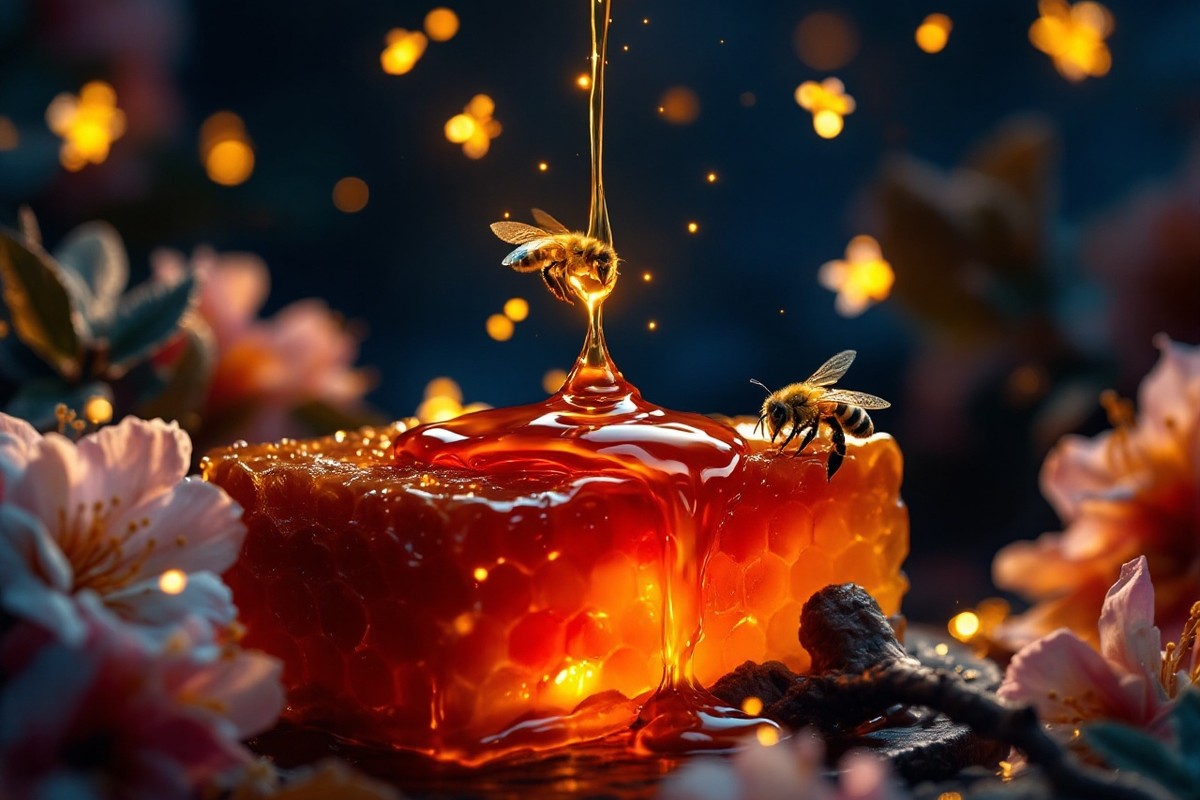
Mad Honey (Grayanotoxin)
Mad honey - 'deli bal' - is honey made by bees foraging on Rhododendron flowers, laced with grayanotoxins. These diterpene toxins jam voltage-gated sodium channels open, over-firing the vagus nerve to cause a drunken buzz, then bradycardia and dangerously low blood pressure. From Xenophon's poisoned soldiers in 401 BC to Himalayan cliff-honey hunts today, this deep dive covers the toxin, the mechanism, the symptoms, the ancient honey traps, and the real danger - honestly kept. Education, not medical advice.
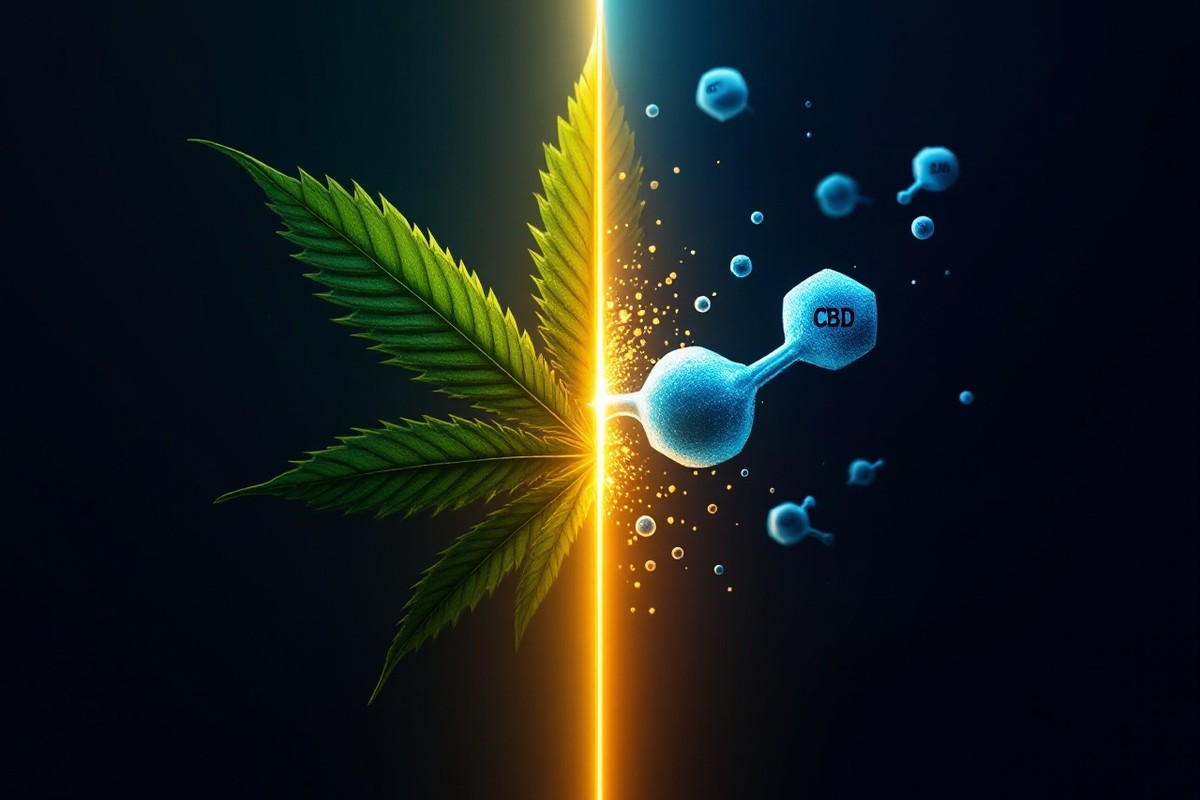
THC vs CBD
THC vs CBD - the same plant, the same molecular formula, opposite effects. THC is a partial agonist at the CB1 receptor and gets you high; CBD does not activate CB1, is non-intoxicating, and works through 5-HT1A, TRPV1 and the anandamide system. This deep dive compares the chemistry, the endocannabinoid mechanism, the entourage-effect debate, approved medicines (Epidiolex, dronabinol, Sativex), safety, edibles pharmacokinetics, and 2026 legality - honestly kept.
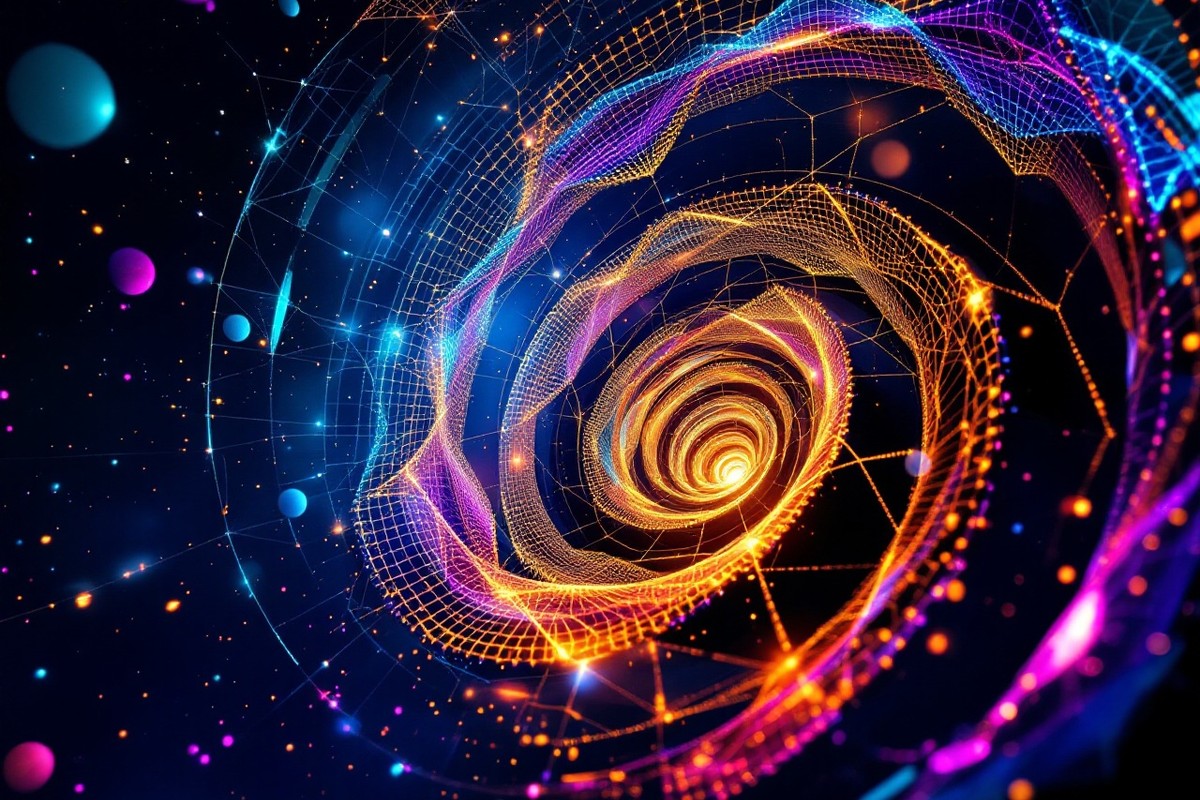
Why You See Geometry
Why do psychedelics make you see spirals, tunnels, lattices and honeycombs? The neuroscience of psychedelic visuals - from Heinrich Kluver's 'form constants' to the 5-HT2A receptor on the visual cortex, cortical disinhibition, and the elegant Ermentrout-Cowan math that maps stripes of brain activity into exactly the geometry you see. This deep dive explains the retinocortical map, simple vs complex visuals, and why the same patterns appear in migraine, near-death, and sensory deprivation. Education, not medical advice.
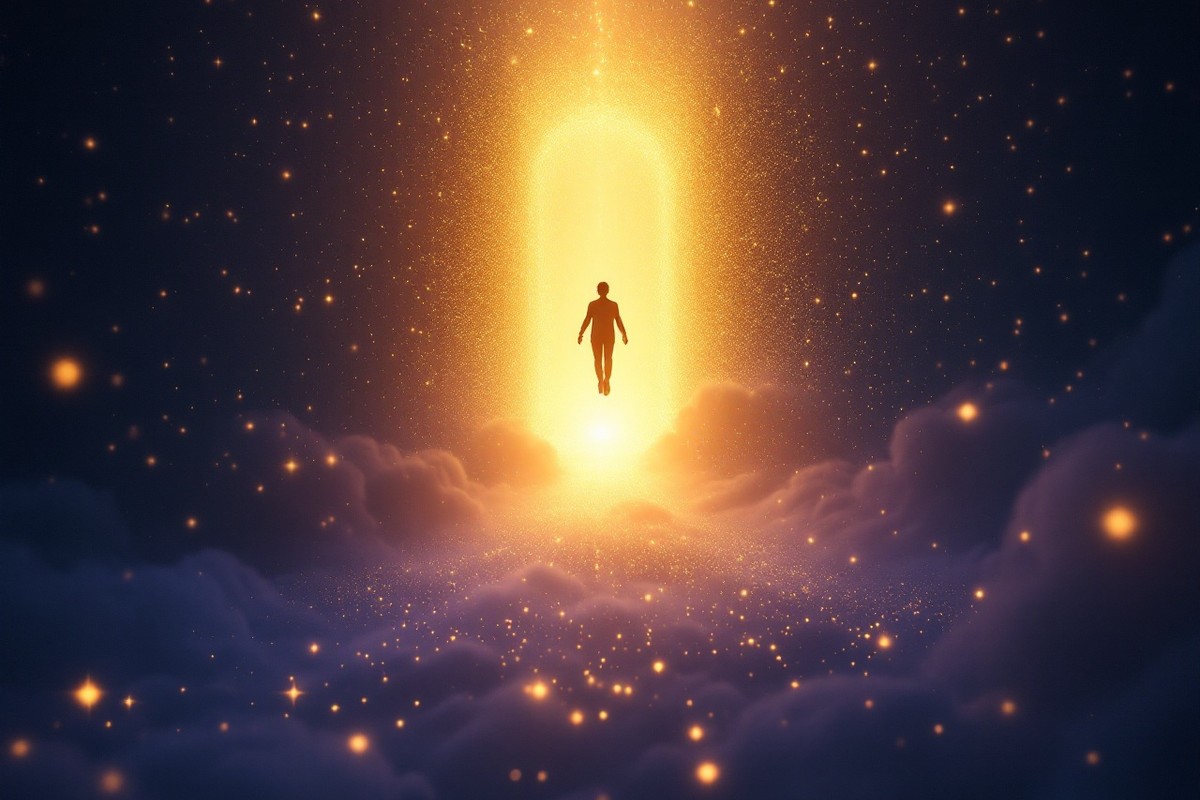
DMT and the Near-Death Experience
DMT and the near-death experience - what does the science actually show? DMT is a 5-HT2A psychedelic that occurs naturally in trace amounts in the brain. A landmark 2018 Imperial College study found that IV DMT produces experiences statistically comparable to real near-death experiences. But is DMT released at death? This deep dive covers Strassman's 'spirit molecule,' the Timmermann study, the dying-brain gamma surge, the pineal myth debunked, and the honest bottom line: resemblance is not proof. Education, not medical advice.
DMT vs Ayahuasca
DMT vs ayahuasca - the same molecule, two completely different experiences. Both center on N,N-DMT, a 5-HT2A psychedelic. Smoked DMT is a 10-20 minute 'breakthrough'; ayahuasca is a 4-6 hour visionary journey. The entire difference is one thing: the MAOI (harmala alkaloids in the Banisteriopsis caapi vine) that stops the gut from destroying oral DMT. This deep dive compares pharmacology, duration, the purge, phenomenology, safety (serotonin syndrome and SSRIs), the science, and 2026 legality - honestly kept.
Ergot: The Fungus That Birthed LSD
Ergot (Claviceps purpurea) is the rye-infecting fungus behind St. Anthony's Fire - centuries of gangrene, convulsions, and mass hallucination - and the source of the lysergic acid from which Albert Hofmann synthesized LSD-25 in 1938. This deep dive covers the fungus, ergotism, the lysergic lineage to LSD and Bicycle Day, the receptor pharmacology, its journey from poison to modern migraine and obstetric medicine, and the Salem and Eleusis hypotheses - honestly kept.
Kratom vs Kava
Kratom vs kava - the two most popular legal, plant-based relaxants, compared honestly. Kratom (Mitragyna speciosa) acts on the mu-opioid system and is dose-dependent (stimulant low, sedative high) with real dependence; kava (Piper methysticum) is a GABA-modulating anxiolytic root with little dependence. This deep dive compares mechanism, effects, addiction risk, safety (kratom's 7-OH concentrates and liver risk vs kava's hepatotoxicity and dermopathy), and 2026 US legality - including the 2025-26 crackdown on concentrated 7-hydroxymitragynine. Education, not medical advice.
Kambo: The Sacred Frog Medicine
Kambo is the dried skin secretion of the Amazonian giant monkey frog (Phyllomedusa bicolor), burned into the skin in a purging ritual. It is not a psychedelic - its intense effects come from a storm of bioactive peptides (phyllocaerulein, phyllomedusin, phyllokinin, sauvagine) and the potent opioids dermorphin and deltorphin. This honest deep dive covers the indigenous origins, the ritual, the real peptide pharmacology, and the serious safety record - including documented deaths, the water-intoxication danger, and Australia's 2021 ban. Education, not medical advice.

Blue Lotus: The Ancient Egyptian Dream Flower
Blue lotus (Nymphaea caerulea) is the ancient Egyptian 'dream flower' - a sacred water lily painted on tombs, found on Tutankhamun, and now sold everywhere as tea, wine, and vapes. But it is not a classic psychedelic: its mild, dreamy, calming effects come from the dopamine-active alkaloids apomorphine and nuciferine, not the serotonin 5-HT2A system. A 2025 UC Berkeley study found most 'blue lotus' sold online is a different, non-psychoactive water lily. This deep dive covers the history, real chemistry, effects, the counterfeit problem, safety, and 2026 legality - honestly kept.
Mescaline: Peyote, San Pedro & the Oldest Psychedelic
Mescaline is the original psychedelic - the first ever chemically isolated, and the active molecule in the peyote and San Pedro cacti used ceremonially for over 5,000 years. It is a serotonin 5-HT2A agonist like LSD and psilocybin, but with the longest arc of the classic psychedelics (~10-14 hours). This deep dive covers the pharmacology, the two sacred cacti, dose and duration, the Liechti dose-finding trials, the Native American Church, the peyote conservation crisis, safety, and 2026 US legality - honestly kept.
Psilocybin vs LSD: The Neuroscience
Psilocybin vs LSD compared on neuroscience: both are classic psychedelics running the same engine — agonism at the serotonin 5-HT2A receptor — and the definitive head-to-head found that once matched for dose and duration, the two experiences are qualitatively very similar. The one robust difference is duration: LSD lasts ~9–12 h and hits a broad receptor panel (including dopamine), while psilocybin lasts ~4–6 h and is comparatively more 5-HT2A-selective. Both collapse the default mode network and raise brain entropy. In the clinic, psilocybin (COMPASS COMP360) is further along with two positive Phase 3 trials than LSD (MindMed MM120). Mechanism, dose, duration, plasticity, safety, and 2026 legality — honestly kept.
5-MeO-DMT: The Neuroscience
How 5-MeO-DMT — the “God molecule” — actually works in the brain. Its defining feature is unusually high affinity for the 5-HT1A receptor (Ki ≈ 3 nM, ~300× over 5-HT2A), which shapes a near-total collapse of the self — the “whiteout” of oceanic boundlessness — rather than DMT’s kaleidoscopic visuals. Found in the venom of the Sonoran Desert toad (Incilius alvarius) and made synthetically, pure mebufotenin is now in mid/late-stage depression trials (GH001, BPL-003). Plus the honest safety picture: MAOI/serotonin-syndrome risk, cardiovascular strain, Schedule I status, and the ethics of harvesting the toad.
Amanita vs Psilocybin: The Neuroscience
Amanita muscaria vs psilocybin compared on neuroscience: both are “mushrooms,” but they are neuropharmacological opposites. Amanita works through muscimol, a GABA-A agonist that inhibits the brain — a sedative, dissociative, deliriant “downer” with a real neurotoxin (ibotenic acid). Psilocybin works through psilocin, a 5-HT2A serotonin agonist that excites cortex, raises entropy, and loosens the default mode network — the classic visionary psychedelic. Mechanism (GABAergic vs serotonergic 5-HT2A), safety, legality, and evidence — and why “is fly agaric a magic mushroom” is the wrong question.
Amanita Muscaria: The Neuroscience
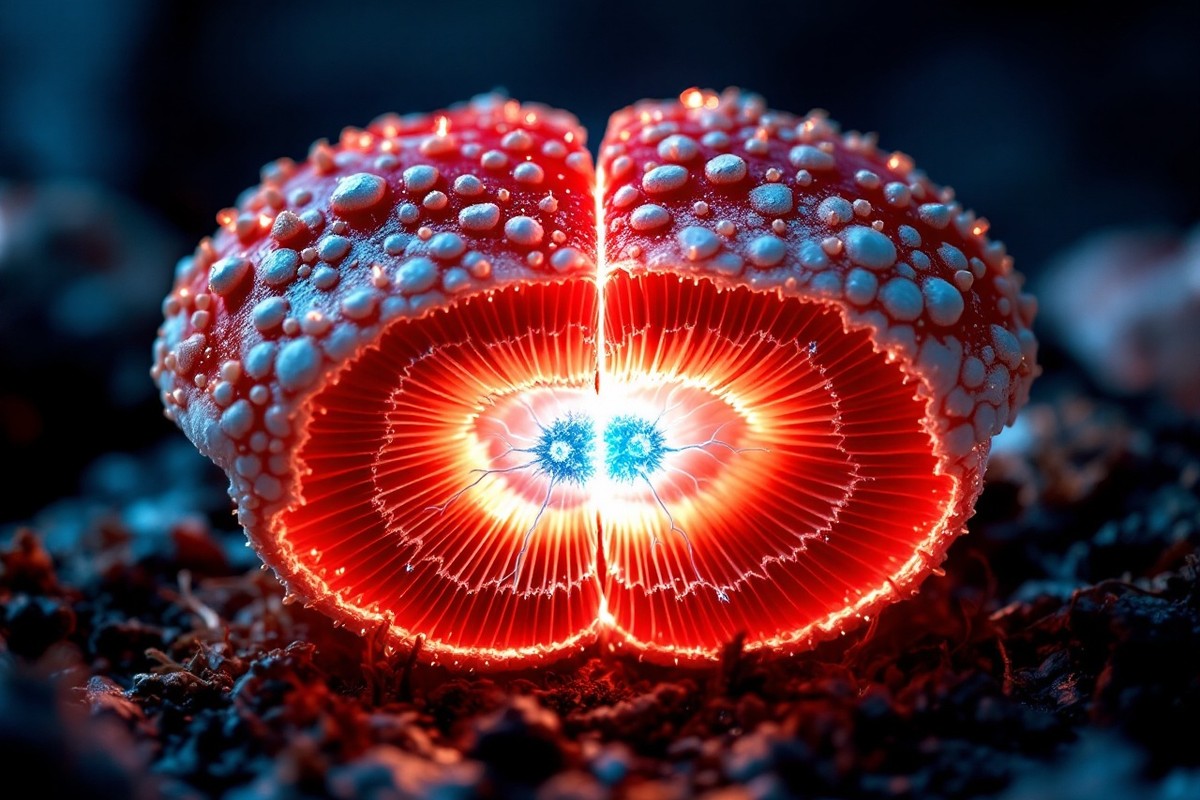
How Amanita muscaria — the fly agaric — actually works in the brain. Its psychoactivity comes from muscimol, a direct (orthosteric) GABA-A receptor agonist with high affinity for extrasynaptic δ-subunit receptors that govern tonic inhibition — a sedative, dissociative, oneirogenic “downer,” not a serotonergic psychedelic. The fresh mushroom also holds ibotenic acid, an NMDA-agonist excitotoxin that decarboxylates to muscimol on drying (the “why you dry the cap” chemistry) and that neuroscientists use to lesion brains. Muscarine is a trace-only misnomer. Plus the honest safety picture, the FDA’s December 2024 food alert, and 2026 legal status.

Salvia vs Ketamine: The Neuroscience
Salvia (salvinorin A) vs ketamine compared on neuroscience: two drugs that both dissolve reality and produce profound dissociation — yet through completely different receptor systems. Salvinorin A is a selective kappa-opioid agonist (brief, bizarre, aversive); ketamine is an NMDA antagonist (longer, dreamy, and an FDA-approved antidepressant). Mechanism, experience, duration, safety, the KOR-antagonist inversion, and 2026 legal status — honestly kept.

LSA (Morning Glory & Hawaiian Baby Woodrose): The Neuroscience
How LSA works in the brain: ergine (d-lysergic acid amide) and iso-ergine, the naturally-occurring ergoline cousins of LSD found in the seeds of Hawaiian baby woodrose (Argyreia nervosa) and morning glory (Ipomoea tricolor / I. violacea). The ergot-alkaloid family, Aztec ololiuhqui and tlitliltzin, Hofmann’s 1960 identification of lysergic acid amide, 5-HT2A partial agonism at far lower potency than LSD, the sedating and oneiric profile, ergot-alkaloid vasoconstriction and nausea, the real danger of coated commercial seeds, and 2026 legal status — LSA a US Schedule III substance while the seeds are sold as ornamentals.

Ketamine vs DXM: The Neuroscience
Ketamine vs DXM (dextromethorphan) compared on neuroscience: two non-competitive NMDA-receptor antagonists from opposite worlds — a hospital anesthetic and an OTC cough syrup — that both became FDA-approved antidepressant ingredients (esketamine/Spravato and Auvelity/AXS-05). Mechanism, the potency and metabolite contrast, sigma-1 and CYP2D6, dissociation, 2022–2026 clinical status, safety, and legal status — honestly kept.

Harmala Alkaloids: The Neuroscience
How the harmala alkaloids — the β-carbolines harmine, harmaline, and tetrahydroharmine from Syrian rue (Peganum harmala) and the ayahuasca vine (Banisteriopsis caapi) — work in the brain. Reversible MAO-A inhibition (RIMA) is the pharmacological key that makes oral DMT active in ayahuasca; harmine’s striking second life as a DYRK1A kinase inhibitor driving pancreatic β-cell proliferation, adult neurogenesis, and anti-tau Alzheimer’s research; and an honest safety picture of serotonin syndrome, tyramine interactions, Syrian rue overdose, and 2026 legal status.

MDMA vs LSD: The Neuroscience
MDMA vs LSD compared on neuroscience: both engage serotonin, but in opposite ways - MDMA reverses the serotonin transporter to flood the synapse (an empathogen), while LSD is a 5-HT2A receptor agonist (a classic psychedelic). Mechanism, experience, dose and duration, the neurotoxicity contrast, 2024-2026 clinical status, safety, and legal status - honestly kept.

Datura & Scopolamine: The Neuroscience
How datura and its tropane alkaloids work in the brain: the nightshade deliriants - jimsonweed, thornapple, angel's trumpet - whose scopolamine, atropine, and hyoscyamine block muscarinic acetylcholine receptors to produce a true delirium, not a psychedelic trip. The anticholinergic toxidrome, scopolamine as the classic amnesia model and cornerstone of the Alzheimer's cholinergic hypothesis, the legitimate medicines (motion-sickness patch, atropine, the contested rapid antidepressant), “devil's breath” crime myth versus reality, an honest look at a narrow-margin poison, and 2026 legal status.

Cannabis vs Psilocybin: The Neuroscience
Two of the most famous mind-altering plants, two entirely different systems - THC's CB1 dampening versus psilocybin's 5-HT2A excitation. Mechanism, dependence, neuroplasticity, 2026 evidence, and the law.

Kanna (Sceletium tortuosum): The Neuroscience
How a fermented South African succulent calms the mind - the mesembrine alkaloids, a rare dual SERT and PDE4 mechanism, the amygdala-fMRI and cognition trials, and an honest, still-small evidence base.

Mescaline vs Psilocybin: The Neuroscience
Two ancient psychedelics - a phenethylamine cactus alkaloid and a tryptamine mushroom prodrug - meet at the 5-HT2A receptor. Potency, duration, the one head-to-head trial, 2026 clinical evidence, and safety.

Kava (Kavalactones): The Neuroscience
How kava's kavalactones calm anxiety through a non-benzodiazepine GABA-A mechanism - the six kavalactones and chemotype, the trials from KADSS to the negative K-GAD study, and the hepatotoxicity controversy, held honestly.

DMT vs 5-MeO-DMT: The Neuroscience
Two short tryptamines, one methoxy group apart, at opposite ends of the psychedelic experience: 5-HT2A visions and entities vs 5-HT1A ego-dissolution and the void. Mechanism, dosing, 2026 trials, and safety.

PCP (Phencyclidine): The Neuroscience
The failed anesthetic that became psychiatry's key to psychosis: open-channel NMDA blockade, the NMDA-hypofunction model of schizophrenia, the parvalbumin circuit, honest harms, and the line to ketamine.

Ibogaine vs Ketamine: The Neuroscience
A polypharmacological root-bark alkaloid for addiction vs a rapid NMDA-antagonist antidepressant. Mechanism, onset, evidence, cardiac vs bladder risk, and 2026 access.

DXM (Dextromethorphan): The Neuroscience
An OTC cough suppressant since 1958 that is also a dissociative NMDA antagonist and now the engine of the antidepressant Auvelity. Mechanism, the CYP2D6 story, and the real risks.

LSD vs DMT: The Neuroscience
Same 5-HT2A doorway, opposite kinetics: LSD is a molecule that won't let go of its receptor and runs for hours; DMT flares and is gone in minutes. Mechanism, imaging, 2026 trials, and safety.

2C-B: The Neuroscience
Shulgin's favorite phenethylamine sits between MDMA and LSD: contested 5-HT2 pharmacology, a famously steep dose-response, thin-but-growing evidence, and a supply contaminated by NBOMes.

Ketamine vs Nitrous Oxide: The Neuroscience
Two NMDA antagonists reach the same receptor by an injection and a breath: ketamine, an approved fast rescue with a maintenance problem, versus nitrous oxide, a promising but investigational near-instant candidate.

Kratom (Mitragynine): The Neuroscience
The traditional leaf is a weak, G-protein-biased, multi-target opioid; concentrated 7-OH is a different animal. Mechanism, dependence, hepatotoxicity, and the 2026 leaf/7-OH regulatory split, honestly.

MDMA vs Psilocybin: A Neuroscience Comparison
An empathogen and a psychedelic heal along two different fault lines: MDMA quiets fear to reprocess trauma; psilocybin loosens rigidity to lift depression. Mechanisms, 2026 trial status, safety, and legal access compared.

Nitrous Oxide Neuroscience: The NMDA Antagonist
The oldest anesthetic in the cabinet is also the fastest-acting NMDA antagonist we know: a molecule that can lift depression in an hour and quietly dismantle the spinal cord over months.

Ketamine vs Psilocybin: A Neuroscience Comparison
Two rapid-acting antidepressants, two opposite mechanisms - NMDA vs 5-HT2A. How ketamine and psilocybin compare on onset, durability, evidence, safety, and 2026 access.

The Neuroscience of THC: How Cannabis Works
THC works because it mimics anandamide and docks onto CB1 receptors your neurons already use. A neuroscience-first tour of how cannabis works, what the evidence supports, and where it stays contested.

Ayahuasca vs Psilocybin: The Neuroscience
Both ayahuasca and psilocybin end up at the serotonin 5-HT2A receptor — but one is a single-molecule prodrug and the other a two-plant MAOI hack. A neuroscience comparison of mechanism, clinical evidence, safety, and law.

Salvia Divinorum: The Kappa-Opioid Psychedelic
Salvinorin A ignores serotonin entirely, activating the kappa-opioid receptor to fracture reality for a few shattering minutes. The neuroscience of the only nitrogen-free psychedelic in common use.

Psilocybin vs LSD: The Neuroscience Compared
Same receptor, different molecules: psilocybin vs LSD on potency, duration, trials, and the law.

Amanita Muscaria: The Neuroscience
The famous red mushroom is a GABA-A deliriant, not a psychedelic — muscimol, ibotenic acid, toxicity, and myth.

MDMA vs Ketamine for PTSD: The Neuroscience Compared
Two drugs, opposite mechanisms: how MDMA and ketamine compare for PTSD on evidence, regulation, and risk.

Ibogaine: The Neuroscience
A root-bark alkaloid that can switch off opioid withdrawal overnight — and stop the heart.

MDMA: The Neuroscience
Not a classic psychedelic but an empathogen — a serotonin releaser that quiets the amygdala and floods the brain with oxytocin. The PTSD trials, the reopened critical period, and the 2024 FDA rejection.

Mescaline: The Neuroscience
The first psychedelic ever isolated — a peyote and San Pedro alkaloid that opened the 5-HT2A door a century before we understood the receptor. The oldest psychedelic, and the least studied.

Ketamine: The Neuroscience
A 1960s anesthetic that lifts depression in hours by blocking the NMDA receptor — the glutamate surge, the synapses it regrows, esketamine, and the debate over whether the dissociation is the medicine.

DMT: The Neuroscience
Active at a few millionths of a gram and lasting twelve hours, LSD is the most potent classical psychedelic — the 5-HT2A receptor “lid” that explains the long trip, the brain’s dissolved boundaries, and LSD’s clinical return through MM120.

LSD: The Neuroscience
Active at a few millionths of a gram and lasting twelve hours, LSD is the most potent classical psychedelic — the 5-HT2A receptor “lid” that explains the long trip, the brain’s dissolved boundaries, and LSD’s clinical return through MM120.

Ayahuasca: The Neuroscience of the Vine
Two Amazonian plants, neither psychoactive alone, become one of the most studied psychedelics on Earth — the DMT–MAOI synergy, the quieting of the default mode network, and the rapid-antidepressant trials.

5-MeO-DMT: The Neuroscience of the God Molecule
The most powerful psychedelic acts on a different receptor than all the others — the 5-HT1A mechanism, the fastest ego death, the ultra-rapid antidepressant trials, and the threatened toad behind the molecule.

Psychedelics and Neuroplasticity: Reopening the Brain's Critical Periods
Psychedelics reopen the developmental windows the brain seals after childhood. How a single dose rewires the adult brain — dendritic spines, the TrkB receptor, the reopened critical period — and why what happens next decides everything.

Psychedelics and Meditation: The Contemplative Neuroscience
Two of humanity's oldest technologies for transforming the mind act on the same brain system — the default mode network. How psilocybin and meditation both quiet the self, and what the data show when they are combined.

Psilocybin and Bipolar Disorder: The Field's Hardest Open Question
The first peer-reviewed psilocybin trial that did not exclude bipolar disorder posted MADRS −24 (Cohen d=4.08) and zero hypomanic switches. The exclusion has stood since 2006; the reasoning behind it has not caught up with the data.

Psilocybin and Parkinson's Disease: The Neuroscience of a Possible Disease-Modifying Therapy
The first psychedelic ever tested in a neurodegenerative disease. Bradley 2025 UCSF trial: −9.3 MADRS, −4.6 motor improvement, zero serious adverse events. α-synuclein silences TrkB; psilocin reactivates it. The cleanest disease-modifying logic chain in psychedelic neuroscience.

Veterans and Psilocybin: The Neuroscience of Healing the Wounds of War
22 veterans die by suicide every day. Combat trauma damages four neural systems at once — amygdala, default mode network, fear-extinction circuit, neuroinflammation. Psilocybin is the first intervention demonstrated to engage all four. The full master review on veterans + psilocybin science.

Psilocybin and Alzheimer’s Disease: The Neuroplasticity Hypothesis
BDNF collapses 30–40% in Alzheimer's brains. Psilocybin triggers the largest known BDNF surge. Tau phosphorylation fell ~35% in mouse models. Four mechanisms, one disease — the most unexpected convergence in neurodegeneration research.

The Pineal Gland: Science vs Myth
Descartes called it the seat of the soul. Strassman called it the DMT factory. Borjigin's lab found DMT-producing enzymes throughout the cortex — not just in the pineal. The neuroscience of the most mythologised organ in your skull.

5-MeO-DMT vs Psilocybin: Two Doors to the Same Room
Six hours vs fifteen minutes. Davis (2018) showed 5-MeO-DMT mystical intensity equals high-dose psilocybin. GH001 hit -15.5 MADRS in Phase 2b TRD. The pharmacology, phenomenology, and clinical data on two molecules that occasion mystical experiences of equivalent intensity.

Psilocybin and Nicotine Addiction: How a Single Session Breaks the Hardest Habit
80% quit rate after 2-3 sessions vs 13% for nicotine patches. Johns Hopkins researchers have cracked the neuroscience of tobacco addiction — and it starts with the default mode network.

Psilocybin and Anxiety: The Neuroscience of Dissolving Fear
80% of participants reported sustained anxiety relief after a single psilocybin session. The amygdala quiets, the default mode network resets, and fear patterns built over decades dissolve.

Psilocybin and Neurogenesis: How Psychedelics Grow New Brain Cells
The adult brain was supposed to stop growing new neurons. Psilocybin proved otherwise. Hippocampal neurogenesis surges after a single dose — the biological mechanism behind the antidepressant effect.

Psilocybin and Addiction: The Neuroscience of Breaking Chemical Dependency
80% 6-month smoking abstinence. 83% reduction in heavy drinking days. Psilocybin is producing addiction outcomes no pharmaceutical has matched. The neuroscience of why it works.

Psilocybin and Cluster Headaches: The Neuroscience of the World's Most Painful Condition
They call them suicide headaches — 10 attacks per day, each rated 10/10 pain. No pharmaceutical reliably stops them. Psilocybin does — even at sub-hallucinogenic doses.

Psilocybin and the Immune System: How Psychedelics Rewrite the Body's Inflammatory Code
Chronic inflammation drives depression, anxiety, neurodegeneration. Psilocybin targets the upstream immune switches directly — through receptors shared with T cells, macrophages, and microglia throughout the body.

Psilocybin and Sleep Architecture: The Neuroscience of Deep Sleep Restoration
Insomnia, fractured REM, and suppressed slow-wave sleep all share a common upstream driver — and psilocybin targets it directly. The emerging neuroscience of psychedelic sleep restoration.

Psilocybin and Chronic Pain: The Neuroscience of Breaking the Pain Cycle
Chronic pain rewires the brain's default mode network in the same way addiction does. Psilocybin may be the first compound that directly targets that architecture.

Psilocybin and Nicotine Addiction: The Neuroscience of Breaking Tobacco Dependence
80% abstinence at 6 months. Johns Hopkins' Matthew Johnson landmark trial rewrites what's possible for smoking cessation. Here is the full neuroscience.

Microdosing Psilocybin: What the Science Actually Says
Does microdosing psilocybin actually work? The most rigorous science — from TrkB-BDNF neuroplasticity to the Szigeti placebo trial — examined with full honesty.

Psilocybin and Neuroplasticity: How a Single Dose Rewires the Brain
A single psilocybin session triggers a 10% increase in dendritic spine density within 24 hours. The structural brain changes persist for weeks. Here is the neuroscience.

Psilocybin and Eating Disorders: The Neuroscience of Breaking Rigid Patterns
Anorexia has the highest mortality of any psychiatric disorder. New clinical trials show psilocybin disrupts the rigid neural patterns that drive eating disorders.

Psilocybin-Assisted Grief Therapy: Clinical Evidence for Healing Complicated Loss
80% of patients showed lasting reductions in grief and death anxiety. The clinical trial evidence for psilocybin-assisted therapy in prolonged grief disorder.

Psilocybin and Grief: The Neuroscience of Healing What Cannot Be Fixed
DMN hyperactivity, prolonged grief disorder, and four mechanisms by which psilocybin may help the brain complete what cannot be fixed.

Cognitive Flexibility and Executive Function Under Psilocybin
How psilocybin rebuilds the prefrontal cortex at the hardware level — REBUS, BDNF, and the 72-hour neuroplasticity window.

Ketamine vs Psilocybin: Two Molecules, Two Paths Out of Depression
Ketamine works in hours. Psilocybin works for months. A complete clinical comparison of the two most promising depression treatments in modern psychiatry.

Micro to Macro: The Science of Psilocybin Dosing Protocols
From 0.1g microdoses to 5g hero doses — five distinct tiers, their pharmacokinetics, and the clinical evidence behind the 25mg therapeutic standard. Griffiths 2016, COMPASS 2022, and the Fadiman vs Stamets debate.

Psilocybin and Alcohol Use Disorder: What the NEJM Trial Found
Bogenschutz 2022 in the New England Journal of Medicine: 83% reduction in heavy drinking days. Two psilocybin sessions restructured craving circuitry where 12 months of pharmacotherapy failed.

Why the Peak Experience Predicts Healing: The Science of the Mystical State
Griffiths' 2006 landmark trial showed that the degree of mystical experience directly predicted therapeutic outcome. The MEQ30 measures it. Here is the neuroscience behind why dissolution heals.

MDMA: The Molecule That Dissolves the Wall Between Self and Other
How MDMA floods the brain with serotonin, triggers a 2× oxytocin surge, silences the amygdala, and reopens a critical window for healing PTSD. The neuroscience behind 67% remission rates in phase 3 trials.

Psilocybin and OCD: Interrupting the Loop
OCD is a circuit problem, not a thought problem. The CSTC loop generates an error signal it cannot terminate. Three clinical trials now show psilocybin interrupts this loop via 5-HT2A activation — with a 73.3% responder rate and 40% full remission.

The Death-Anxiety Trials: Psilocybin and End-of-Life Existential Distress
Two landmark trials in 2016 found that a single psilocybin session produced clinically significant reductions in death anxiety in ~80% of terminal cancer patients. The effects lasted 4.5 years.

Psilocybin and PTSD: The Emerging Evidence
PTSD is not a memory problem — it is a fear extinction failure. New clinical trials are testing whether psilocybin can restore the neuroplasticity that the disorder destroys. The complete emerging science.

Anandamide: The Endocannabinoid That Cacao Unlocks
Your brain produces its own cannabinoid. Ceremonial cacao contains three FAAH-inhibiting compounds that block the enzyme that destroys it — extending the biology of bliss through a mechanism published in Nature in 1996.

Psilocybin and Creativity: What the Data Actually Shows
Controlled trials show psilocybin increases Openness to Experience by more than one standard deviation, persisting for 14 months. The complete neuroscience of creative cognition under psilocybin.

The Integration Window: How to Use the 72-Hour Neuroplasticity Period
BDNF is elevated for 72 hours after psilocybin. New synaptic connections form at measurable rates. What you do in this window determines whether the neuroplasticity produces lasting change — or fades.

MAO Inhibition in Cacao: The Amplification Mechanism
How ceremonial cacao’s β-carboline alkaloids reversibly inhibit monoamine oxidase — extending the life of serotonin, dopamine, and phenylethylamine.
The Inflamed Brain: How Psilocybin Resets the Immune-Neural Interface
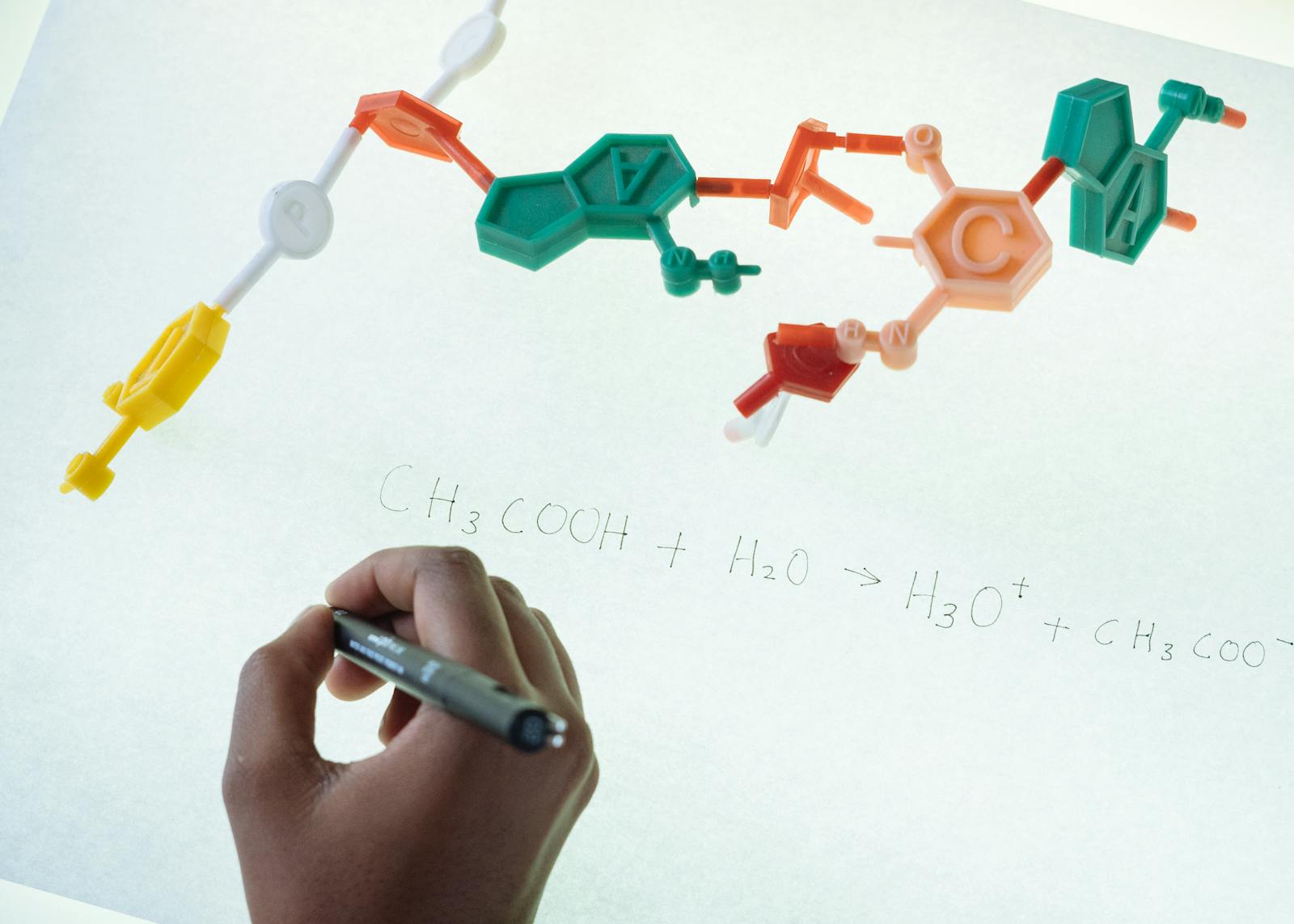
Neuroinflammation silently drives depression, cognitive fog, and treatment resistance. How psilocybin modulates microglia, cytokines, and the IDO1 pathway to restore mental clarity.

The Vagus Nerve: Your Body’s Master Reset Button
How the vagus nerve regulates everything from mood to immune function — and why vagal tone is the hidden determinant of psychedelic healing depth.

Oxytocin, Psilocybin, and the Neuroscience of Social Connection
How psilocybin activates oxytocin pathways and dissolves the barriers to human connection — the receptor pharmacology of love, trust, and belonging.

Psilocybin and Depression: What Phase 3 Clinical Trials Actually Show
29% remission at 3 weeks vs 9% placebo. The COMPASS, Imperial College, and Johns Hopkins data — the most rigorous psychedelic trials ever conducted.

Ego Dissolution: The Neuroscience of Losing Yourself to Find Yourself
At high doses, psilocybin dismantles the neural architecture that constructs the experience of being a separate self. Imperial College London has mapped the mechanism.

Theobromine: The Heart-Opening Molecule
The primary alkaloid in ceremonial cacao isn't caffeine. Theobromine — a methylxanthine with a 6–10 hour half-life — dilates blood vessels, crosses the blood-brain barrier, and generates the warm, expansive state that defines the ceremonial cacao experience.

From Spore to Synapse: The Journey of Psilocybin Through Your Body
Psilocybin is pharmacologically inert. The active molecule is psilocin — and the 90-minute biochemical journey between ingestion and peak experience is one of the most precisely mapped stories in psychopharmacology.

The 5-HT2A Blueprint: How Psilocybin Speaks to Your Brain
The single receptor that explains psilocybin's profound transformation of consciousness — block it with one drug and the entire psychedelic experience disappears. The molecular blueprint decoded.

The Set and Setting Science: How Expectation and Environment Shape the Psilocybin Brain
Expectation, environment, and intention are not soft variables. They are pharmacologically active — shaping receptor binding, network dynamics, and long-term therapeutic outcomes in ways that clinical data now confirms.

Psilocybin and Addiction: Rewiring the Compulsive Brain
How 80% tobacco abstinence rates and 84% reductions in alcohol use are redefining what addiction treatment can achieve — and the precise neuroscience of why it works.

The Entropic Brain Hypothesis
How increased neural entropy during psychedelic states allows the brain to escape fixed attractor states and build new cognitive architectures.

Microdosing with Ceremonial Cacao: The Daily Integration Protocol
Sub-perceptual benefits of daily integration: improving divergent thinking and serotonergic baseline using ceremonial cacao as a psychedelic stack.

Psilocybin-Assisted Therapy for Combat Veterans
Three neurobiological mechanisms through which psilocybin addresses the structural brain changes caused by combat trauma — with clinical data from active veteran trials.

The Cacao-Psilocybin Synergy Protocol
Four neurochemical mechanisms through which ceremonial-grade cacao primes the nervous system and amplifies psilocybin's therapeutic effects.

BDNF and the Architecture of Neuroplasticity
How psilocybin triggers the release of brain-derived neurotrophic factor and physically rebuilds neural architecture at the synaptic level.

The Default Mode Network: Your Brain's Autopilot
Mapping the neural architecture that locks consciousness into repetitive thought patterns — and how psilocybin dissolves those fixed attractor states.

Your Brain on Psilocybin: The Complete Neuroscience of Neural Reconstruction
How psilocybin fundamentally rewrites the brain's operating system — the complete neuroscience of mystical experience, neuroplasticity, and lasting therapeutic change.