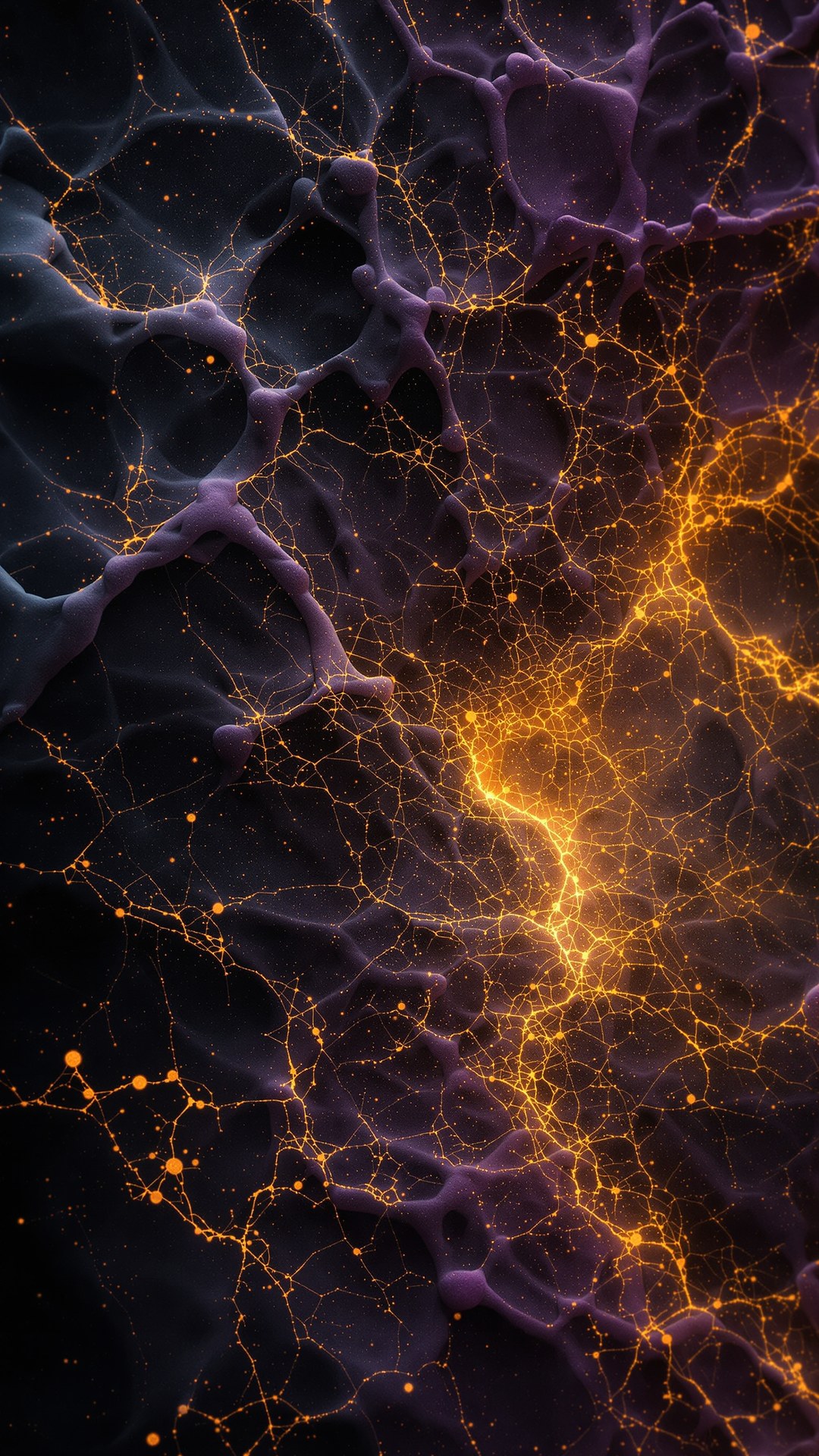
In 1944, the physicist Erwin Schrödinger published a small book called What Is Life? In it, he argued that living organisms are distinguished from dead matter by their capacity to import order from their environment — to sustain local decreases in entropy against the thermodynamic current that runs toward disorder. Life, in Schrödinger's framing, is organized resistance to randomness.
Seventy years later, Robin Carhart-Harris inverted this logic for the brain — and in doing so produced one of the most consequential frameworks in contemporary neuroscience. His 2014 paper in Frontiers in Human Neuroscience, "The Entropic Brain," proposed that the relationship between neural entropy and conscious experience is not simply that more order equals better function. It proposed something more subtle and more radical: that the brain operates across a spectrum of entropy states, and that psychological pathology — depression, addiction, obsession, rigid ideation — is characterized not by too much disorder, but by too little.
The therapeutic implication follows directly. If suffering is organized around fixed, low-entropy patterns — attractor states that the system cannot escape through ordinary means — then the intervention is not more structure. The intervention is controlled disruption. The intervention is a temporary, precisely calibrated increase in neural entropy that shakes the system loose from the groove it has carved for itself and opens a window during which new grooves can form.
Psilocybin is that intervention. And the Entropic Brain Hypothesis is the theoretical architecture that explains why it works.
What Neural Entropy Actually Means
Entropy in information theory — the framework Carhart-Harris applies to neural dynamics — measures the unpredictability of a system's states. A system with low entropy occupies a small number of states with high probability. A system with high entropy distributes its activity across a much larger state space with more uniform probability. Low entropy is predictable, constrained, ordered. High entropy is variable, unconstrained, complex.
Applied to the brain, entropy is measured through techniques like Lempel-Ziv complexity analysis of EEG or MEG signals, or through the diversity of functional connectivity patterns observable in fMRI data. A brain showing low neural complexity produces stereotyped, repetitive patterns of activation — the same networks firing in the same sequences in response to the same stimuli. A brain showing high neural complexity produces a richer, more varied repertoire of activation patterns, with greater connectivity between regions that do not typically communicate.
Measuring Neural Entropy
Schartner and colleagues (2017) applied Lempel-Ziv complexity analysis to MEG and EEG recordings from participants under psilocybin, ketamine, and LSD. All three compounds produced significant increases in neural signal diversity compared to placebo — the largest increases in signal complexity ever recorded in a controlled human neuroimaging study at that time. The signal was not random noise. It was richer, more varied, more informationally complex.
The crucial distinction is between entropy that represents meaningful complexity — a brain exploring a larger state space productively — and entropy that represents mere noise. Carhart-Harris's framework, and the neuroimaging data that supports it, argues that psychedelic-induced entropy falls into the first category. The increased complexity under psilocybin is not random neural noise. It is structured exploration — the brain accessing regions of its state space that ordinary consciousness keeps locked.
The Architecture of Fixed Attractors
To understand what psilocybin disrupts, you first need to understand what it is disrupting. The concept of an attractor state comes from dynamical systems theory: an attractor is a set of states toward which a system tends to evolve, regardless of where it starts. Pour water into a bowl from any direction, and it converges on the same equilibrium. The bowl's shape defines the attractor; gravity is the force that drives convergence.
The brain operates analogously. Neural networks develop characteristic patterns of activation — default configurations that the system returns to, reliably, across different contexts and stimuli. Some of these attractors are adaptive. The default mode network's self-referential processing is an attractor that serves planning, autobiographical memory, and social cognition. The visual cortex's orientation columns are attractors that produce stable perception from noisy input. These fixed patterns are features, not bugs — they reduce the computational cost of navigating a predictable world.
Pathological attractors are the same mechanism operating on content that destroys rather than organizes. The rumination loops of treatment-resistant depression are attractors — the mind returns, reliably, to negative self-evaluation, hopelessness, and withdrawal, regardless of what positive experiences are introduced. The craving cycles of addiction are attractors — the reward system has been shaped by repeated substance use into a basin from which ordinary experience cannot escape. The intrusive thought patterns of OCD are attractors — the system cannot move past the fixed point because every attempt to leave it is interpreted as confirmation that leaving is dangerous.
These are not problems of insufficient willpower or inadequate coping skills. They are topological problems — the landscape of the brain's state space has been shaped such that the pathological pattern is the lowest point in a steep basin. Everything flows back to it.
The Carhart-Harris Framework: 2014
Carhart-Harris's foundational 2014 paper synthesized a decade of neuroimaging data — his own and others' — into a unified theoretical account of psychedelic action. The central argument: psychedelics produce their therapeutic effects by temporarily increasing neural entropy, thereby destabilizing pathological attractors and enabling state transitions that the system could not achieve through ordinary perturbation.
The paper introduced the concept of a "primary state" — high entropy, characterized by loose associativity, reduced self-referential processing, and decreased boundary rigidity between self and world — as the ancestral mode of consciousness from which the organized, low-entropy "secondary state" of ordinary waking consciousness evolved. In this framing, psychedelics do not produce an alien state. They temporarily restore an older one.
The key claim: The brain's ordinary waking state is a constrained version of its full potential state space. Ordinary consciousness operates within a subset of the brain's possible configurations — a subset shaped by development, experience, culture, and habit. Psychedelics temporarily relax these constraints, expanding the accessible state space. What feels like dissolution is actually expansion.
The data Carhart-Harris marshaled in support of this framework included fMRI studies showing decreased DMN connectivity under psilocybin — the self-referential attractor loses its structural integrity during the psychedelic state — and EEG studies showing increased signal diversity and reduced alpha-wave power, both consistent with a shift toward higher-entropy neural dynamics.
Precisely-Dosed Psilocybin Mushroom TreatsOOTW Psilocybin Mushroom Treats
Precisely-dosed, lab-tested, quality psilocybin mushroom treats — crafted for daily ritual, neural support, and sustained clarity. Journal readers: 10% off your first order with code JOURNAL10 (applied automatically at checkout).
Claim 10% Off →REBUS: The 2019 Refinement
Five years after the Entropic Brain paper, Carhart-Harris and computational neuroscientist Karl Friston published a more mechanistically precise account in Pharmacological Reviews. REBUS — Relaxed Beliefs Under Psychedelics — provided the predictive processing framework that explains how psilocybin increases entropy at the level of neural computation.
The Predictive Processing Model
The brain, in the predictive processing framework, is fundamentally a prediction machine. Higher cortical areas generate predictions (priors) about what lower areas will report. Lower areas generate prediction errors — signals representing the difference between what was predicted and what was actually sensed. The brain's job is to minimize prediction error, either by updating its predictions or by suppressing the incoming signal. The balance between these strategies determines the weight given to top-down beliefs versus bottom-up evidence.
REBUS proposes that psilocybin's 5-HT2A agonism selectively disrupts the top-down signaling pathway — reducing the gain on the brain's high-level priors and beliefs. The effect is to flatten the hierarchical confidence that the brain's predictive models have in their own outputs. Strong priors — including the deeply embedded priors of the depressive self-model, the addictive reward model, the obsessive threat model — lose their authority over perception and cognition.
When top-down priors are relaxed, bottom-up signals from sensory and emotional experience are weighted more heavily. The brain becomes more sensitive to actual incoming data and less constrained by its preexisting model of what that data should mean. This is the computational mechanism of increased entropy: more of the brain's state space is accessible because the high-level constraints that ordinarily limit it are temporarily loosened.
The Annealing Metaphor
The most useful physical metaphor for the entropic brain mechanism comes from metallurgy. Annealing is the process by which a metal is heated to a high temperature and then slowly cooled. At high temperature, the atoms in the metal's crystal lattice have enough energy to overcome their local constraints — they become mobile, able to explore configurations they could not reach at lower temperatures. As the metal cools slowly, the atoms settle into new, lower-energy arrangements. The result is a metal with fewer structural defects and greater mechanical strength than it had before heating.
The brain under psilocybin undergoes an analogous process. The "heating" — increased neural entropy, loosened priors, expanded accessible state space — gives the system the energy to escape the local minima it was trapped in. The "cooling" — the integration period during and after the session — allows the system to settle into new configurations. These new configurations may represent genuinely lower-energy states: patterns of thinking, feeling, and perceiving that require less maintenance cost and produce less chronic suffering than the pathological attractors they replaced.
Why integration matters: The annealing metaphor explains the integration imperative. Metal that is heated and then quenched — cooled too rapidly — does not settle into optimal configurations. The same principle applies neurologically. The post-session period requires conditions — therapeutic support, intentional reflection, behavioral change — that allow the newly fluid system to settle into adaptive patterns rather than simply reforming around the same attractors.
Depression as a Fixed Attractor: The Clinical Evidence
The Entropic Brain Hypothesis makes a specific, testable prediction: if depression is maintained by pathologically fixed low-entropy brain states, then psilocybin should increase neural entropy, and this entropy increase should correlate with therapeutic outcome. The data now exists to evaluate this prediction.
Carhart-Harris and colleagues' 2016 open-label trial of psilocybin for treatment-resistant depression — subsequently followed by randomized controlled trials at Imperial College London and Johns Hopkins — demonstrated not only significant reductions in depressive symptoms but changes in neural dynamics consistent with the entropic framework. Neuroimaging data showed increased brain entropy post-psilocybin, decreased DMN connectivity, and — critically — increased connectivity between the DMN and task-positive networks that are normally anti-correlated.
The mechanism visible in the data: psilocybin disrupted the hyperconnected DMN attractor that maintains depressive self-referential processing, increased global neural complexity, and permitted the formation of new connectivity patterns between previously isolated networks. Patients described the experience as a "reset" — language that maps precisely onto the annealing metaphor. The attractor was disrupted. The system resettled. The new configuration was one in which the fixed groove of depressive rumination had become shallower and easier to escape.
AI That Understands The MedicineOOTW Spirit Guide
Set. Setting. Dose. Integration. The questions you can't bring to your doctor — answered by an AI grounded in every peer-reviewed paper, protocol, and ceremony manual. Private, sober, always there.
Talk to the Spirit Guide → A Sacred 5-MeO-DMT Ceremony · MiamiJoin the OOTW Sacrament
The oldest prayer, remembered — the gentle dissolving of the self into light, held in ceremony by a master facilitator. Sit with our community first: a free, live weekly circle on Zoom. No commitment, simply a conversation.
Join the Weekly Circle →Addiction: Disrupting the Reward Attractor
The attractor model applies with equal precision to substance use disorders. Addiction is, at a neural level, the progressive narrowing of the brain's motivational state space toward a single dominant attractor: drug-seeking behavior and its associated reward prediction signals. The dopamine system, designed for broad-spectrum reward evaluation, is progressively colonized by a single compound's signal until ordinary pleasures cannot compete and the neural landscape has been sculpted into a basin with one valley.
Psilocybin trials for tobacco addiction (Matthew Johnson et al., Johns Hopkins, 2014) and alcohol use disorder (Michael Bogenschutz et al., 2015) demonstrated abstinence rates substantially exceeding those of approved pharmacological treatments. The neurobiological interpretation is consistent with the entropic framework: psilocybin's temporary disruption of the reward system's fixed attractor creates a window during which behavioral change is possible — not because willpower increased, but because the system's topology temporarily changed.
Building New Cognitive Architectures
The Entropic Brain Hypothesis is not only a model of pathology. It is a model of growth. The same mechanism that disrupts maladaptive attractors also enables the formation of new ones — new patterns of thought, perception, and behavior that could not have been installed into the system without the temporary loosening that psilocybin provides.
This is the neuroscientific basis for what practitioners describe as psilocybin's capacity to accelerate psychotherapy, deepen insight, and produce durable personality change in the direction of openness and psychological flexibility. These are not mystical effects. They are the predictable consequences of a brain that has temporarily been given access to a larger portion of its own state space and has used that access to install new attractors in the territory it explored.
Openness — the personality trait most reliably and durably increased by psilocybin experience — is, in the entropic framework, not a soft outcome. It is a structural description of a brain whose attractor landscape has become less steep, whose grooves have become shallower, whose state space is more broadly accessible under ordinary conditions than it was before the session. A more open brain is, literally, a more entropic one — not chaotically, but in the precise sense that more of its configuration space is regularly visited.
The Precision of Disruption
A frequent objection to the entropic framework is that increasing neural disorder sounds dangerous — that a brain freed from its constraints is a brain susceptible to psychosis. The objection points to a real phenomenon (psychedelics can, in vulnerable individuals, trigger psychotic episodes) but misidentifies the mechanism.
The difference between therapeutic entropy and pathological chaos lies in what Carhart-Harris calls the "critical point" — the optimal entropy level at which the system is maximally flexible without losing coherence. Too little entropy: rigid attractors, psychological rigidity, treatment-resistant pathology. Too much: loss of coherent self-model, breakdown of reality testing, psychosis. The therapeutic window is a band of elevated-but-bounded entropy in which the system can explore without fragmenting.
Psilocybin, at appropriate doses in appropriate set and setting, reliably produces entropy levels within this therapeutic band. The 5-HT2A agonism is partial — the receptor is activated, not saturated. The dose-response curve is steep enough to produce meaningful disruption and shallow enough that coherence is maintained. The context — the therapeutic relationship, the physical environment, the intentional preparation — shapes how the increased entropy is navigated. The disruption is precise because the compound is precise and because the conditions determine what the entropy is used for.
The Map and the Territory
The Entropic Brain Hypothesis is a model. Models are not reality — they are representations of reality that are useful to the extent that they generate correct predictions and guide productive interventions. The entropic framework generates both.
It predicts, correctly, that psilocybin increases neural signal diversity — confirmed by Schartner et al. It predicts, correctly, that this entropy increase correlates with therapeutic outcome in depression — confirmed by multiple imaging studies. It predicts, correctly, that the disruption of fixed attractors produces lasting change in personality measures associated with psychological flexibility — confirmed by MacLean et al.'s long-term openness data. It predicts, correctly, that set and setting modulate outcome — consistent with the REBUS framework's emphasis on what fills the expanded state space during the high-entropy window.
What the model does not predict is the content of individual experience. It says the door opens. It does not say what is on the other side. Every person who has taken psilocybin in a therapeutic context has encountered a different territory when the attractors dissolved. Some encountered grief they had not allowed themselves to feel. Some encountered a capacity for love they had forgotten. Some encountered the structural architecture of their own suffering and finally understood how it had been built.
The neuroscience maps the mechanism. What happens in the territory — the specific cognitive architectures that form in the expanded state space, the particular fixed patterns that dissolve and what replaces them — that is the work. The entropy opens the possibility. The work determines the outcome.
The framework matters because it removes the mystification without removing the meaning. Psilocybin does not work because of supernatural intervention or unknowable forces. It works because it temporarily increases the informational complexity of the brain's dynamics, disrupts the topological structures maintaining chronic psychological suffering, and creates a window during which new patterns can form. This is rigorous, mechanistically grounded, and reproducible. It is also, in its own way, extraordinary.
Precisely-Dosed Psilocybin Mushroom TreatsBring the Science Home
Every article here is the why. OOTW's ceremony-ready mushroom confectioneries are the how — precision-crafted to carry the medicine into your daily practice. Journal readers: 10% off your first order with code JOURNAL10 (applied automatically at checkout).
Claim 10% Off →