
Every culture that has used Theobroma cacao — the plant whose name translates literally as "food of the gods" — has described the same experience. Warmth spreading from the chest outward. A softening of the protective layer around the heart. An openness to emotion, connection, and presence that arrives without the anxiety or overstimulation of conventional stimulants. Indigenous Maya and Aztec practitioners built entire ceremonial systems around this quality. Modern ceremony facilitators report it consistently. The question that Western pharmacology only recently began asking is: what is the molecule responsible?
The answer is not caffeine. Cacao contains caffeine — approximately 0.1–0.2g per 100g of ceremonial-grade paste — but caffeine is a secondary alkaloid in cacao, present at roughly one-tenth the concentration of its more abundant sibling. The primary alkaloid in ceremonial cacao, comprising up to 2.5g per 100g of high-quality ceremonial paste, is theobromine: 3,7-dimethylxanthine, a methylxanthine with a pharmacological profile that is categorically different from caffeine in ways that map precisely onto the cacao experience.
Theobromine dilates blood vessels rather than constricting them. It produces mild, sustained alertness rather than sharp, anxious stimulation. It has a half-life nearly double that of caffeine, producing a smooth, long-duration curve rather than a spike and crash. It relaxes smooth muscle. It crosses the blood-brain barrier, but less aggressively than caffeine, producing effects that are body-forward and heart-centered rather than head-heavy. And it operates within a cacao matrix that contains additional compounds — phenylethylamine, anandamide, trace MAO inhibitors, serotonin precursors, flavanols — whose effects compound and interact with theobromine in ways that no single-compound extract could replicate.
This is not mysticism. This is pharmacology. And understanding it changes how you work with cacao.
The Chemistry of Cacao's Primary Alkaloid
Theobromine — chemical formula C₇H₈N₄O₂, molecular weight 180.16 Da — belongs to the methylxanthine class of alkaloids, a group that includes caffeine (1,3,7-trimethylxanthine), theophylline (1,3-dimethylxanthine), and paraxanthine. All methylxanthines share a bicyclic purine scaffold: a pyrimidine ring fused with an imidazole ring, with nitrogen atoms at positions 1, 3, 7, and 9, and carbonyl (ketone) groups at positions 2 and 6. The differences between methylxanthines are entirely in which nitrogen atoms carry methyl groups — and these positional differences produce pharmacological divergence that is far larger than their structural similarity suggests.
Caffeine carries methyl groups at positions 1, 3, and 7. Theobromine carries them only at positions 3 and 7 — absent at position 1. This missing methyl group is the critical structural difference. The N-1 methyl group in caffeine dramatically increases its potency as an adenosine receptor antagonist and enhances its lipophilicity for central nervous system penetration. Without it, theobromine is a weaker adenosine antagonist (approximately 5–10 times less potent at A₁ and A₂A receptors than caffeine) and crosses the blood-brain barrier less readily. What it does instead is prioritize PDE inhibition — particularly PDE5, the enzyme that degrades cyclic GMP in vascular smooth muscle — making it functionally more of a cardiovascular compound than a CNS stimulant.
Theobromine — 3,7-Dimethylxanthine
Theobromine is the dominant alkaloid in Theobroma cacao, comprising 1–2.5g per 100g of ceremonial-grade paste versus ~0.1–0.2g of caffeine. It is a competitive nonselective phosphodiesterase (PDE) inhibitor, a weak adenosine receptor antagonist, and a mild positive inotrope. Its 6–10 hour elimination half-life — roughly double caffeine's — produces a sustained, non-peaking pharmacological curve that underlies cacao's characteristic smoothness. Metabolized primarily by CYP1A2 via N-demethylation; major metabolite is 7-methylxanthine. Therapeutic window for cardiovascular effects: approximately 250mg–1,000mg (corresponding to ~20–80g of ceremonial cacao paste).
In the Theobroma cacao plant, theobromine is biosynthesized from xanthosine through a series of methylation steps catalyzed by N-methyltransferase enzymes encoded by the TCS1 gene cluster. It accumulates predominantly in the cotyledons (the "nibs") of cacao seeds during development, reaching peak concentrations in unfermented, unroasted ceremonial-grade cacao. The fermentation process that produces conventional commercial chocolate partially degrades theobromine, and high-temperature roasting further reduces concentrations — which is one of the reasons that ceremony-grade raw cacao paste delivers meaningfully higher theobromine per gram than a square of commercial dark chocolate.
PDE Inhibition: The Vasodilation Engine
Phosphodiesterases (PDEs) are a family of enzymes whose job is to break down cyclic nucleotides — cyclic AMP (cAMP) and cyclic GMP (cGMP) — the intracellular second messengers that relay signals for smooth muscle relaxation, vasodilation, and cellular energy regulation. When PDEs are inhibited, these cyclic nucleotides accumulate, their signals persist, and their downstream effects — particularly smooth muscle relaxation in blood vessel walls — are amplified and extended.
Theobromine is a nonselective PDE inhibitor, meaning it inhibits multiple PDE subtypes, though with particular relevance to PDE4 (which hydrolyzes cAMP, primarily in cardiac muscle, smooth muscle, and immune cells) and PDE5 (which hydrolyzes cGMP, primarily in vascular smooth muscle, pulmonary smooth muscle, and platelets). This is the same class of mechanism as sildenafil (Viagra) — a selective PDE5 inhibitor — though theobromine's affinity for PDE5 is substantially weaker and its action is broader across PDE subtypes. At ceremonial doses, the cardiovascular effects of theobromine's PDE inhibition are genuine but moderate: measurable vasodilation, mild reduction in peripheral vascular resistance, and a corresponding increase in blood flow to the periphery and to the coronary arteries.
The physiological consequence of PDE inhibition in vascular smooth muscle is the mechanism behind cacao's most celebrated phenomenological quality. When cGMP accumulates in vascular smooth muscle cells, protein kinase G (PKG) is activated, which phosphorylates myosin light chain kinase and reduces the calcium sensitivity of the contractile apparatus. The muscle fibers relax. Blood vessels dilate. Blood flow increases throughout the body — including, critically, through the coronary arteries that supply the heart itself with oxygenated blood. This is not metaphor: the "heart opening" reported in cacao ceremony is a literal vascular event, mediated by theobromine's PDE inhibition and the downstream accumulation of cGMP in cardiac vasculature.
The PDE4 branch of this action has parallel effects in the airways. cAMP accumulation in bronchial smooth muscle produces bronchodilation — the same mechanism exploited therapeutically by theophylline (theobromine's close structural relative) in the treatment of asthma and COPD. At ceremonial cacao doses, this bronchodilatory effect is mild but perceptible: practitioners often describe a sensation of breathing more easily and deeply during cacao ceremony, which has a direct pharmacological correlate in theobromine-mediated airway smooth muscle relaxation. This respiratory openness contributes to the practice's integration with breathwork and meditative techniques — the pharmacology creates a biological context for deeper breathing.
Adenosine Antagonism — Without the Crash
The second major mechanism of theobromine — and the source of its stimulant properties — is competitive adenosine receptor antagonism. Adenosine is a purine nucleoside that accumulates in the brain during periods of wakefulness and neural activity, progressively inhibiting the firing of neurons and producing the subjective experience of fatigue and sleepiness. Caffeine works by blocking adenosine receptors (primarily A₁ and A₂A subtypes) before adenosine can bind, preventing the inhibitory signal and producing the familiar alertness, accelerated thought, and suppressed fatigue of a morning coffee.
Theobromine is also an adenosine receptor antagonist, but it is substantially weaker than caffeine at this mechanism — approximately 5 to 10 times less potent at both A₁ and A₂A receptors in standard binding assays. This means theobromine produces genuine but mild alertness: a lifting of fatigue and a gentle sharpening of attention that lacks the intensity, urgency, or anxiogenic quality of caffeine's more aggressive adenosine blockade. Critically, theobromine does not produce the same degree of A₁-receptor-mediated sympathetic activation as caffeine — it is less likely to drive the increases in heart rate variability, cortisol release, and anxiety that caffeine can trigger in sensitive individuals.
Why cacao doesn't cause jitters: Caffeine drives alertness primarily through A₁ and A₂A adenosine receptor antagonism, which at high doses activates sympathetic nervous system pathways and increases cortisol and epinephrine. Theobromine's weaker adenosine antagonism, combined with its PDE-mediated vasodilation (which counteracts caffeine-like vasoconstriction), produces alertness through a different pharmacological vector — one that doesn't carry the adrenergic burden of caffeine. The result is stimulation that feels warm and open rather than sharp and anxious.
A 2013 study by Baggott et al. in Psychopharmacology gave subjects either pure caffeine, pure theobromine, or placebo in a double-blind crossover design. Theobromine produced measurable improvements in self-reported mood and reduced fatigue without the cardiovascular and anxiogenic side effects associated with caffeine. Subjects rated theobromine as producing a "calm energy" quality — alert but not driven. Caffeine produced stronger alertness but also more side effects. The study characterized theobromine as having a distinctly favorable stimulant profile for applications where sustained, low-anxiety alertness is desired — precisely the profile needed for meditation, ceremony, and integrative therapeutic work.
The long half-life of theobromine (6–10 hours versus caffeine's 3–5 hours) amplifies this difference. Caffeine's shorter half-life means plasma concentrations rise and fall steeply, creating the spike-and-crash dynamics familiar to coffee drinkers. Theobromine's extended half-life produces a broad, flat pharmacokinetic curve — concentrations rise slowly to a modest peak and decline gradually over many hours, without the sharp peak that drives overstimulation or the rapid fall that drives the energy crash. This sustained profile is pharmacologically aligned with the slow, deepening quality of a ceremonial cacao experience that lasts 4–6 hours and feels increasingly nourishing rather than increasingly depleted.
Precisely-Dosed Psilocybin Mushroom TreatsOOTW Psilocybin Mushroom Treats
Precisely-dosed, lab-tested, quality psilocybin mushroom treats — crafted for daily ritual, neural support, and sustained clarity. Journal readers: 10% off your first order with code JOURNAL10 (applied automatically at checkout).
Claim 10% Off →The Cardiovascular Signature
Cacao has a unique cardiovascular signature that distinguishes it from both stimulants and sedatives. It produces mild positive chronotropy (slight increase in heart rate) and mild positive inotropy (slight increase in cardiac contractile force) through its cAMP-elevating PDE4 inhibition in cardiac muscle, while simultaneously producing vasodilation through its cGMP-elevating PDE5 inhibition in vascular smooth muscle. The net effect is a heart that beats slightly faster and slightly more forcefully, pumping blood through vessels that have slightly widened — increased cardiac output with reduced peripheral resistance, producing warmth and circulation to the extremities without the blood pressure spike associated with sympathomimetic stimulants.
Multiple human clinical studies have documented theobromine's favorable cardiovascular effects at doses achievable through ceremonial cacao consumption. Beyond the HDL-raising effect documented by Daniells et al., theobromine has been shown to reduce LDL cholesterol, improve endothelial function (measured by flow-mediated dilation of the brachial artery), and reduce platelet aggregation. Grassi et al. demonstrated that dark chocolate consumption significantly reduced blood pressure and improved insulin sensitivity in healthy subjects — effects now attributed in part to theobromine's vascular mechanisms and in part to cacao's flavanol content (which enhances nitric oxide production through endothelial NOS activation, a complementary vasodilatory pathway).
In individuals with hypertension or existing cardiovascular disease, theobromine's cardiovascular effects require more caution. The mild tachycardia it induces can be problematic in arrhythmia, and the vasodilatory effects can interact with existing antihypertensive medications. These are not reasons to avoid ceremonial cacao — they are reasons to understand what the compound does and to approach it with the pharmacological awareness that any therapeutically active substance deserves.
Crossing the Blood-Brain Barrier
The blood-brain barrier presents a selective membrane challenge that theobromine navigates via passive transcellular diffusion. With a logP of approximately 0.78 and a molecular weight of 180 Da, theobromine meets the basic requirements for CNS penetration: it is small enough and lipophilic enough to dissolve into the phospholipid bilayer of brain endothelial cells and diffuse across into brain interstitial fluid. However, its logP is meaningfully lower than caffeine's (~-0.07 for the free base — caffeine actually uses carrier-mediated transport mechanisms), and CNS penetration of theobromine is more modest and slower.
The result is central nervous system effects that are real but attenuated: mild mood elevation, gentle cognitive sharpening, and a subtle sense of presence and emotional openness. These effects are unlikely to be produced by peripheral mechanisms alone — they require central action on neurotransmitter systems. Theobromine's central adenosine antagonism contributes to its alertness-promoting effect. But the central mood effects likely involve additional mechanisms: theobromine elevates cAMP in neurons as well as in peripheral tissue, which activates protein kinase A (PKA) and influences dopaminergic signaling cascades. Elevated neuronal cAMP has been linked to antidepressant-like effects in multiple animal models and is mechanistically related to the action of several antidepressant classes including PDE4 inhibitors currently in clinical development for depression.
The MAO Inhibition Layer: PEA and Anandamide
Cacao is not merely a theobromine delivery vehicle. The ceremonial cacao matrix contains a constellation of pharmacologically active compounds whose effects interact with theobromine in ways that no isolated extract could replicate. Two of the most significant are phenylethylamine (PEA) and anandamide — and understanding them requires understanding the MAO inhibitors that cacao also contains.
Phenylethylamine is a trace amine and endogenous neuromodulator that stimulates dopamine release in the mesolimbic reward pathway, producing brief but intense feelings of euphoria, motivation, and attraction. The problem with dietary PEA — present in cacao at 2–4mg per 100g — is that it is rapidly destroyed by monoamine oxidase B (MAO-B) in the gut wall and liver before it can reach systemic circulation in meaningful quantities. Cacao's redemption lies in its content of compounds that inhibit MAO-B: specifically, harmine-like beta-carbolines and other phenolic compounds that have been detected in raw cacao at concentrations sufficient to partially inhibit gut MAO-B. With this enzyme partially blocked, dietary PEA survives first-pass metabolism in higher proportions and reaches the brain in pharmacologically relevant concentrations — contributing to the mood-elevating quality that practitioners describe as cacao's "bliss" component.
Anandamide — N-Arachidonoylethanolamine (AEA)
Anandamide is the brain's endogenous "bliss molecule" — a lipid neurotransmitter that acts as a partial agonist at CB1 cannabinoid receptors, producing mood elevation, reduced anxiety, and a sense of flow and ease. Cacao contains anandamide directly, along with N-oleoylethanolamine and N-linoleoylethanolamine — fatty acid ethanolamides that inhibit the enzyme FAAH (fatty acid amide hydrolase), which normally breaks down anandamide. The combined effect is elevated endocannabinoid tone: more anandamide available for longer, activating CB1 receptors in the amygdala, hippocampus, and prefrontal cortex. CB1 activation modulates serotonin and dopamine release, contributing to cacao's emotional openness and appetite for connection.
The synergy between theobromine's cardiovascular effects and this MAO/anandamide layer is what produces the full ceremonial cacao experience. Theobromine opens the heart physically — vasodilation, increased cardiac circulation, warmth in the chest. PEA and anandamide, preserved by MAO inhibition and FAAH inhibition respectively, elevate mood and reduce defensive emotional armoring. The combined state is one of physiological warmth, emotional receptivity, and gentle alert presence — precisely the conditions that make it useful as a ceremonial medicine for inner work, therapeutic processing, and interpersonal connection.
AI That Understands The MedicineOOTW Spirit Guide
Set. Setting. Dose. Integration. The questions you can't bring to your doctor — answered by an AI grounded in every peer-reviewed paper, protocol, and ceremony manual. Private, sober, always there.
Talk to the Spirit Guide → A Sacred 5-MeO-DMT Ceremony · MiamiJoin the OOTW Sacrament
The oldest prayer, remembered — the gentle dissolving of the self into light, held in ceremony by a master facilitator. Sit with our community first: a free, live weekly circle on Zoom. No commitment, simply a conversation.
Join the Weekly Circle →Why Ceremonial Grade Matters: Dose Is Everything
The pharmacological distinction between ceremonial-grade cacao and commercial chocolate is not marketing language — it is a matter of theobromine dose that determines whether you are in a therapeutic concentration range or a sub-threshold one. A typical 30g serving of commercial dark chocolate (70% cacao) contains approximately 0.4–0.6g of theobromine — a dose that produces mild, barely perceptible cardiovascular and mood effects in most individuals. A full ceremonial serving of 42g of raw ceremonial paste — unfermented, unroasted, minimally processed — contains approximately 0.7–1.0g of theobromine, approaching the 250mg threshold at which Baggott et al. documented significant subjective stimulant effects and mood enhancement in controlled human trials.
Traditional ceremonial doses of 80–100g — the "full Keith's dose" used in some ceremony contexts — deliver 1.3–2.5g of theobromine, which is well into the range where cardiovascular effects are pronounced and PDE inhibition is substantial. This dose territory requires respect: at 2g+ of theobromine, individuals with cardiac conditions, hypertension, anxiety disorders, or sensitivity to stimulants can experience uncomfortable palpitations, blood pressure changes, or amplified anxiety. The ceremonial tradition of approaching cacao as a medicine — beginning with lower doses, building familiarity, respecting contraindications — has pharmacological grounding that goes beyond ritual.
The fermentation and roasting processes used in commercial chocolate production are the primary reasons commercial chocolate delivers less theobromine per gram than raw ceremonial cacao. Fermentation — the 5–7 day process in which cacao beans are covered and allowed to develop flavor through microbial action and enzymatic activity — degrades alkaloids, including theobromine, by up to 20–30%. High-temperature roasting (120–150°C) produces further Maillard reaction products and volatile losses. Cold-pressing and minimal processing of ceremonial-grade paste preserves a significantly higher proportion of the original theobromine content of the raw cacao bean.
This is why OOTW sources ceremonial-grade, minimally processed cacao: every pharmacologically relevant compound — theobromine, PEA, anandamide, flavanols — is preserved in the concentration that produces the full ceremonial experience. It is not the same product as commercial chocolate, and its effects are not the same magnitude.
Theobromine and Psilocybin: A Mechanistic Case for the Stack
The combination of ceremonial cacao and psilocybin mushrooms is not new — it has roots in Mesoamerican ceremonial traditions that predate written history, with archaeological evidence of cacao use in sacred and psychedelic contexts extending back more than 3,000 years. What is new is the ability to examine the combination through a pharmacological lens and identify the mechanisms that might explain why the two compounds have been consistently paired.
The most mechanistically direct interaction is vascular. Theobromine's PDE5 inhibition produces cerebrovascular dilation — widened blood vessels in the brain that increase cerebral blood flow. This is the same mechanism by which sildenafil has been studied (in research, not clinical practice) as a potential cognitive enhancer: more blood flow means more oxygen and glucose delivery to neural tissue, lower cerebrovascular resistance, and potentially more efficient delivery of lipophilic compounds — including psilocin — across the blood-brain barrier. An individual who ingests ceremonial cacao 30–45 minutes before psilocybin may have meaningfully elevated cerebral blood flow at the point when psilocin begins crossing the BBB, potentially amplifying the peak experience through enhanced CNS penetration of the active compound.
The MAO inhibition layer creates a second interaction point. Cacao's partial inhibition of MAO enzymes slows the breakdown of monoamines — including dopamine, serotonin, and psilocin itself, which is metabolized by MAO-A as part of its elimination pathway. Reduced MAO-A activity in the gut wall and liver may slightly increase the bioavailability and plasma peak of psilocin from oral psilocybin — a potentiation mechanism analogous to (though far weaker than) the harmaline/DMT interaction in ayahuasca. This effect has not been studied in controlled human trials, but the pharmacological pathway is mechanistically sound.
The endocannabinoid layer adds a third dimension. Cacao's anandamide content and FAAH inhibitors elevate CB1 receptor activity, which modulates serotonergic neurotransmission in the same circuits that psilocin activates. CB1 receptors are co-expressed with 5-HT2A receptors in cortical pyramidal neurons — the principal target cells of psilocybin's action. CB1 agonism modulates the excitatory/inhibitory balance in these neurons in ways that may sensitize them to 5-HT2A-mediated signaling, potentially deepening the quality of psilocin's effects without simply amplifying their intensity.
The practitioner's model: Cacao is traditionally taken 30–45 minutes before psilocybin to allow theobromine's vasodilation to develop before psilocin begins crossing the BBB. The heart-opening warmth of cacao is said to create the emotional conditions — receptivity, openness, reduced defensiveness — that allow the psilocybin experience to be approached with love rather than fear. The pharmacology supports this framing: theobromine-mediated vasodilation, PEA-mediated dopamine activation, and anandamide-mediated CB1 signaling collectively create a physiological state of warmth and receptivity before the 5-HT2A agonism of psilocin begins.
Precisely-Dosed Psilocybin Mushroom TreatsBring the Science Home
Every article here is the why. OOTW's ceremony-ready mushroom confectioneries are the how — precision-crafted to carry the medicine into your daily practice. Journal readers: 10% off your first order with code JOURNAL10 (applied automatically at checkout).
Claim 10% Off →None of this is to suggest the combination is without complexity. Both compounds are pharmacologically active, both produce cardiovascular effects, and both interact with serotonergic systems. The elevation of theobromine-mediated cAMP, combined with 5-HT2A-mediated serotonin signaling from psilocin, creates a polysynaptic environment that has not been characterized in controlled human trials. The traditional wisdom of starting with smaller doses of both compounds, working with experienced practitioners, and approaching the stack with respect reflects a pharmacological reality that enthusiasm should not outrun.
The Heart Medicine
Albert Henfrey, writing in the 19th century on the botanical curiosities of South American flora, noted that the indigenous peoples who used cacao medicinally described it specifically as a remedy for sadness — a compound that "opens the heart to joy." They did not know about PDE5 inhibition. They did not know about adenosine receptor antagonism or FAAH inhibition. What they knew was phenomenological: this plant, prepared correctly and consumed intentionally, produced a reliable shift in the quality of emotional experience toward warmth, openness, and connection.
The science confirms the observation without reducing it. Theobromine's vasodilatory action is real. The heart physically receives more blood. The chest warms. The defensive muscular constriction that modern humans carry as chronic emotional armor softens under the combined action of theobromine, PEA, and anandamide. None of this requires a metaphysical explanation — though the fact that the molecule responsible comes from a plant named "food of the gods" and has been used ceremonially for three thousand years suggests that the tradition knew something the laboratory is only now formalizing.
What the laboratory adds is precision: the ability to distinguish ceremonial-grade from commercial-grade, to understand why dose matters, to identify contraindications, and to comprehend the mechanism of the cacao-psilocybin stack with enough specificity to work with it intelligently rather than blindly. The heart medicine works. Now we know why.
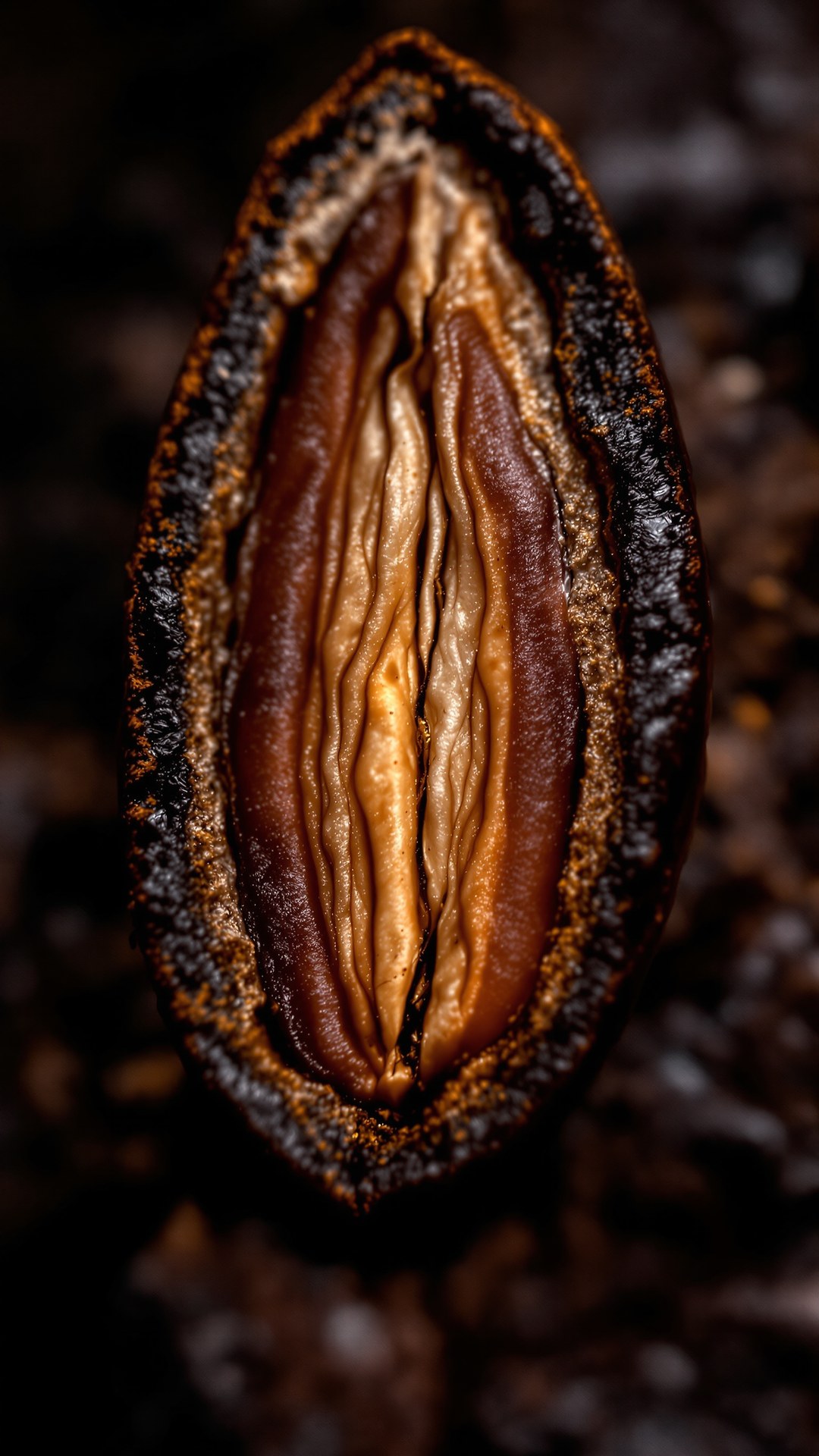
Save this image, post it to your Instagram story or feed, and tag @ootwchocolate. Link in bio.
Frequently Asked Questions
Hear the science, every day.
Every OOTW deep dive — each article narrated, and as a two-host conversation. Press play, or follow the show on your platform of choice.
▸ Follow the show →References
- Smit HJ. Theobromine and the pharmacology of cocoa. Handb Exp Pharmacol. 2011;200:201-234. doi:10.1007/978-3-642-13443-2_7
- Baggott MJ, Childs E, Hart AB, et al. Psychopharmacology of theobromine in healthy volunteers. Psychopharmacology. 2013;228(1):109-118. doi:10.1007/s00213-013-3021-0
- Martínez-Pinilla E, Oñatibia-Astibia A, Franco R. The relevance of theobromine for the beneficial effects of cocoa consumption. Front Pharmacol. 2015;6:30. doi:10.3389/fphar.2015.00030
- Nehlig A. The neuroprotective effects of cocoa flavanol and its influence on cognitive performance. Br J Clin Pharmacol. 2013;75(3):716-727. doi:10.1111/j.1365-2125.2012.04378.x
- Mitchell ES, Slettenaar M, vd Meer N, et al. Differential contributions of theobromine and caffeine on mood, psychomotor performance and blood pressure. Physiol Behav. 2011;104(5):816-822. doi:10.1016/j.physbeh.2011.07.027
- Mumford GK, Evans SM, Kaminski BJ, et al. Discriminative stimulus and subjective effects of theobromine and caffeine in humans. Psychopharmacology. 1994;115(1-2):1-8. doi:10.1007/BF02244743
- Zoumas BL, Kreiser WR, Martin RA. Theobromine and caffeine content of chocolate products. J Food Sci. 1980;45(2):314-316. doi:10.1111/j.1365-2621.1980.tb02603.x
- Rusconi M, Conti A. Theobroma cacao L., the Food of the Gods: a scientific approach beyond myths and claims. Pharmacol Res. 2010;61(1):5-13. doi:10.1016/j.phrs.2009.08.008
- Grassi D, Lippi C, Necozione S, Desideri G, Ferri C. Short-term administration of dark chocolate is followed by a significant increase in insulin sensitivity and a decrease in blood pressure. Am J Clin Nutr. 2005;81(3):611-614. doi:10.1093/ajcn/81.3.611
- Daniells S, Verhagen H, Verschuren WM, et al. Theobromine raises HDL-cholesterol in healthy subjects. Am J Clin Nutr. 2012;95(3):687. doi:10.3945/ajcn.111.027748
- di Tomaso E, Beltramo M, Piomelli D. Brain cannabinoids in chocolate. Nature. 1996;382(6593):677-678. doi:10.1038/382677a0
- Wan Y, Vinson JA, Etherton TD, et al. Effects of cocoa powder and dark chocolate on LDL oxidative susceptibility. Am J Clin Nutr. 2001;74(5):596-602. doi:10.1093/ajcn/74.5.596