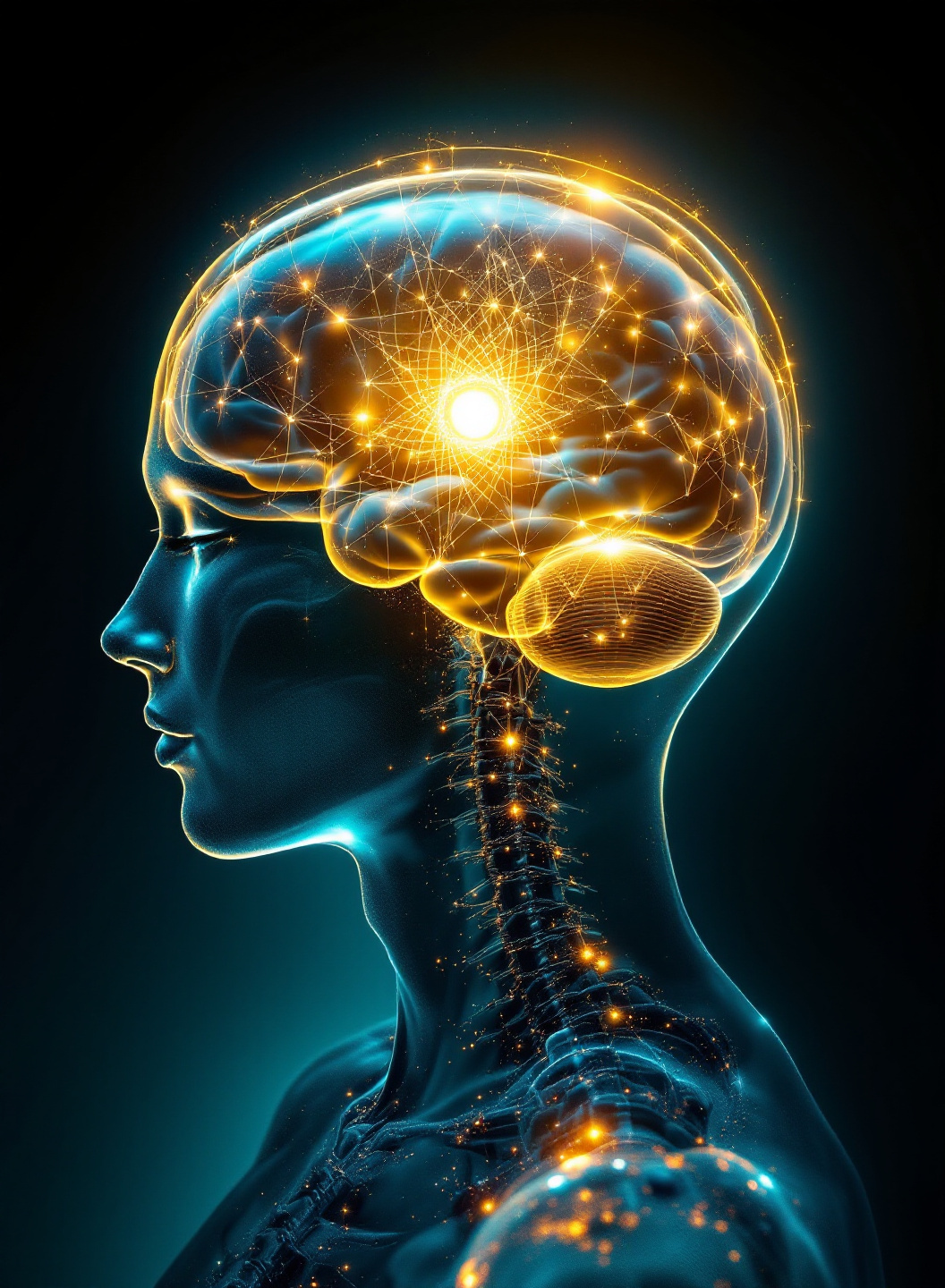
Does the pineal gland make DMT — the “spirit molecule”? The honest answer is a careful yes-and-no. DMT is genuinely endogenous: your body makes it. It has been detected in rat pineal gland microdialysate (Barker et al., 2013), and — more strikingly — the rat brain itself synthesizes and releases DMT at extracellular concentrations comparable to serotonin, using the enzymes AADC and INMT (Dean et al., 2019). But the specific romantic claim — that the pineal floods the brain with psychoactive DMT at birth, in dreams, and at death — is not supported. The adult pineal weighs under 0.2 grams and its main job is making melatonin; there is no evidence it produces psychoactive amounts of DMT, and the concentrations detected in brain are far below a psychedelic dose (Nichols, 2018). A real molecule, a beautiful myth, and an honest middle.
Every field has a story so beautiful that people want it to be true. In psychedelic culture, that story is the pineal gland and the spirit molecule — the idea that a tiny gland at the center of the brain is a kind of spiritual antenna, secreting the most powerful psychedelic known at the great thresholds of life: our first breath, our dreams, and our death. It is an idea that fuses ancient mysticism with modern chemistry, and it is genuinely thrilling. It is also a near-perfect case study in how to hold a wondrous claim honestly — taking seriously what the evidence supports, letting go of what it does not, and finding that the truth is stranger than the myth.
The seat of the soul
The pineal gland has fascinated thinkers for millennia. A pea-sized structure buried near the center of the brain, it is unpaired — a single organ in an otherwise symmetrical brain — which struck the 17th-century philosopher René Descartes as deeply significant. He proposed that this singular gland was the seat of the soul, the meeting point between the immaterial mind and the physical body. Long before him, contemplative traditions across the world had located a “third eye” at roughly the same place, an inner organ of spiritual perception.
Modern science gave the pineal a humbler, though still elegant, job: it is the body’s timekeeper. In response to darkness, it secretes melatonin, the hormone that governs our circadian rhythms and tells the body when it is night. That is its established, essential function. But the gland’s central location and long mystical reputation left it primed for a grander story.
The spirit molecule hypothesis
That story arrived, in its modern form, with the psychiatrist Rick Strassman. In the 1990s he ran the first new human studies of DMT in a generation, and in his 2001 book DMT: The Spirit Molecule he offered a bold and poetic hypothesis: that the pineal gland is the natural source of DMT in the body, releasing it at the most profound moments of existence — at birth, during dreaming, in mystical states, and above all at the moment of death, producing the visions of the dying and the near-death experience.
It is easy to see why the idea took hold. It gave a physical home to the soul’s most extraordinary experiences; it married the mystic’s third eye to the chemist’s molecule; and it suggested that the doorway opened by ayahuasca or a DMT journey was the very same one we will all pass through at the end. Strassman himself was careful to present it as speculation. But in the culture that grew around it, the hypothesis often hardened into stated fact. So what does the evidence actually show?
Precisely-Dosed Psilocybin Mushroom TreatsOOTW Psilocybin Mushroom Treats
Precisely-dosed, lab-tested, quality psilocybin mushroom treats — crafted for daily ritual, neural support, and sustained clarity. Journal readers: 10% off your first order with code JOURNAL10 (applied automatically at checkout).
Claim 10% Off →What is actually true: DMT is endogenous
Here is the part that is real, and remarkable. DMT is a genuine endogenous compound — a molecule your own body manufactures. It has been detected in human blood, urine, and cerebrospinal fluid since the 1960s. The body possesses the enzymes needed to build it: AADC, which is everywhere in the nervous system, and INMT, the methyltransferase that adds the two methyl groups to convert tryptamine into DMT.
And the pineal itself is not innocent of DMT. In a careful 2013 study, Steven Barker, Jimo Borjigin, and colleagues used sensitive mass spectrometry to sample fluid directly from the living rat pineal gland — and detected DMT there, along with its precursors and metabolites, for the first time in pineal microdialysate (Barker et al., 2013). So the pineal can contain DMT. The Strassman hypothesis was not made of nothing.
The bigger, stranger finding: it is the whole brain
But the most important discovery came later, and it reframes the entire story — away from the pineal and toward the brain at large. In 2019, Jon Dean, Jimo Borjigin, and colleagues (with Strassman and Barker among the authors) showed that the rat brain synthesizes and releases DMT well beyond the pineal. They found the two synthesizing enzymes, INMT and AADC, colocalized in brain tissue including the cerebral cortex, and measured extracellular DMT in the cortex of normal, behaving rats at concentrations comparable to those of serotonin and other classic neurotransmitters (Dean et al., 2019). They also reported that DMT levels rose in the brain during experimental cardiac arrest.
Sit with what that means. A psychedelic molecule — the same one at the heart of ayahuasca and the DMT journey — appears to be woven into the ordinary, everyday chemistry of the mammalian cortex, produced and released like a neurotransmitter. This is arguably more astonishing than the pineal myth: not a mystical antenna firing at the thresholds of life, but a hallucinogen quietly present in the fabric of the normal, waking brain.
AI That Understands The MedicineOOTW Spirit Guide
Set. Setting. Dose. Integration. The questions you can’t bring to your doctor — answered by an AI grounded in every peer-reviewed paper, protocol, and ceremony manual. Private, sober, always there.
Talk to the Spirit Guide → A Sacred 5-MeO-DMT Ceremony · MiamiJoin the OOTW Sacrament
The oldest prayer, remembered — the gentle dissolving of the self into light, held in ceremony by a master facilitator. Sit with our community first: a free, live weekly circle on Zoom. No commitment, simply a conversation.
Join the Weekly Circle →The honest correction
And yet the romantic version — the pineal as spirit-molecule gland flooding the mind at birth and death — runs hard into the numbers. The most rigorous public correction came from the medicinal chemist David Nichols, who laid out the arithmetic plainly (Nichols, 2018). The adult human pineal gland weighs less than 0.2 grams, and it is a busy little factory devoted to producing only about 30 micrograms of melatonin per day. A psychoactive dose of DMT, by contrast, is on the order of tens of milligrams — hundreds to thousands of times more, and it must arrive fast and be protected from the enzymes that destroy DMT within minutes.
There is, Nichols noted, no evidence that the human pineal actually produces DMT at all, let alone in such quantities; and the concentrations detected in brain tissue, while real, are minute — far below what could produce a psychedelic effect. The dramatic image of a pineal “DMT flood” at death remains an untested hypothesis, and there are other, well-supported explanations for the altered states of near-death and extreme stress that do not require it. The molecule is real. The specific pineal-spirit story, as usually told, is not established — and on the numbers, is unlikely.
So what is endogenous DMT for?
This leaves the genuinely open and fascinating question. If the brain makes DMT as a matter of course, at low levels, what is it doing there? Honestly, no one yet knows (Barker, 2018). It may act as a subtle neuromodulator. It binds the sigma-1 receptor, a stress-and-resilience protein, raising the possibility of a neuroprotective role. It might shape mood, perception, or the response to extreme physiological stress in ways we have not yet measured. These are live hypotheses, not conclusions — which is exactly what makes endogenous DMT one of the most intriguing loose threads in all of neuroscience. It connects naturally to our pieces on DMT and the near-death experience and on the dreaming brain, where the same questions recur.
Precisely-Dosed Psilocybin Mushroom TreatsBring the Science Home
Every article here is the why. OOTW’s precisely-dosed, lab-tested, quality psilocybin mushroom treats are the how — crafted to carry the medicine into your daily practice. Journal readers: 10% off your first order with code JOURNAL10 (applied automatically at checkout).
Claim 10% Off →The honest cautions
This topic demands unusual care, because it sits exactly where evidence and belief blur. To be precise: DMT being endogenous is settled; its detection in the pineal and its synthesis in the brain are real and published; but the claim that the pineal releases psychoactive DMT at birth, in dreams, and at death is unproven and, by the physical numbers, improbable. Holding all three of those statements at once is the honest position. It is a disservice both to the science and to the wonder to collapse them into a slogan.
Much of the direct measurement is in rodents, and what endogenous DMT does in the human brain is genuinely unknown. Nothing here suggests that meditation, breathwork, or any practice “activates the pineal” to release a psychedelic — there is no evidence for that. And the usual cautions apply in full: DMT and ayahuasca are powerful controlled substances, are unsafe for some people, and nothing in this article is a recommendation to use them.
Stranger than the myth
The pineal gland is not, as far as we can tell, a soul-gland firing the spirit molecule at the edges of life. Descartes was wrong about the seat of the soul, and Strassman’s most romantic reading is probably wrong about the pineal. But the truth the science actually found is, if anything, more beautiful than the myth it replaced. It is not that a mystical gland opens a door at the moment of death. It is that a psychedelic molecule — a maker of visions — may be quietly present in the ordinary chemistry of every waking mind, its purpose still unknown, hiding in plain sight in the most familiar organ we have. The mystery did not vanish when the myth was corrected. It simply moved — from a single gland to the whole of the brain, and from a story we told to a question we have not yet answered.
OOTW Journal is educational and does not provide medical advice. DMT is a well-established endogenous compound; its detection in rat pineal microdialysate (Barker et al., 2013) and its synthesis and release in the mammalian brain at serotonin-like concentrations (Dean et al., 2019) are real, published findings. However, the claim that the pineal gland releases psychoactive DMT at birth, during dreams, or at death is unproven and, given the gland's tiny size and the large doses required, physically implausible (Nichols, 2018). Much of this work is in rodents, the function of endogenous DMT is unknown, and DMT is a controlled substance. Nothing here is a recommendation to use it.