Something is quietly on fire inside millions of brains right now. Not metaphorically — literally. The same immune machinery that rushes to a sprained ankle sends sentinel cells into neural tissue, flooding synapses with signalling molecules that reshape thought, mood, and identity. We call this neuroinflammation, and emerging science suggests it may be one of the most underappreciated drivers of modern mental illness.
Psilocybin — the compound that has captivated researchers for its rapid, durable antidepressant effects — appears to have a direct and sophisticated relationship with this inflammatory process. Understanding that relationship may unlock a new framework not just for treating depression, but for understanding why the mind breaks down in the first place.
What Neuroinflammation Actually Means
The brain was once considered an immunologically privileged site, sealed behind the blood-brain barrier and operating outside normal immune surveillance. That story has been completely revised. The brain hosts its own resident immune cells — microglia — that continuously monitor neural tissue, pruning synapses, clearing debris, and responding to injury or infection.
When these cells become chronically activated — whether by systemic inflammation, stress hormones, gut dysbiosis, or psychological trauma — they shift from protective pruners into inflammatory emitters. They release cytokines like interleukin-6 (IL-6), tumour necrosis factor-alpha (TNF-α), and interleukin-1β (IL-1β), which alter neurotransmitter synthesis, disrupt neuroplasticity, and directly suppress mood-regulating circuits.
The IDO1 Pathway: Where Immunity Hijacks Your Mind
One of the most significant pathways connecting inflammation to depression runs through an enzyme called indoleamine-2,3-dioxygenase 1, or IDO1. When the immune system activates IDO1, it diverts tryptophan — the amino acid precursor to serotonin — away from serotonin synthesis and toward the kynurenine pathway. The result is reduced serotonin, elevated kynurenic acid and quinolinic acid, and downstream excitotoxic damage to hippocampal neurons.
Mechanism Deep-Dive: IDO1 activation is the immune system’s “tryptophan theft.” During chronic inflammation, IDO1 converts up to 95% of available tryptophan into kynurenine metabolites instead of serotonin. Quinolinic acid — one of those metabolites — is a direct NMDA receptor agonist that triggers excitotoxic neuronal death in the hippocampus. This creates a self-amplifying loop: inflammation depletes serotonin, damages neurons, and further compromises the brain’s ability to regulate its own stress response. (Köhler et al., 2014)
This pathway helps explain why SSRIs often fail in inflammatory-subtype depression: if the upstream problem is tryptophan theft by IDO1, blocking reuptake of a neurotransmitter that was never synthesised in the first place provides limited benefit.
Precisely-Dosed Psilocybin Mushroom TreatsOOTW Psilocybin Mushroom Treats
Precisely-dosed, lab-tested, quality psilocybin mushroom treats — crafted for daily ritual, neural support, and sustained clarity. Journal readers: 10% off your first order with code JOURNAL10 (applied automatically at checkout).
Claim 10% Off →Microglia Under the Microscope
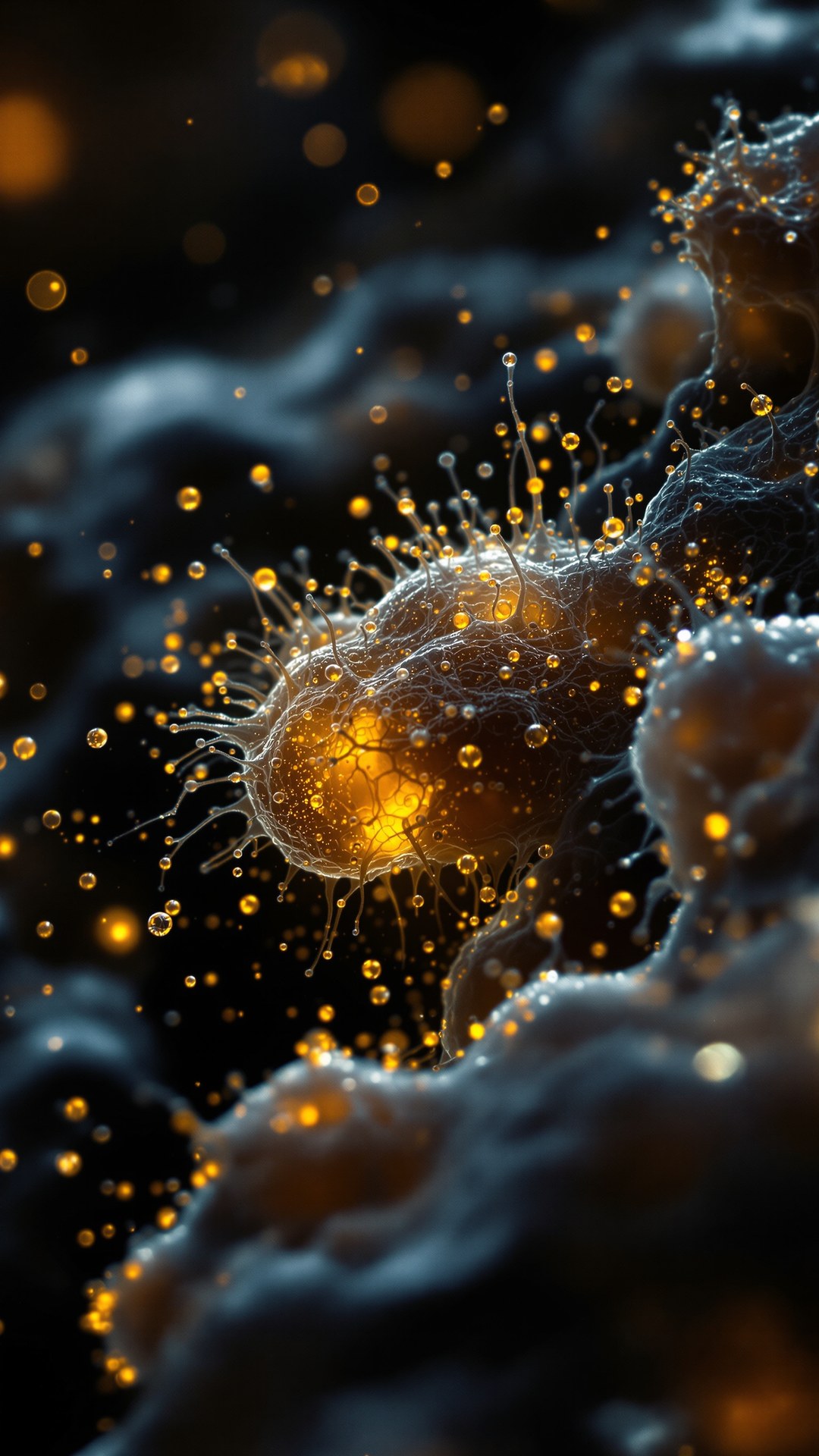
Microglia are the brain’s immune sentinels — constituting roughly 10–15% of all brain cells and replacing themselves continuously through the adult lifespan. In their ramified, resting state they extend long processes that sample the local environment, clearing dead cells and modulating synapse strength. In their activated, amoeboid state they contract, release inflammatory cytokines, and can begin inappropriately phagocytosing healthy synapses.
Post-mortem studies of individuals who died by suicide and had severe depression show dramatically elevated microglial density and activation markers in prefrontal cortex, anterior cingulate cortex, and hippocampus — precisely the regions most implicated in mood, self-referential processing, and memory consolidation. (Yirmiya et al., 2015)
Three Inflammatory Pathways to the Depressed Brain
Pathway 1 — Cytokine-Induced Sickness Behaviour: Pro-inflammatory cytokines (IL-6, TNF-α, IL-1β) cross the blood-brain barrier and directly suppress dopaminergic reward circuits, creating motivational anhedonia that mimics clinical depression.
Pathway 2 — Glucocorticoid Resistance: Chronic inflammation interferes with glucocorticoid receptors, impairing the brain’s ability to terminate its own stress response — HPA axis dysregulation at the cellular level.
Pathway 3 — Reduced Neurotrophic Support: Inflammatory cytokines suppress BDNF expression, starving prefrontal and hippocampal neurons of the growth factor required for synaptic plasticity and the structural changes associated with antidepressant response. (Dantzer, 2008; Carhart-Harris, 2016)
How Psilocybin Interfaces With Inflammation
Psilocybin’s pharmacology centres on 5-HT2A receptor agonism — binding to serotonin receptors distributed densely across cortical pyramidal neurons. But this interaction cascades into effects far beyond serotonergic modulation. 5-HT2A activation in microglia and astrocytes directly suppresses the release of TNF-α and IL-6. It shifts activated microglia from a pro-inflammatory M1 phenotype toward an anti-inflammatory M2 phenotype. And it upregulates BDNF expression in prefrontal tissue, counteracting the neurotrophic suppression that cytokines impose.
In human trials, psilocybin-assisted therapy has been shown to reduce scores on inflammatory biomarker panels alongside its antidepressant effects — though disentangling direct anti-inflammatory action from downstream effects of reduced psychological distress remains an active area of research. (Martín & Ramos, 2021)
AI That Understands The MedicineOOTW Spirit Guide
Set. Setting. Dose. Integration. The questions you can't bring to your doctor — answered by an AI grounded in every peer-reviewed paper, protocol, and ceremony manual. Private, sober, always there.
Talk to the Spirit Guide → A Sacred 5-MeO-DMT Ceremony · MiamiJoin the OOTW Sacrament
The oldest prayer, remembered — the gentle dissolving of the self into light, held in ceremony by a master facilitator. Sit with our community first: a free, live weekly circle on Zoom. No commitment, simply a conversation.
Join the Weekly Circle →The Gut–Brain Inflammatory Axis
No discussion of neuroinflammation is complete without acknowledging the gut microbiome. The enteric nervous system — housing more neurons than the spinal cord — maintains a constant bidirectional dialogue with the brain via the vagus nerve, the immune system, and the tryptophan-serotonin pathway. Gut dysbiosis increases intestinal permeability, allowing bacterial lipopolysaccharides (LPS) into the bloodstream where they trigger systemic inflammation that reaches the brain.
Emerging data suggests psilocybin may also influence the gut microbiome, potentially shifting microbial communities toward compositions associated with lower systemic inflammation — though this research is still in early stages. The bidirectional nature of this axis means that addressing neuroinflammation comprehensively requires attending to gut ecology as much as brain chemistry. (Bhatt et al., 2020)
Anti-Inflammatory Neurological Integration
Psilocybin does not act in a vacuum. The evidence base for lasting neuroinflammation reduction increasingly points toward a multi-modal approach — one where psychedelic therapy is embedded within a lifestyle framework that continuously dials down the inflammatory signal.
Coherence Breathing
Slow diaphragmatic breathing at 5–6 breaths/min maximally activates the vagus nerve, driving parasympathetic tone and suppressing the sympathetic-inflammatory cascade. HRV increases; IL-6 decreases.
Cold Exposure
Brief cold water immersion (10–15℃, 2–4 min) triggers a norepinephrine surge — the body’s most potent natural anti-inflammatory signal — reducing TNF-α and activating brown adipose tissue.
Sleep Architecture
Slow-wave sleep is the brain’s primary glymphatic clearance window. Deep sleep flushes inflammatory debris including amyloid-beta and tau. Even one night of sleep deprivation elevates CRP measurably.
Dietary Restructuring
Elimination of ultra-processed foods, refined seed oils, and high-glycaemic carbohydrates — combined with increased omega-3s and polyphenols — directly reduces systemic LPS and TNF-α levels.
A New Mechanistic Framework for Psychedelic Therapy
The serotonergic model of psilocybin’s effects — while accurate — is increasingly seen as incomplete. A more comprehensive framework integrates: (1) direct 5-HT2A agonism on neurons and immune cells, (2) BDNF-mediated neuroplasticity that creates a window for therapeutic relearning, (3) microglial phenotype modulation shifting the inflammatory tone of prefrontal circuits, and (4) IDO1 pathway normalisation restoring tryptophan availability for serotonin synthesis.
This framework suggests that psilocybin’s most lasting effects may not be the acute mystical experience — powerful as that is — but a quieting of the chronic neural immune activation that keeps the brain locked in depressive states. The experience may be the catalyst; the anti-inflammatory action may be the mechanism of sustained relief. (Howren et al., 2009; Carhart-Harris, 2016)
For individuals navigating their own mental health, this reframes recovery as not just psychological insight — but biological restoration.
Precisely-Dosed Psilocybin Mushroom TreatsBring the Science Home
Every article here is the why. OOTW's ceremony-ready mushroom confectioneries are the how — precision-crafted to carry the medicine into your daily practice. Journal readers: 10% off your first order with code JOURNAL10 (applied automatically at checkout).
Claim 10% Off →