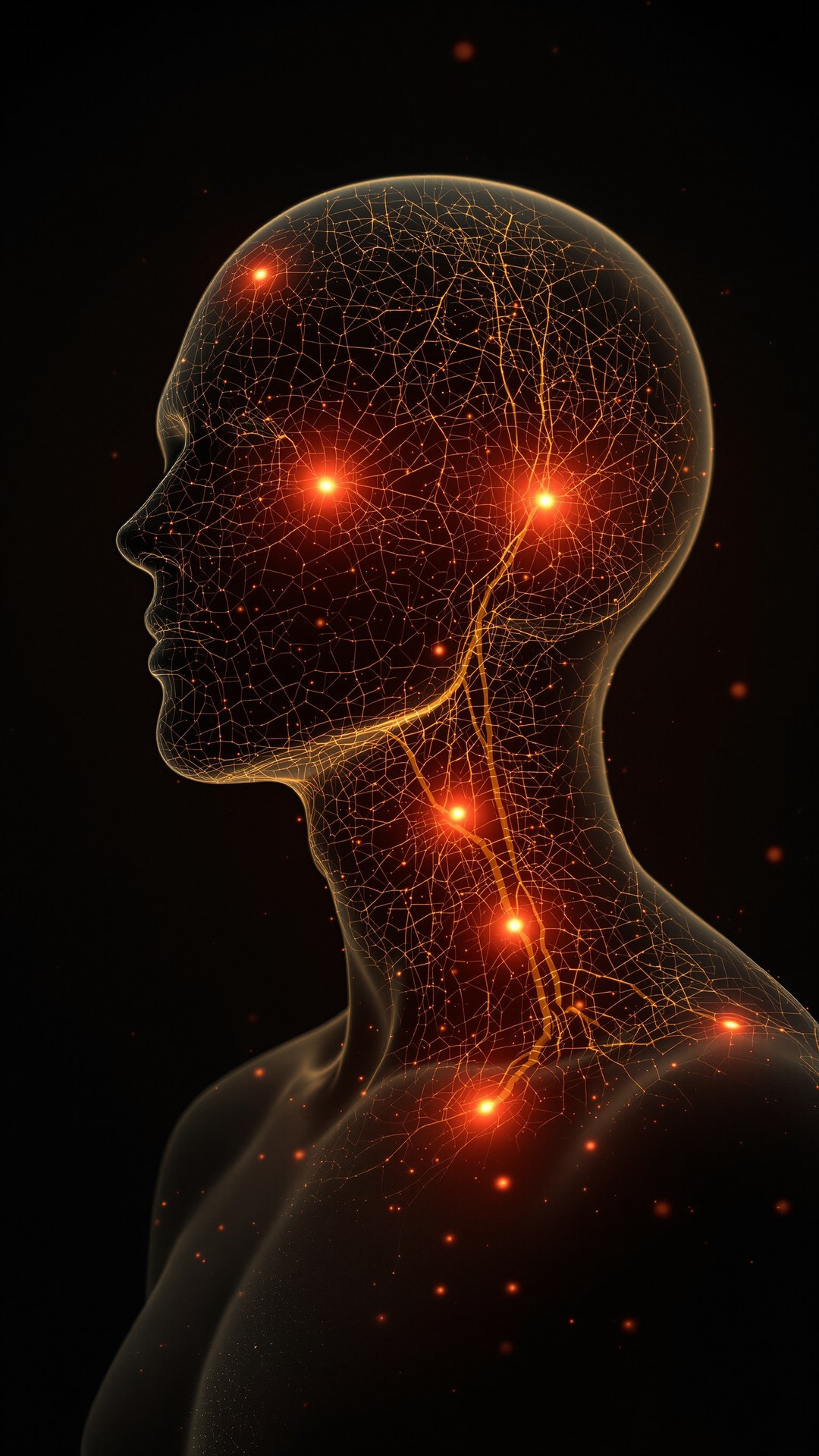
More than 50 million Americans live with chronic pain. Not the acute pain of injury — which serves a biological purpose and resolves — but persistent, years-long pain that has outlasted its original cause and now exists as a disease in its own right. Of those 50 million, roughly 20 million have high-impact chronic pain: pain that limits daily activities, causes disability, and degrades quality of life to a degree that makes the word "living" feel generous. The United States spends over $600 billion annually on chronic pain — more than diabetes, heart disease, and cancer combined. Opioids, the dominant pharmacological response for the past three decades, have produced one of the worst addiction epidemics in recorded history while failing to cure the underlying disease.
The reason opioids cannot cure chronic pain is the same reason they cannot cure addiction: they are targeting the wrong problem. The revolution in pain neuroscience over the past two decades has revealed that chronic pain is not a peripheral nerve problem. It is a brain reorganization disease — and the brain region most central to that reorganization is the default mode network.
What Chronic Pain Actually Is: The Brain Reorganization Model
The traditional model of pain is simple: tissue damage sends nociceptive signals via peripheral nerves to the spinal cord and up to the brain, where the signals are interpreted as pain. Remove the damage, remove the signal, remove the pain. This model is accurate for acute pain. It is fundamentally wrong for chronic pain.
A. Vania Apkarian at Northwestern University has spent three decades demonstrating what he calls the "transition to chronic pain" — a process that occurs, not in the damaged tissue, but in the brain. When acute pain is not resolved within the expected timeframe, the brain undergoes a structural reorganization: gray matter density shifts from sensory processing regions (somatosensory cortex, thalamus) toward emotional and self-referential processing regions — primarily the prefrontal cortex and the anterior cingulate cortex, both of which are anchor nodes of the default mode network.
This reorganization is not merely descriptive. Apkarian's longitudinal studies showed that whether a patient with back pain at 3 months will still have pain at 12 months can be predicted with ~85% accuracy by measuring the degree of prefrontal-DMN engagement in their early pain-processing brain activity. Chronic pain is not an injury that failed to heal. It is a learned brain state — a new attractor that the DMN has encoded as a stable configuration of "this is how I experience my body."
The Transition to Chronic Pain — Apkarian et al. (2004, 2011) showed that patients who develop chronic back pain show measurable changes in prefrontal cortex gray matter density within months of injury onset. These changes correlate with DMN engagement and with catastrophizing scores — not with the severity of the original injury. The pain persists because the brain reorganized around it, not because the original tissue damage was more severe.
Central Sensitization: The Amplifier That Won't Turn Off
The clinical manifestation of this brain reorganization is called central sensitization: a state in which the central nervous system has become hypersensitive, amplifying pain signals far beyond what the peripheral nociceptors are actually sending. A patient with central sensitization experiences pain from light touch (allodynia), exaggerated pain from genuinely painful stimuli (hyperalgesia), and often pain in areas of the body that were never injured at all (referred central pain).
Central sensitization was once thought to be a spinal cord phenomenon — sensitized dorsal horn neurons lowering the threshold for pain transmission. This is real and important. But neuroimaging has revealed that central sensitization is primarily a brain phenomenon, driven by altered dynamics in the DMN and its interactions with the insula (interoceptive body monitoring), the anterior cingulate (emotional pain evaluation), and the prefrontal cortex (pain meaning-making and anticipatory processing).
When the DMN is in a chronic pain configuration, it engages in a continuous low-level simulation of pain that persists independently of peripheral input. Patients often describe "the pain being there before they even move" — and neuroimaging confirms this: DMN activity in chronic pain states is elevated even at rest, anticipating and pre-loading pain experience before any nociceptive signal arrives. The brain is not waiting to receive pain. It is generating it.
The Pain Identity: How the DMN Sustains Suffering
The default mode network's role in chronic pain extends beyond signal amplification. The DMN is the brain's self-modeling system — responsible for maintaining a continuous, coherent narrative of who you are and how your body functions. In chronic pain, this self-model incorporates pain as a permanent feature. "I am a person who has chronic pain" becomes, over time, an identity structure maintained by the DMN with the same rigidity it uses to maintain any deeply held self-belief.
This has measurable consequences. Pain catastrophizing — the tendency to ruminate on pain, magnify its threat, and feel helpless about it — is one of the strongest predictors of chronic pain outcomes across every pain condition studied. Catastrophizing is a DMN phenomenon: it is the default mode network running self-referential simulations about pain that amplify its emotional significance. Brain imaging studies by Tor Wager at Columbia and by M. Catherine Bushnell at NIH show that catastrophizing is associated with increased activity in exactly the prefrontal-DMN nodes that Apkarian identified as the signature of chronification.
The pain identity also explains why cognitive-behavioral therapy reduces chronic pain through an indirect route — not by teaching patients to relax muscles or reduce inflammation, but by challenging the cognitive structures the DMN uses to maintain its pain-saturated self-model. CBT works on chronic pain to the extent that it modifies DMN-driven catastrophizing narratives. It is slow, effortful, and requires significant therapist time because it is trying to update a well-consolidated DMN belief structure one piece at a time.
Psilocybin may offer a different approach: not updating the DMN's pain identity piece by piece, but temporarily dissolving the architecture that maintains it — creating a window in which a new self-model, one that does not center pain as its organizing feature, can be structurally encoded.
Precisely-Dosed Psilocybin Mushroom TreatsOOTW Psilocybin Mushroom Treats
Precisely-dosed, lab-tested, quality psilocybin mushroom treats — crafted for daily ritual, neural support, and sustained clarity. Journal readers: 10% off your first order with code JOURNAL10 (applied automatically at checkout).
Claim 10% Off →Psilocybin's Mechanism in the Context of Pain
Psilocybin, after conversion to psilocin, acts as a partial agonist at 5-HT2A serotonin receptors. These receptors are densely expressed in the cortical layer V pyramidal neurons of the medial prefrontal cortex and posterior cingulate cortex — the anchor nodes of the DMN and the same nodes that are hyperactive in chronic pain states.
5-HT2A activation in these regions disrupts the synchronized oscillations that allow the DMN to function as a unified, self-sustaining network. Under psilocybin, fMRI studies by Robin Carhart-Harris and colleagues at Imperial College London show that DMN internal connectivity drops sharply, BOLD signal in the mPFC and PCC decreases, and the pattern of brain-wide functional connectivity becomes more variable and exploratory — what Carhart-Harris calls "neural entropy," a state of increased information-processing flexibility.
For chronic pain specifically, this DMN disruption represents a direct hit on the neural architecture sustaining central sensitization. The prefrontal pain-anticipation circuits that fire before peripheral signals arrive, the cingulate catastrophizing loops that amplify pain's emotional weight, the default self-model that has incorporated pain as a permanent feature — all of these are DMN processes. Psilocybin's 5-HT2A agonism disrupts all of them simultaneously, in a way that no existing analgesic addresses.
The REBUS Model and Pain — Carhart-Harris and Friston's 2019 REBUS framework proposes that psilocybin reduces the "precision weighting" of high-level predictions, temporarily allowing bottom-up sensory information to compete with top-down expectations. In chronic pain, the brain has assigned extreme precision to its pain predictions — it expects pain, generates pain, confirms pain. REBUS suggests psilocybin could reduce that expectation precision, allowing the nervous system to re-evaluate whether the pain signal actually needs to be amplified. This is the theoretical mechanism for lasting post-session analgesia.
Neuroinflammation: The Pain-Sustaining Fire
The chronic pain-brain reorganization connection has a third component beyond DMN dynamics and central sensitization: neuroinflammation. Microglial activation — the brain's resident immune response — is now understood to be a critical driver of central sensitization and a mechanism by which peripheral tissue damage becomes brain-based chronic pain.
When peripheral inflammation persists (as in arthritis, fibromyalgia, or inflammatory bowel disease), pro-inflammatory cytokines including interleukin-6 (IL-6), tumor necrosis factor-alpha (TNF-α), and interleukin-1β (IL-1β) cross the blood-brain barrier and activate microglia. Activated microglia in the spinal cord, thalamus, and prefrontal cortex lower pain thresholds, amplify synaptic transmission in nociceptive circuits, and release additional pro-inflammatory mediators in a self-sustaining loop. This is why chronic inflammatory conditions are so often accompanied by central sensitization that far outlasts the inflammation itself — the neuroinflammatory loop has become autonomous.
Psilocybin has demonstrated anti-neuroinflammatory properties in multiple preclinical studies. Its 5-HT2A agonism in microglial cells shifts their activation state from the pro-inflammatory M1 phenotype (which amplifies pain) toward the anti-inflammatory M2 phenotype (which promotes tissue repair and resolution). A 2020 study by Bhatt and colleagues showed psilocybin reduced microglial density in pain-associated brain regions and decreased circulating IL-6 and TNF-α levels in a rodent model of neuropathic pain. The anti-neuroinflammatory mechanism is separate from — and additive to — the DMN disruption mechanism, suggesting psilocybin may address chronic pain at multiple levels of pathophysiology simultaneously.
The Cluster Headache Evidence: A Paradigm-Disrupting Signal
Cluster headache is known colloquially as "the suicide headache" — a description that is clinically accurate and not hyperbolic. Attacks involve one-sided orbital or periorbital pain of severity rated 9–10 on the numerical pain scale, lasting 15 minutes to 3 hours, occurring up to 8 times per day during active cluster periods. During episodic cluster periods, patients describe the experience as the worst pain a human being can experience. Suicidality during active cluster periods is significantly elevated. Standard treatments — high-flow oxygen, sumatriptan injections, verapamil for prevention — provide inadequate or partial relief in a substantial proportion of patients.
In the early 2000s, cluster headache patients began self-reporting that small doses of psilocybin mushrooms — below the threshold for significant psychedelic effects — appeared to break their cluster cycles, extending the remission period between episodes from the typical weeks to months or years. This was not a placebo-susceptible population: cluster headache patients are among the most pain-experienced, skeptical, and medically sophisticated patient groups, and many had exhausted all standard treatments. The effect they described was too specific and too consistent to dismiss.
Emmanuelle Schindler and colleagues at Yale formalized this into the first clinical study of psilocybin for cluster headache, published in Neurology in 2021. The randomized, double-blind, placebo-controlled crossover trial enrolled 10 participants with episodic or chronic cluster headache. Participants received either psilocybin (0.143mg/kg, approximately 10mg for a 70kg adult) or niacin placebo across multiple sessions. The results were striking: psilocybin produced significant reductions in attack frequency, with 50% or greater reduction in attacks in a majority of the psilocybin arm. Importantly, the effects persisted for weeks beyond the acute drug period — consistent with the neuroplastic mechanism rather than direct pharmacological action during the drug window.
The dose used in the Yale study — approximately 10mg — is notably lower than the doses used in depression and addiction trials (25–40mg). This has significant implications: the analgesic mechanism may not require a full mystical-intensity psychedelic experience. This would remove a major barrier to clinical deployment, as the requirement for carefully supervised, full-intensity psychedelic sessions significantly limits scalability. If sub-psychedelic doses can break cluster cycles, the therapeutic profile becomes considerably more accessible.
Fibromyalgia and Central Sensitization Disorders
Fibromyalgia is the paradigmatic central sensitization disorder: widespread musculoskeletal pain with no identifiable peripheral pathology, amplified pain sensitivity throughout the body, and chronic fatigue, cognitive impairment ("fibro fog"), and sleep disruption as companion symptoms. It affects an estimated 4 million Americans and is notoriously treatment-resistant. The FDA-approved medications for fibromyalgia — duloxetine, milnacipran, pregabalin — provide meaningful relief for a minority of patients and are poorly tolerated by many.
The neuroimaging signature of fibromyalgia is strikingly consistent with the chronic pain-DMN model: hyperconnectivity within the DMN, increased activation of the insula and anterior cingulate in response to non-painful stimuli, and reduced gray matter in the dorsolateral prefrontal cortex — which is responsible for top-down modulation of the DMN's pain amplification. Fibromyalgia may be the purest form of DMN-driven pain pathology available to study.
Preliminary reports from case series and small observational studies suggest that psilocybin produces significant reductions in fibromyalgia pain scores, with patients describing a qualitative shift in their relationship to the pain — not its absence, but a reduced emotional weight and decreased catastrophizing that persists for weeks to months. A formal clinical trial at the University of Wisconsin-Madison began enrollment in 2024, representing the first randomized trial of psilocybin specifically for a central sensitization disorder.
AI That Understands The MedicineOOTW Spirit Guide
Set. Setting. Dose. Integration. The questions you can't bring to your doctor — answered by an AI grounded in every peer-reviewed paper, protocol, and ceremony manual. Private, sober, always there.
Talk to the Spirit Guide → A Sacred 5-MeO-DMT Ceremony · MiamiJoin the OOTW Sacrament
The oldest prayer, remembered — the gentle dissolving of the self into light, held in ceremony by a master facilitator. Sit with our community first: a free, live weekly circle on Zoom. No commitment, simply a conversation.
Join the Weekly Circle →The Neuroplasticity Window in Pain Rehabilitation
The connection between psilocybin's neuroplastic effects and chronic pain treatment has a practical implication beyond the acute psychedelic experience: the post-session neuroplasticity window.
Shao et al. (2021) demonstrated that a single psilocybin dose increases dendritic spine density by approximately 10% in prefrontal cortical neurons within 24 hours, with the new spines persisting for at least one month. For chronic pain, this structural enhancement has specific relevance: the dorsolateral prefrontal cortex — which is atrophied in chronic pain states — is responsible for the top-down modulation that prevents the DMN from running unchecked pain amplification. When the dPFC is functioning optimally, it can impose regulatory control over the anterior cingulate's catastrophizing circuits and the DMN's pain identity processing. When it is atrophied, as in chronic pain, that regulatory capacity is reduced — and the DMN's pain amplification runs without adequate braking.
Psilocybin-induced dendritic spine growth in the prefrontal cortex may directly restore this regulatory capacity. The implication is that psilocybin-assisted therapy for chronic pain should be followed by intensive pain rehabilitation — physical therapy, graded exercise, CBT for pain, mindfulness-based stress reduction — during the days to weeks when prefrontal neuroplasticity is maximal. The drug creates the biological conditions for the rehabilitation to work at the structural level. The rehabilitation fills the new synaptic capacity with adaptive pain coping programs rather than maladaptive ones.
Opioids vs. Psilocybin: A Mechanistic Contrast
The pharmacological contrast between opioids and psilocybin in chronic pain is not a matter of one being better or worse — they operate on entirely different systems and likely address different aspects of pain pathology. Understanding this contrast clarifies both why opioids fail as long-term chronic pain treatments and where psilocybin's specific value might lie.
Opioids act on mu-opioid receptors throughout the nervous system, reducing the transmission of nociceptive signals at the spinal cord level and activating descending pain inhibitory pathways from the periaqueductal gray. They are highly effective for acute pain, cancer pain, and end-of-life pain — conditions where reducing the intensity of pain signaling is the primary therapeutic goal. They are poorly suited for central sensitization disorders because central sensitization is not primarily a signal-intensity problem. It is a signal-amplification and signal-attribution problem, driven by DMN dynamics that mu-opioid receptor stimulation does not address.
Long-term opioid use additionally produces opioid-induced hyperalgesia (OIH): a paradoxical increase in pain sensitivity driven by neuroadaptations to chronic mu-opioid receptor stimulation. The glutamatergic NMDA receptor upregulation and descending pain facilitation pathways activated by long-term opioid exposure effectively worsen central sensitization. This is why chronic opioid patients often require escalating doses for the same pain relief — and why a subset experience more pain on opioids than they would without them.
Psilocybin's mechanism is orthogonal to opioids. It acts on serotonin 5-HT2A receptors. It does not activate mu-opioid receptors. It does not produce tolerance in the neurobiological sense. It does not produce opioid-induced hyperalgesia. And its mechanism — DMN disruption, reduction of pain identity, neuroplastic restructuring of prefrontal pain regulation, anti-neuroinflammatory effects — addresses the specific pathophysiology that opioids leave untouched.
Combination Potential — Because psilocybin and opioids act on entirely different receptor systems, they are not mechanistically redundant. A theoretical combination protocol might use opioids for acute pain management during a chronic pain patient's most severe flares, while psilocybin-assisted therapy addresses the underlying central sensitization and DMN dysregulation over a longer timeframe. Whether this combination is safe, tolerable, or synergistic is an open clinical question — no controlled studies have examined it directly.
What the Evidence Cannot Yet Tell Us
The psilocybin chronic pain data is promising but early. The Yale cluster headache study had 10 participants. The fibromyalgia observational data is not yet from randomized trials. The mechanistic model — compelling as it is — has not been directly tested in clinical pain populations with the neuroimaging tools that would confirm or refute the DMN hypothesis in these specific conditions.
Key open questions include: What dose is optimal for different pain conditions? Does sub-psychedelic dosing achieve meaningful analgesic effects, or is some degree of psychedelic experience required for durable pain relief? How many sessions are needed, and how frequently? Are certain pain conditions — those with strong central sensitization components, like fibromyalgia and cluster headache — more responsive than conditions with significant peripheral pathology (rheumatoid arthritis, neuropathic pain from nerve damage)?
The integration question is also unresolved in chronic pain in a way it is not in addiction. In addiction and depression, psilocybin-assisted therapy has a clear integration target: the patient uses the neuroplasticity window to consolidate new behavioral or cognitive patterns. In chronic pain, the integration target is less clearly defined. Is it pain catastrophizing reduction? Physical rehabilitation and graded exercise? Mindfulness practice? The field has not yet identified the optimal therapeutic container for psilocybin in chronic pain — which matters enormously for outcomes, given the evidence from depression and addiction that integration quality strongly predicts durability of benefit.
The Long Tail: Migraine, Neuropathic Pain, and What's Coming
Beyond cluster headache and fibromyalgia, the preliminary psilocybin pain data extends to several other conditions. In migraine — affecting 40 million Americans, with 12% of the population experiencing them regularly — Schindler's Yale group published a 2020 pilot study finding that two doses of psilocybin (0.5mg/kg and 0.143mg/kg) significantly reduced the frequency of migraine headaches over the two-week observation period following treatment. A follow-up observational study found patients reporting migraine frequency reductions of 50–80% for weeks to months after a single session.
In neuropathic pain — pain arising from nerve damage, as in diabetic neuropathy, post-herpetic neuralgia, and chemotherapy-induced peripheral neuropathy — the evidence is primarily preclinical but mechanistically compelling. Rodent models of neuropathic pain show that psilocybin reduces allodynia and hyperalgesia through a combination of 5-HT2A-mediated DMN disruption and anti-neuroinflammatory microglial modulation. Human neuropathic pain trials are in development at Johns Hopkins and UCSF.
The most significant upcoming development may be the broader framework shift: as the chronic pain field increasingly adopts the central sensitization and DMN-reorganization model as its primary explanatory paradigm, psilocybin's unique profile — the only pharmacological agent that directly disrupts DMN dynamics, reduces neuroinflammation, and produces rapid lasting neuroplasticity — positions it as a conceptually indispensable tool. The question is no longer whether psilocybin has analgesic potential. The question is which pain conditions it will address most powerfully, and how to design the therapeutic context that allows that potential to translate into durable patient outcomes.
Precisely-Dosed Psilocybin Mushroom TreatsBring the Science Home
Every article here is the why. OOTW's ceremony-ready mushroom confectioneries are the how — precision-crafted to carry the medicine into your daily practice. Journal readers: 10% off your first order with code JOURNAL10 (applied automatically at checkout).
Claim 10% Off →