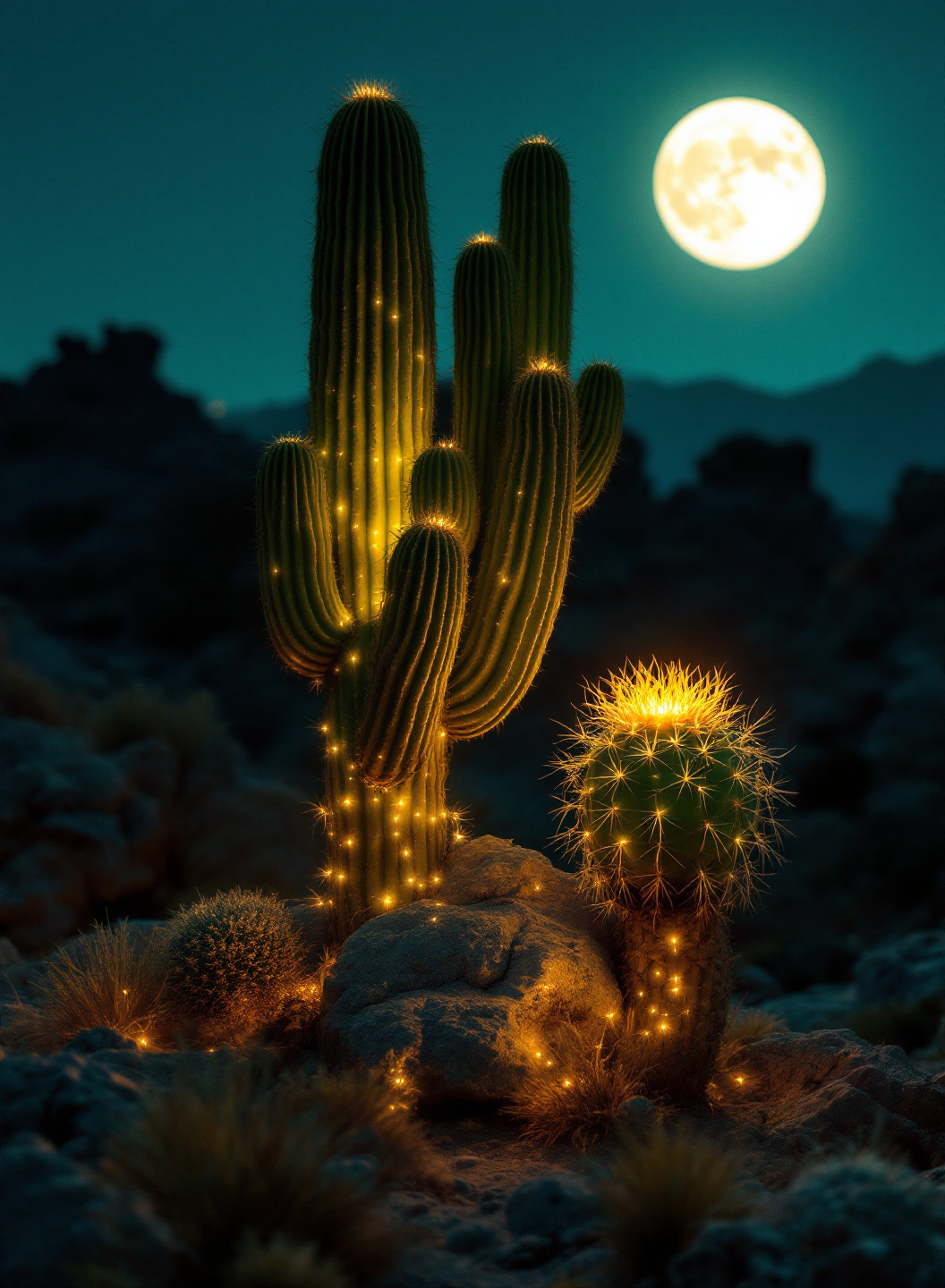
What is mescaline, and how is it different from other psychedelics? Mescaline is the psychoactive molecule in the peyote cactus (Lophophora williamsii) of North America and the San Pedro cactus (Trichocereus / Echinopsis pachanoi) of the Andes. It is the oldest psychedelic on the archaeological record: peyote buttons recovered from a Texas cave contain mescaline and radiocarbon-date to roughly 5,700 years ago (El-Seedi et al., 2005). Chemically it is unusual: not a tryptamine like psilocybin, LSD, or DMT, but a phenethylamine — yet it produces classic psychedelic effects because it, too, is an agonist at the 5-HT2A serotonin receptor (Nichols, 2016). Its signature is time: a plasma half-life around 3.5 hours and a subjective experience that lengthens with dose, from about 6 up to 14 hours (Ley et al., 2024). Peyote is a slow-growing, threatened plant sacred to Indigenous peoples; mescaline is a controlled substance.
Every psychedelic has an origin story, but only one can claim to be the first. Before the tryptamines that dominate the modern conversation — the psilocybin of mushrooms, the LSD of the laboratory, the DMT of ayahuasca — there was a molecule growing quietly inside two humble desert cacti, one hugging the ground in the north and one standing tall in the south. That molecule is mescaline, and the record of human beings using it stretches back further than writing, further than the wheel, into a past so deep it makes every other psychedelic look like a recent arrival.
The oldest medicine
In the 1930s, archaeologists working the dry caves along the Rio Grande in southern Texas recovered small, dried, button-like objects — the desiccated crowns of peyote, Lophophora williamsii. Decades later, a team took two of these “buttons” from museum collections and subjected them to modern analysis. Radiocarbon dating placed them in the window of roughly 3780 to 3660 BC, and chemical analysis found that they still contained mescaline as their major alkaloid. That makes them, in the authors’ words, the oldest plant drug ever to yield a major bioactive compound on analysis — direct evidence that people in North America recognized and used peyote’s properties around 5,700 years ago (El-Seedi et al., 2005).
Far to the south, the same molecule has its own ancient lineage. The San Pedro cactus — a tall, ribbed, columnar species of the Andean foothills, known locally as huachuma — appears in the stone carvings and ceramics of some of the oldest civilizations of Peru. It is depicted in the temple iconography of the Chavín culture more than three thousand years ago and recurs through the Cupisnique, Nazca, and Moche periods that followed — a continuous thread of ceremonial use running through Andean prehistory (Cassels & Sáez-Briones, 2018). Two cacti, two hemispheres, one molecule — and a human relationship with it older than almost anything else we still do.
The molecule that started it all
Mescaline holds another distinction: it was the first psychedelic ever chemically isolated. The German chemist Arthur Heffter purified it from peyote in 1897 and, in a act of nerve that would define early psychedelic science, tested the fractions on himself until he found the one that produced the visions. It was synthesized in the laboratory in 1919, decades before LSD or psilocybin. For the first half of the twentieth century, when scientists and writers spoke of a “drug that unlocks the doors of perception,” they almost always meant mescaline.
What makes it chemically fascinating is what it is not. The other classic psychedelics — psilocybin, LSD, DMT, 5-MeO-DMT — are all tryptamines, built on a molecular skeleton that closely resembles serotonin itself. Mescaline is a phenethylamine, structurally closer to dopamine and to the amphetamines than to serotonin. By the logic of “like binds like,” it should not slot neatly into serotonin’s receptors at all. And yet it does.
The shared doorway
For all their structural differences, mescaline and the tryptamine psychedelics converge on the same molecular target. Mescaline is an agonist at the 5-HT2A serotonin receptor, the receptor now understood to be the common gateway of essentially all the classic psychedelics (Nichols, 2016). Block that receptor with a selective antagonist, and mescaline’s psychedelic effects fall away — the same experiment that defines the mechanism for LSD and psilocybin holds for mescaline too. In a modern double-blind, placebo-controlled study, the acute effects of mescaline tracked its dose closely and depended on 5-HT2A activation, confirming in humans what the pharmacology predicted (Ley et al., 2024).
This is one of the quiet marvels of psychedelic science: two very different molecular shapes, arrived at by evolution in unrelated plants on different continents, both reaching into the human mind through the very same lock. Mescaline’s affinities span several serotonin receptors — it touches 5-HT2C, 5-HT1A, and others — but its characteristic visionary effects, like those of its tryptamine cousins, run primarily through 5-HT2A.
Precisely-Dosed Psilocybin Mushroom TreatsOOTW Psilocybin Mushroom Treats
Precisely-dosed, lab-tested, quality psilocybin mushroom treats — crafted for daily ritual, neural support, and sustained clarity. Journal readers: 10% off your first order with code JOURNAL10 (applied automatically at checkout).
Claim 10% Off →The slow psychedelic
If 5-HT2A is what mescaline shares with the others, time is what sets it apart. Where the tryptamines tend to come on fast and, in some cases, burn out quickly, mescaline is famously patient. Its plasma half-life is around 3.5 hours, and it is absorbed and cleared slowly, so the experience builds gradually rather than crashing in. Crucially, its duration scales with the dose: in controlled study, the average length of the subjective experience stretched from roughly 6 hours at lower doses to as long as 14 hours at the highest (Ley et al., 2024). A full mescaline journey can occupy an entire waking day and spill into the night.
That long, rolling arc is not just a pharmacokinetic footnote — it shapes the character of the experience and the traditions built around it. A medicine that lasts a full day is a medicine for the all-night ceremony, for the vigil that runs from dusk to dawn, for a slow unwinding rather than a sudden plunge. The peyote meetings of the Native American Church and the nocturnal mesa ceremonies of Andean curanderos are both built around this patient timescale, in which the medicine is a companion for many hours of song, prayer, and reflection.
Not the same as ayahuasca's chemistry
It is worth drawing one sharp contrast. Mescaline is orally active on its own. Eat the cactus, and the molecule is absorbed and reaches the brain without any chemical help. This is unlike DMT, the visionary molecule of ayahuasca, which is destroyed in the gut and only becomes orally active when combined with an MAO inhibitor. The Andean and North American cactus traditions therefore never needed the two-plant pharmacological trick that the Amazonian brew depends on — the single cactus does the whole job. It is a reminder that the world’s Indigenous psychedelic traditions each solved the problem of reaching non-ordinary states in their own distinct chemical way.
What the long arc reveals
Mescaline’s enduring interest is partly that it lets us separate what is essential to the psychedelic state from what is incidental to any one molecule. Here is a compound with a completely different chemical skeleton from the tryptamines, a completely different pace, and a completely different botanical and cultural home — and yet the core of the experience it produces is unmistakably psychedelic: the intensified color and pattern, the sense of meaning and connection, the softening of the ordinary boundaries of the self. That convergence points back to the receptor. Whatever the classic psychedelic state fundamentally is, it appears to be written more in the language of 5-HT2A activation and its downstream effects — a more entropic, less constrained brain — than in the particular shape of the key that opens the lock.
And mescaline reminds us of something the modern, clinical framing can obscure: that this is not a new frontier at all. The pineal and its rumored molecules, the mushrooms, the vines — humanity’s chemical routes into vision are ancient, and mescaline’s cactus is the oldest of them we can date. When we study it, we are not inventing a relationship. We are rejoining one that is nearly six thousand years deep.
AI That Understands The MedicineOOTW Spirit Guide
Set. Setting. Dose. Integration. The questions you can’t bring to your doctor — answered by an AI grounded in every peer-reviewed paper, protocol, and ceremony manual. Private, sober, always there.
Talk to the Spirit Guide → A Sacred 5-MeO-DMT Ceremony · MiamiJoin the OOTW Sacrament
The oldest prayer, remembered — the gentle dissolving of the self into light, held in ceremony by a master facilitator. Sit with our community first: a free, live weekly circle on Zoom. No commitment, simply a conversation.
Join the Weekly Circle →The honest cautions
Two kinds of caution matter here, and both are serious. The first is ecological and cultural. Peyote is a very slow-growing cactus that has been pushed toward scarcity by over-harvesting and habitat loss, and it is a living sacrament at the heart of Indigenous religious life, most formally in the Native American Church. Its conservation and the sovereignty of the peoples for whom it is sacred are real, pressing issues — not abstractions. San Pedro grows far more readily, but the ceremonial traditions around it likewise deserve respect rather than extraction.
The second is pharmacological. Mescaline is a controlled substance in most countries. Like other 5-HT2A psychedelics it can produce frightening and destabilizing states, it raises heart rate and blood pressure, it commonly causes nausea and vomiting (a notable feature of the raw cactus), and it is not safe for everyone — particularly people with cardiovascular conditions or personal or family histories of psychosis. Its very long duration means that a difficult experience can last many hours with no way to shorten it. Nothing here is a recommendation to use it.
The patient cactus
There is a kind of humility in mescaline. It does not announce itself with the sudden violence of a smoked tryptamine or the sharp modern edge of a laboratory molecule. It comes on slowly, asks for a whole day, and has been doing so, in the hands of desert and mountain peoples, since before the first cities were built. To study mescaline is to study the beginning of the human conversation with the psychedelic — a conversation that started not in a lab, but in a cave and a temple, with a cactus and a question about the nature of the world. The molecule was the first one we learned to speak with. It is still, in its slow and patient way, teaching.
OOTW Journal is educational and does not provide medical advice. Mescaline's status as the oldest chemically confirmed plant psychedelic (El-Seedi et al. 2005), its action as a 5-HT2A agonist despite being a phenethylamine (Nichols 2016), and its dose-dependent 6-to-14-hour duration (Ley et al. 2024) are documented in the cited work. Peyote is a threatened, slow-growing plant sacred to Indigenous peoples; both peyote and San Pedro traditions belong to living cultures. Mescaline is a controlled substance, raises heart rate and blood pressure, is not safe for everyone, and nothing here is a recommendation to use it.