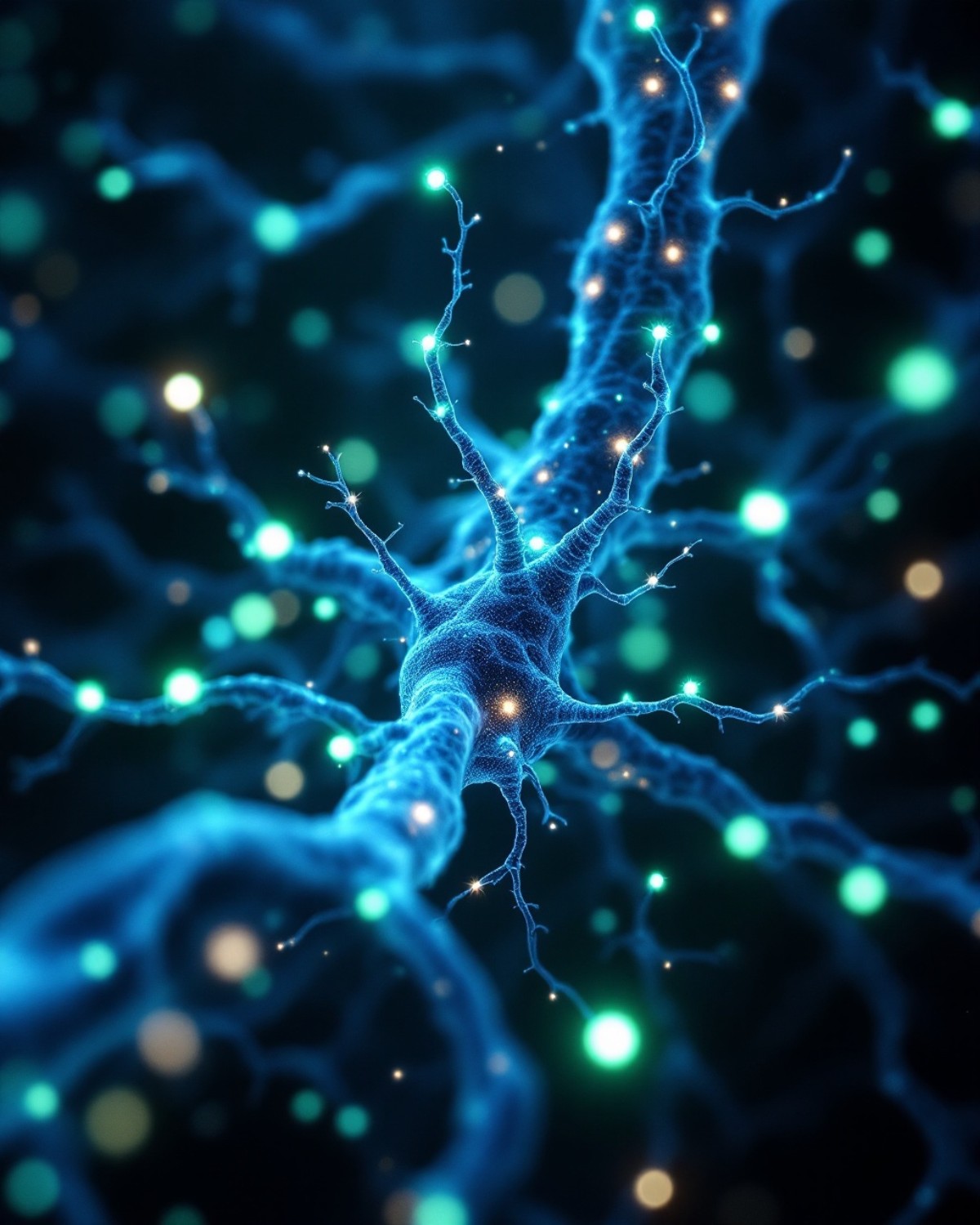
The standard story about psychedelics is a story about experience: the visions, the dissolution of the self, the felt sense of insight. But the most consequential thing a psychedelic may do has nothing to do with what you see while you are on it. In the days and weeks after a single dose, the adult brain does something it is not supposed to be able to do — it becomes young again. It grows new connections, loosens the molecular brakes that lock circuits in place, and reopens windows of learning that biology was thought to slam shut after childhood. This is the neuroscience of psychedelic neuroplasticity: how the medicine rewires the brain, why the effect outlasts the trip by weeks, and why what you do with the open window matters more than the window itself.
The Brain Closes a Door: What a Critical Period Is
Early in life, the brain is exquisitely shapeable. There are defined windows — critical periods — during which specific circuits are sculpted by experience and then, in large part, fixed. The classic example comes from David Hubel and Torsten Wiesel’s Nobel-winning work on vision: cover one eye of a young animal during its visual critical period and the corresponding cortex rewires permanently; do the same in adulthood and almost nothing happens. The same logic governs the effortless way infants absorb language, and the way young animals learn the social cues of their species. The window opens, experience writes to the circuit, and the window closes.
Closing is not passive decay. The mature brain actively installs molecular brakes to protect what it has learned from being overwritten. Chief among them are perineuronal nets — lattice-like structures of extracellular matrix that wrap around fast-spiking inhibitory neurons and physically stabilize the circuits they govern. As these nets condense, plasticity falls and the adult brain settles into efficient rigidity. That rigidity is mostly a feature. But it is also, increasingly, how neuroscience understands what goes wrong in disease: depression, addiction, PTSD, and chronic anxiety can be read as conditions of a brain locked into a maladaptive pattern it can no longer update. Which raises the question that has galvanized the field — what if you could reopen the window?
Precisely-Dosed Psilocybin Mushroom TreatsOOTW Psilocybin Mushroom Treats
Precisely-dosed, lab-tested, quality psilocybin mushroom treats — crafted for daily ritual, neural support, and sustained clarity. Journal readers: 10% off your first order with code JOURNAL10 (applied automatically at checkout).
Claim 10% Off →Psychoplastogens: Drugs That Regrow the Brain
The first piece of the answer arrived in 2018. David Olson’s lab at UC Davis (Ly et al., Cell Reports) tested psychedelics across three chemical families — tryptamines like DMT and psilocin, ergolines like LSD, and amphetamines like DOI and MDMA — and found that nearly all of them did the same thing to neurons: they increased the complexity of dendritic branches, grew new dendritic spines, and formed new synapses, after a single exposure. Olson coined a word for this class of compound: psychoplastogen — a drug that produces rapid, lasting neuroplasticity from one dose. Ketamine had been the prototype; the surprise was that classic psychedelics were, structurally, even more potent at it.
The most striking confirmation came from watching it happen in a living brain. Alex Kwan’s lab (Shao et al., Neuron, 2021) used two-photon microscopy to image the frontal cortex of mice before and after psilocybin. Within 24 hours, new dendritic spines sprouted — an increase of roughly 10 percent in spine density — and the new connections were still present a month later. Crucially, psilocybin also reversed the spine loss caused by chronic stress. This matters because the prefrontal synaptic atrophy that psilocybin repairs is one of the best-documented physical signatures of depression. The drug was not just changing mood; it was rebuilding the hardware that depression erodes.
The Molecular Key: TrkB, BDNF, and the Trip You Don’t Need
How does a serotonergic drug end up growing synapses? The textbook cascade runs like this: psychedelics activate the serotonin 2A (5-HT2A) receptor, triggering a burst of glutamate, which drives AMPA-receptor signaling, the release of brain-derived neurotrophic factor (BDNF), activation of its receptor TrkB, and the mTOR pathway that builds new proteins and synapses. BDNF and TrkB sit at the center of that chain — they are the brain’s master regulators of growth and plasticity.
In 2023, a team led by Eero Castrén (Moliner et al., Nature Neuroscience) rewrote part of the story. They found that LSD and psilocin do not merely trigger BDNF release downstream — they bind directly to TrkB, lodging in its transmembrane domain and stabilizing the receptor so it responds more powerfully to BDNF. The affinity was extraordinary: about 1,000 times higher than that of conventional antidepressants like fluoxetine. And the experiments dissociated two effects that everyone had assumed were inseparable. The plasticity and the antidepressant-like behavior depended on TrkB binding and were independent of 5-HT2A; the hallucinogenic-type effects depended on 5-HT2A and were independent of TrkB. In other words: the rewiring and the trip travel on different molecular rails. They can, at least in principle, be pulled apart — a finding that reframes the entire therapeutic debate.
AI That Understands The MedicineOOTW Spirit Guide
Set. Setting. Dose. Integration. The questions you can’t bring to your doctor — answered by an AI grounded in every peer-reviewed paper, protocol, and ceremony manual. Private, sober, always there.
Talk to the Spirit Guide → A Sacred 5-MeO-DMT Ceremony · MiamiJoin the OOTW Sacrament
The oldest prayer, remembered — the gentle dissolving of the self into light, held in ceremony by a master facilitator. Sit with our community first: a free, live weekly circle on Zoom. No commitment, simply a conversation.
Join the Weekly Circle →Reopening the Window: The Dölen Discovery
The boldest claim in the field came in June 2023, when Gül Dölen, Romain Nardou, and colleagues published in Nature what may be the unifying mechanism behind all of it. They studied a specific, well-defined critical period in mice — the window for social reward learning, the period in which young animals learn to associate being with others with reward. In normal development that window closes after adolescence. The question was simple: could a psychedelic reopen it in an adult?
It could — and not just one drug. A single dose of ketamine, psilocybin, MDMA, LSD, or ibogaine reopened the social-reward-learning critical period in adult mice. The most remarkable detail was the timing: the duration the window stayed open scaled with the drug’s subjective duration in humans. Ketamine held it open for about 48 hours; psilocybin for about two weeks; MDMA for two weeks; LSD for three; ibogaine for roughly four weeks. Underneath, the reopening was carried by a restoration of oxytocin-dependent long-term depression in the nucleus accumbens — a form of metaplasticity — and by a physical reorganization of the extracellular matrix, the same perineuronal-net machinery that closes critical periods in the first place.
Dölen’s interpretation is sweeping: reopening critical periods may be the master key that all psychedelics share, the deep mechanism beneath their effects on depression, addiction, and PTSD. And if that is true, the implications run past psychiatry. Critical-period plasticity is the bottleneck in recovery from stroke, in regaining motor function, even in sensory rehabilitation such as restoring hearing — domains where the inability to relearn is the whole problem. A drug that reopens the window could, in theory, matter wherever an adult brain needs to learn something it was built to learn only once.
The Window Is Neutral: Why Integration Decides Everything
Here is the part that gets lost in the excitement. Reopening a critical period does not heal anything by itself. Removing the brakes does not steer the car; it just makes the steering responsive. A brain in an open critical period is not a brain that is getting better — it is a brain that has become maximally sensitive to whatever happens next. As a 2021 framework paper (Lepow, Morishita, and Yehuda, Frontiers in Neuroscience) put it, psychedelics are best understood as critical-period openers, and the therapeutic work is the input delivered while the window is open.
This is the rigorous, neuroscientific meaning of “set and setting” and of integration — words that can sound like ceremony but describe something literal. The plastic brain encodes the environment it finds itself in. Supportive, structured, intentional experience during the open window gets written in as healing. But the same openness cuts the other way: a frightening, traumatic, or unsupported experience during that period can be encoded just as durably as harm. The window amplifies; it does not discriminate. This is why psychedelic therapy is not a pill but a protocol — screening, preparation, a held container, and weeks of integration afterward. The molecule opens the door. What walks through it is up to everything around the molecule.
Precisely-Dosed Psilocybin Mushroom TreatsBring the Science Home
Every article here is the why. OOTW’s ceremony-ready mushroom confectioneries are the how — precision-crafted to carry the medicine into your daily practice. Journal readers: 10% off your first order with code JOURNAL10 (applied automatically at checkout).
Claim 10% Off →Engineering the Rewire Without the Trip
If the plasticity runs through TrkB and the hallucination runs through 5-HT2A, an obvious and provocative question follows: could you keep the medicine and drop the trip? Olson’s lab has spent years building exactly that. Their lead compound, tabernanthalog (TBG) — a water-soluble, non-toxic, non-hallucinogenic analog of ibogaine (Cameron et al., Nature, 2021) — promotes structural neuroplasticity, reduces alcohol- and heroin-seeking, and produces antidepressant-like effects in rodents, while engaging the same 5-HT2A–TrkB–mTOR–AMPA machinery as classic psychedelics. Later work suggests TBG can induce plasticity without even the immediate glutamate burst and gene-activation surge that the classic drugs trigger.
Whether this works in humans is the field’s defining open question. One camp argues the subjective experience is therapeutically essential — that insight, emotional breakthrough, and the felt sense of meaning are not side effects but the active ingredient, and that Dölen’s duration-scaling data (the window tracking the trip) hint the two are biologically linked. The other camp sees the trip as a removable liability — the thing that makes the medicine expensive, risky, and hard to scale — and the plasticity as the real mechanism. Billions of dollars and the future shape of the field ride on the answer. The honest position today is that we don’t yet know, and that both could be partly right.
What the Evidence Cannot Yet Tell Us
The mechanism is profound, convergent, and still mostly written in mice. The reopening of critical periods has been demonstrated in animals and is, so far, inferred in humans, where neuroplasticity can only be measured indirectly — through blood markers of BDNF, EEG signatures, and neuroimaging proxies. We do not yet know precisely how the animal windows map onto a human therapeutic window, or how to time integration to the days when plasticity actually peaks. And the central caution bears repeating: more plasticity is not automatically better. An open, amplifying brain is a vulnerable one. The science here is genuinely thrilling, but the right posture is the one good clinicians and good traditions both counsel — excitement disciplined by patience and by care for the person in the chair.
The Synthesis
The deepest action of a psychedelic may not be the vision but the window — a pharmacological return, for a few weeks, to the open, plastic state the adult brain spends a lifetime sealing shut. That single reframe changes everything downstream. The drug does not install health; it reopens the capacity to learn health. It does not fix the circuit; it makes the circuit teachable again. Which means the medicine is only ever half the treatment. The other half is what the brain meets while the door is open — the therapy, the practice, the relationships, the meaning, the care. Psychedelics give the brain back its childhood plasticity for a moment. What we do with that moment is the whole game.