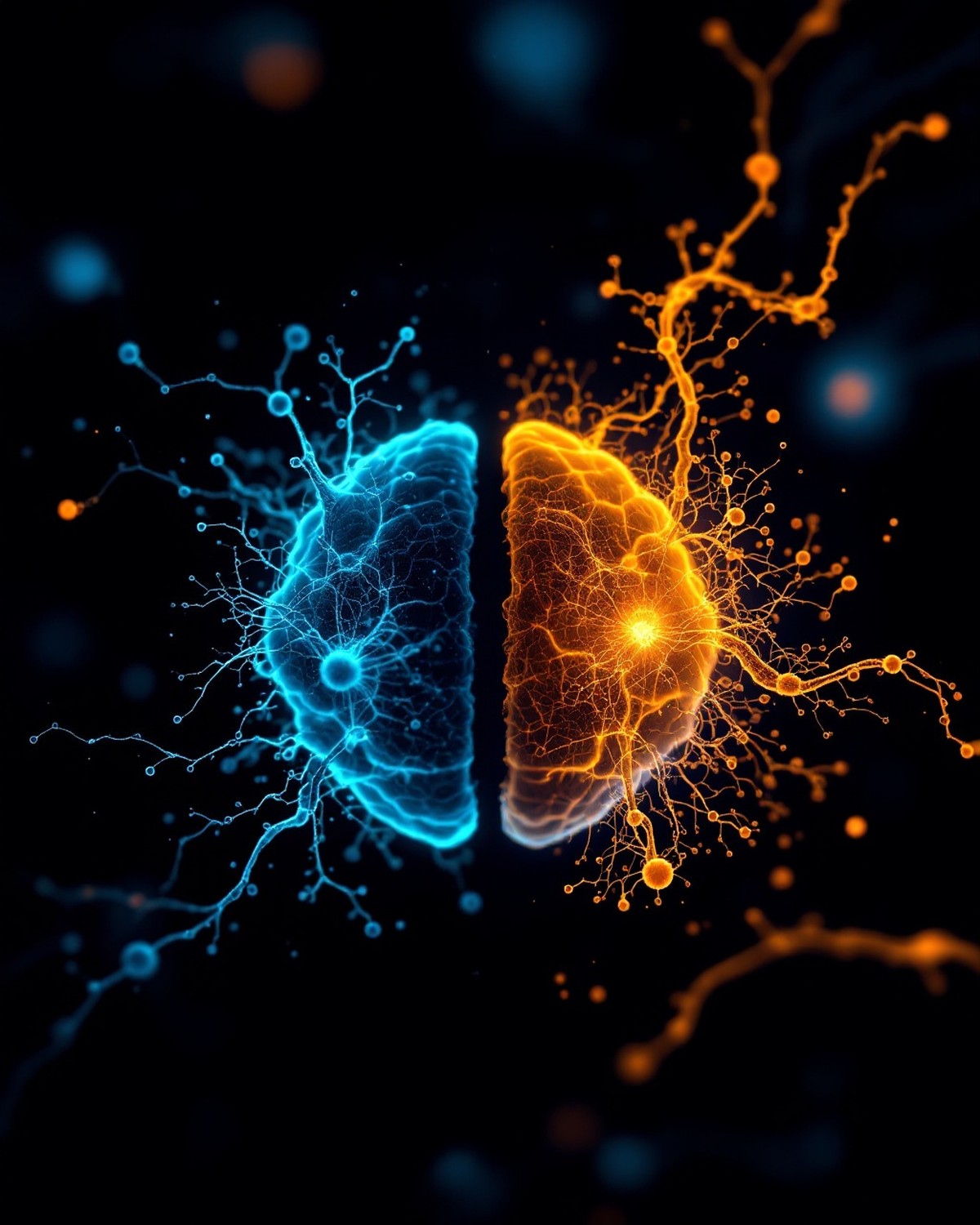
Is fly agaric a magic mushroom? No — and that is the whole point. Amanita muscaria (fly agaric) and psilocybin mushrooms are neuropharmacological opposites. Amanita’s active compound, muscimol, is a GABA-A agonist that inhibits the brain — a sedative, dissociative, deliriant “downer,” and the fresh mushroom also holds ibotenic acid, a real excitotoxic neurotoxin. Psilocybin’s active form, psilocin, is a serotonergic 5-HT2A agonist that excites cortex, raises neural entropy, and loosens the default mode network — the classic visionary psychedelic. On safety, psilocybin has an exceptionally high margin (no established lethal dose), while Amanita carries genuine toxicity, delirium, and rare fatality risk. On law, Amanita is federally unscheduled (sold as gummies) while psilocybin is Schedule I (decriminalized/regulated in OR, CO, NM). On evidence, psilocybin has NEJM trials and positive Phase 3 data; Amanita has essentially none. In short: GABAergic downer vs serotonergic psychedelic. Education, not medical or use advice.
Put a fly agaric and a handful of psilocybe caps side by side and the marketplace will tell you they are cousins — both “mushrooms,” both “psychedelic,” both sold in gummies with the same trippy branding. Put their pharmacology side by side and the resemblance collapses. Amanita muscaria and psilocybin mushrooms are neuropharmacological opposites: one is a GABAergic sedative that dims the brain and carries a genuine neurotoxin; the other is a serotonergic psychedelic that excites cortex and raises its entropy. This is a comparison of two fungi that share a kingdom and almost nothing else.
OOTW has covered each on its own — Amanita Muscaria: The Neuroscience and Your Brain on Psilocybin. This piece sets them side by side, both to make the contrast legible and to name why the conflation — encouraged by “legal magic mushroom” marketing — is a genuine safety problem, not just a semantic one. (Educational overview only — not medical or use advice.)
vs 5-HT2A
The shared premise: same kingdom, opposite brains
The one-line summary is worth stating up front: A. muscaria turns the brain’s volume down (inhibition), and psilocybin turns its ordering loose and up (entropic excitation). Both are fungi, and both alter consciousness, but they do so through unrelated molecular systems pushing in opposite directions. Everything else in this comparison — experience, safety, law, evidence — flows from that single fact. The reason it matters is concrete: a person who buys a “legal magic mushroom” product expecting a psilocybin-style visionary experience may instead receive a sedating, sometimes delirious drug with a toxic component, which is a very different — and in some ways riskier — thing to take.
The comparison at a glance
| Dimension | Amanita muscaria (muscimol) | Psilocybin (psilocin) |
|---|---|---|
| Active compound | Muscimol (+ ibotenic acid, a prodrug and toxin) | Psilocybin → psilocin |
| Primary receptor | GABA-A agonist (esp. extrasynaptic δ-subunit); ibotenic acid = NMDA/glutamate | 5-HT2A serotonin agonist |
| Mechanism | Direct orthosteric inhibition — chloride influx, hyperpolarization; tonic inhibition | Cortical excitation, ↑glutamate, ↑entropy, DMN disintegration |
| Effect class | Sedative / dissociative / deliriant / oneirogenic (a “downer”) | Classic psychedelic: visionary, insightful, entropic |
| Onset / duration | Slow ~30–90 min onset; ~4–8 h (residual to 24 h) | ~20–40 min onset; ~4–6 h (afterglow next day) |
| Body load | Nausea, ataxia, twitching, heavy sedation; unpredictable | Nausea early, pupil dilation, mild HR/BP rise |
| Physiological safety | Real neurotoxin; delirium; rare fatalities; unpredictable potency | Very high margin; no established lethal dose; ranked least physically harmful |
| Chief risk type | Toxicological + delirium | Psychological / behavioral (bad trips; caution w/ psychosis history) |
| US legality (2026) | Unscheduled federally; sold as gummies; Louisiana bans; FDA says not food-safe | Schedule I; regulated/decriminalized in OR, CO, NM + cities |
| Clinical evidence | Essentially none (no human RCTs) | Robust & growing: NEJM RCT, positive Phase 3 for TRD |
| Best understood as | A GABAergic sedative-deliriant with a toxic component | A serotonergic, entropy-raising visionary psychedelic |
Amanita’s door: GABAergic inhibition
A. muscaria’s psychoactivity comes chiefly from muscimol, which mimics GABA — the brain’s main inhibitory neurotransmitter — and binds directly at the orthosteric GABA site on GABA-A receptors (unlike benzodiazepines and alcohol, which only modulate the receptor allosterically). It opens the chloride channel, hyperpolarizes neurons, and shuts down firing, with special affinity for extrasynaptic δ-subunit receptors that govern tonic, background inhibition (Benkherouf et al., J. Neurochem. 2019). The net brain state is widespread inhibition and sedation — the opposite of psychedelic cortical activation. And the fresh mushroom carries a second, more dangerous molecule: ibotenic acid, an NMDA/glutamate excitotoxin so reliable at killing neurons that labs use it to lesion brain tissue, which decarboxylates into muscimol on drying (Frontiers in Neuroscience, 2020). The deeper mechanism is unpacked in Amanita Muscaria: The Neuroscience.
Precisely-Dosed Psilocybin Mushroom TreatsOOTW Psilocybin Mushroom Treats
Precisely-dosed, lab-tested, quality psilocybin mushroom treats — crafted for daily ritual, neural support, and sustained clarity. Journal readers: 10% off your first order with code JOURNAL10 (applied automatically at checkout).
Claim 10% Off →Psilocybin’s door: 5-HT2A excitation and entropy
Psilocybin runs the other way entirely. It is a prodrug, dephosphorylated in the body to psilocin, which agonizes 5-HT2A receptors densely expressed on layer-5 cortical pyramidal neurons (DMN systematic review, 2023). That agonism increases glutamatergic excitation and produces asynchronous, desynchronized firing — a more disordered, higher-entropy brain state, the core of Carhart-Harris’s entropic brain hypothesis (Carhart-Harris et al., 2014). It also reduces connectivity within the default mode network — the self-referential “narrative self” system detailed in The Default Mode Network — while increasing cross-network communication; the REBUS (“relaxed beliefs under psychedelics”) model frames this as loosening rigid high-level priors. This DMN disintegration is the leading neural correlate of ego dissolution and the therapeutic “reset,” and it runs through the same 5-HT2A receptor that defines the classic psychedelics. Where muscimol dims and quiets, psilocin excites and loosens.
The experience: dreamy confusion versus lucid vision
The subjective contrast follows directly from the mechanism. A. muscaria is dreamy, sedating, dissociative, and often delirious or confused — a waking-dream, oneirogenic quality that points “inward and downward,” sleepy and unpredictable, with onset over a slow 30–90 minutes and a body load of nausea, ataxia, twitching, and heavy sedation. Psilocybin is visionary, insightful, and emotionally cathartic — geometric visuals, ego dissolution, an “outward and expansive” direction that is lucid even when intense, coming on in 20–40 minutes with a body load of early nausea, pupil dilation, and a mild rise in heart rate and blood pressure (Poison Control). “Which is stronger” is the wrong question, because the two are not on the same axis: one produces a sedating, confused dream, the other a lucid, entropic vision. The kind of experience differs, not just the intensity.
AI That Understands The MedicineOOTW Spirit Guide
Set. Setting. Dose. Integration. The questions you can’t bring to your doctor — answered by an AI grounded in every peer-reviewed paper, protocol, and ceremony manual. Private, sober, always there.
Talk to the Spirit Guide → A Sacred 5-MeO-DMT Ceremony · MiamiJoin the OOTW Sacrament
The oldest prayer, remembered — the gentle dissolving of the self into light, held in ceremony by a master facilitator. Sit with our community first: a free, live weekly circle on Zoom. No commitment, simply a conversation.
Join the Weekly Circle →Safety: which is riskier, and why
On acute physiological toxicity, the answer is clear and perhaps counterintuitive: A. muscaria is the riskier drug. It contains an actual neurotoxin (ibotenic acid) and produces delirium, agitation, ataxia, seizures, and coma in significant poisonings, with symptoms lasting 8–24 hours or longer (MDPI Toxins, 2025); fatalities are rare but documented, a category psilocybin essentially lacks (ScienceDirect, 2022). Its dose unpredictability — muscimol and ibotenic-acid content vary widely by specimen and preparation, and drying only partly detoxifies — is a core hazard, compounded by mislabeling in commercial gummies.
Psilocybin, by contrast, has an exceptionally high physiological safety margin: low organ toxicity, a very large therapeutic index, and no well-established lethal dose in humans (CNS Spectrums review). The landmark Nutt et al. multicriteria harm analysis ranked psilocybin mushrooms among the least harmful of common drugs, below alcohol, tobacco, and cannabis (Nutt et al., The Lancet, 2010). Its real risks are psychological and behavioral — anxiety or panic during a “bad trip,” risky behavior while impaired, and caution with a personal or family history of psychosis and with serotonergic drug interactions. This is not a claim that psilocybin is “safe” — set, setting, and mental-health history matter — but the type of danger is fundamentally different: toxicological for Amanita, psychological for psilocybin.
The legal inversion — and why it exists
Here is the irony worth naming plainly. The mushroom with a real neurotoxin is legal and on shelves, while the mushroom with the stronger safety record and clinical evidence is Schedule I. Under US federal law, A. muscaria, muscimol, and ibotenic acid are unscheduled and sold openly as gummies across most states — though the FDA (Dec 2024) ruled they are not authorized or safe as food and told people to avoid edibles containing them, and Louisiana banned muscimol/ibotenic-acid consumables in 2025 (FDA, Dec 2024; HealthDataConsortium, 2026). Psilocybin has been Schedule I since 1970, yet holds FDA Breakthrough Therapy designation and is now decriminalized or regulated in Oregon (Measure 109 service centers), Colorado (Proposition 122), and New Mexico (2025 Medical Psilocybin Act), plus many city decriminalizations (psilocybin decriminalization overview). This regulatory inversion — legality reflecting a historical scheduling accident rather than a safety judgment — is precisely what drives the “legal magic mushroom” market and the confusion it feeds on. (Verify current federal and state law where you live; this is not legal advice.)
Precisely-Dosed Psilocybin Mushroom TreatsBring the Science Home
Every article here is the why. OOTW’s precisely-dosed, lab-tested, quality psilocybin mushroom treats are the how — crafted to carry the medicine into your daily practice. Journal readers: 10% off your first order with code JOURNAL10 (applied automatically at checkout).
Claim 10% Off →Why the conflation is dangerous
The gummy market sells A. muscaria under psychedelic-coded language — “legal magic mushrooms,” “legal psychedelics” — the exact framing the FDA called out in December 2024. The concrete hazards are four. First, wrong drug, wrong expectations: a buyer expecting a psilocybin-style journey instead gets a sedating, dissociative, potentially delirious GABAergic drug, a mismatch that can itself provoke panic. Second, a real neurotoxin in the mix: unlike psilocybin, Amanita products can contain ibotenic acid, an excitotoxin, with unpredictable batch-to-batch potency. Third, a false safety halo: “legal” reads as “safe,” but here legality is a regulatory gap, not an endorsement. Fourth, a public-health signal: the broader mushroom-“microdosing” trend has coincided with rising poison-control and ER contacts (The Conversation, 2025), and the 2024 Diamond Shruumz edible poisonings showed how “mushroom” edibles can hide undisclosed actives.
The evidence gap, and the honest bottom line
The therapeutic asymmetry is as stark as the pharmacological one. Psilocybin has a substantial, maturing clinical base: a Phase 2b randomized trial of single-dose COMP360 psilocybin gave a highly significant reduction in treatment-resistant depression at three weeks, published in the New England Journal of Medicine (Goodwin et al., NEJM 2022), and two Phase 3 trials have since reported hitting their primary endpoints for the same indication (STAT, Feb 2026 — industry-sponsored; full peer-reviewed publication and regulatory review remain the appropriate bar). A. muscaria, by contrast, has essentially no clinical evidence: no completed controlled human trials of muscimol for any psychiatric or medical indication, only preclinical GABAergic findings plus anecdote (Technology Networks). The “microdose muscimol as a legal benzo alternative” narrative is marketing, not trial-backed science.
So the honest bottom line is not that one mushroom is “good” and the other “bad,” but that they are different drugs entirely, and the label “mushroom” describes an organism, not a pharmacology. Psilocybin is a serotonergic, entropy-raising psychedelic with a high safety margin and real clinical evidence, held under Schedule I. Amanita is a GABAergic sedative-deliriant with a genuine toxic component and no clinical evidence, sold legally as candy. If you take nothing else from this comparison, take the receptors: GABA-A versus 5-HT2A, inhibition versus entropy — opposite doors, opposite brains.
OOTW Journal is educational and does not provide medical advice.Amanita muscaria is a toxic mushroom containing a genuine neurotoxin (ibotenic acid), with unpredictable potency and rare but real fatality risk; the FDA has advised against consuming products that contain it. Psilocybin is a Schedule I substance in most of the US, and although its physiological safety margin is high, its psychological risks are real and depend heavily on set, setting, and mental-health history. This article is not a guide to using either substance. If you are in crisis, contact a local emergency line or the 988 Suicide and Crisis Lifeline (US); for a suspected poisoning, contact Poison Control (1-800-222-1222 in the US).