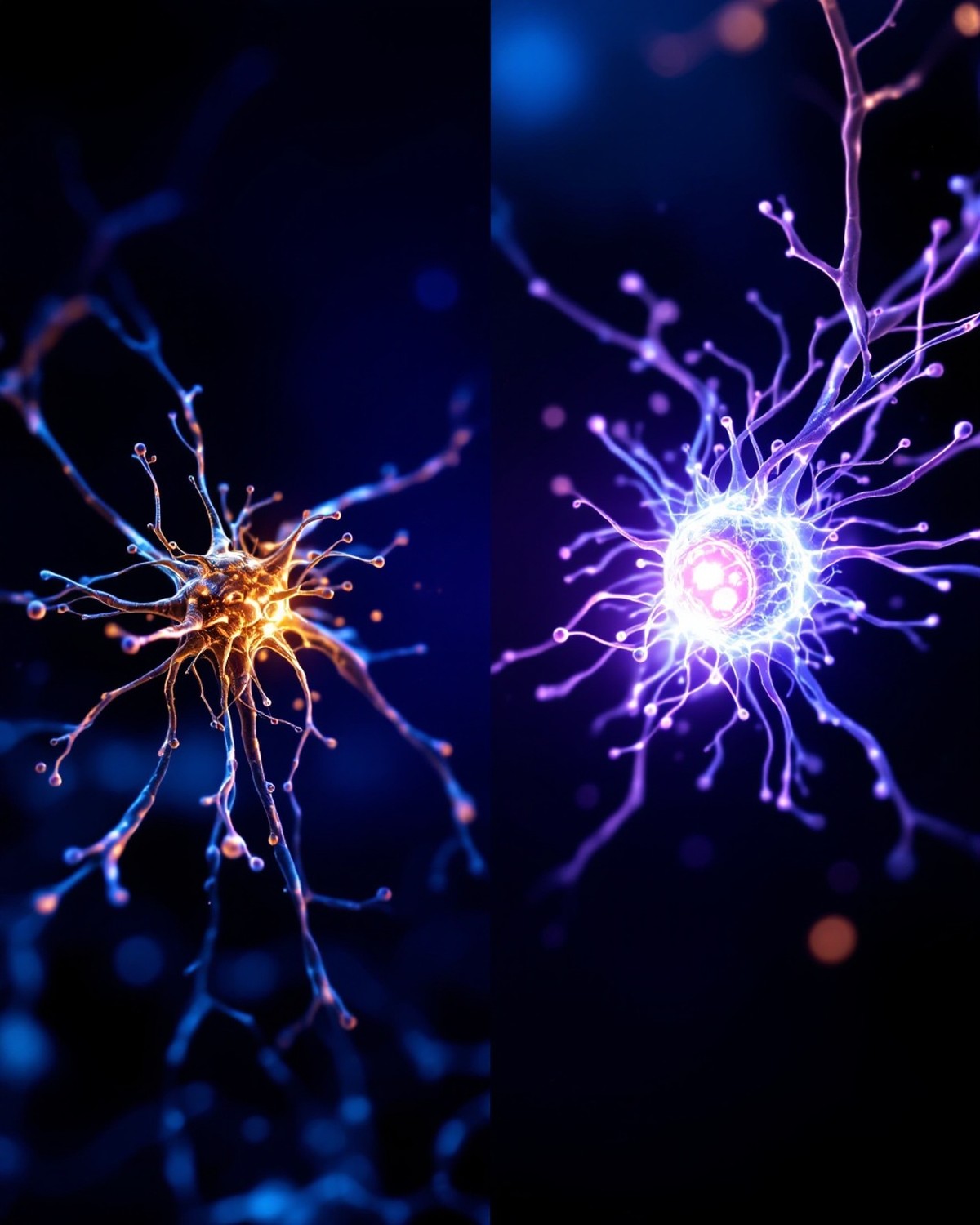
What’s the difference between psilocybin and LSD? Less than folklore suggests. Both are classic psychedelics and both are 5-HT2A serotonin agonists — the receptor that drives the psychedelic state for each — so their brain signatures and phenomenology are strikingly similar. The single most reliable difference is duration: in the definitive head-to-head (Holze/Liechti), LSD lasted ~9+ hours and psilocybin ~5.6–6.5 hours, and once matched for dose and duration the quality of the two experiences barely differed. Under the hood, LSD is pharmacologically promiscuous (it also hits dopamine D1–D3 and a broad receptor panel, with an ultra-long 5-HT2A residence time, active in micrograms), while psilocin is comparatively more 5-HT2A-selective and dosed in milligrams. Both collapse the default mode network, raise brain entropy, and drive dendritic-spine plasticity. In the clinic (2026), psilocybin is further along — COMPASS’s COMP360 has two positive Phase 3 depression trials versus LSD’s MM120 still in Phase 3. Both are physiologically very safe and both remain Schedule I (psilocybin has regulated access in Oregon & Colorado; LSD does not). Education, not medical or use advice.
Ask a room of people how LSD and psilocybin differ and you will get confident answers: LSD is longer, sharper, more visual and cerebral; mushrooms are warmer, more emotional, more “of the earth.” Some of that folklore holds up. Most of it dissolves the moment you put the two molecules under controlled conditions. Beneath the surface, psilocybin and LSD are the two archetypal classic psychedelics, and they share the same core mechanism — agonism at the serotonin 5-HT2A receptor. The best head-to-head study we have found that once you match them for dose and duration, the quality of the experience is remarkably alike. This is a comparison of two drugs that are far more similar than the culture around them believes — and where the real differences actually lie.
OOTW has covered each on its own — Your Brain on Psilocybin and LSD: The Neuroscience. This piece sets them side by side, both to make the contrast legible and to separate what the rigorous data actually show from the folklore that surrounds them. (Educational overview only — not medical or use advice.)
vs ~6 h
The shared engine: one receptor, two molecules
Start with what unites them, because it is bigger than what divides them. Both psilocybin and LSD are serotonergic 5-HT2A receptor agonists, and this is not a minor detail: blocking 5-HT2A abolishes the subjective psychedelic effects of both, which is why the receptor is the accepted primary driver of the classic-psychedelic state (Sharp et al., Br. J. Pharmacol. 2025). Psilocybin itself is a prodrug: the body rapidly dephosphorylates it to psilocin, the molecule that actually does the work. LSD needs no such conversion. But both arrive, ultimately, at the same cortical door — the 5-HT2A receptor densely expressed on layer-5 pyramidal neurons that we unpack in The 5-HT2A Receptor. Everything else in this comparison is a variation on that shared theme.
The comparison at a glance
| Dimension | Psilocybin (→ psilocin) | LSD (lysergide) |
|---|---|---|
| Active molecule | Psilocybin (a prodrug) → psilocin | LSD (lysergic acid diethylamide) |
| Receptor targets | 5-HT2A agonist (primary); also 5-HT2C/1A; comparatively more 5-HT2-focused, weak/inconsistent non-serotonergic activity | 5-HT2A agonist (primary) plus broad 5-HT1/2/5/6/7, dopamine D1–D3, adrenergic; ultra-long 5-HT2A residence time |
| Potency / dose | Milligrams; typical 15–30 mg | Micrograms; typical 100–200 µg (~100× more potent by mass) |
| Onset / duration | Onset ~20–40 min; ~4–6 h (~5.6–6.5 h in Basel) | Onset ~30–60 min; ~8–12 h (~9.3 h in Basel) |
| Phenomenology | Often more emotional/introspective/embodied; gentler taper; BP↑ | Often more energetic/“electric”; longer arc; HR↑. At matched dose, quality ≈ psilocybin — difference is mainly duration |
| Brain (imaging) | DMN disintegration, ↑entropy, ↑global integration; tracks plasma psilocin | DMN disintegration, ↑entropy, ↑visual-cortex & global connectivity |
| Plasticity | ↑dendritic spines within 24 h, persists ~1 mo; 5-HT2A/TrkB/mTOR | Neuritogenesis/spinogenesis via 5-HT2A/TrkB/mTOR; ↑BDNF in humans |
| Clinical stage (2026) | Two positive Phase 3 TRD trials (COMP005, COMP006); NDA anticipated — furthest along | Phase 3 (MM120): GAD (Voyage, Panorama) + MDD (Emerge); topline through 2026 |
| Safety | Very high margin; risk mostly psychological; rare HPPD; shorter session = easier to manage | Very high margin; risk mostly psychological; rare HPPD (more long-term perceptual reports vs psilocybin); longer session = longer risk window |
| Legality (US 2026) | Schedule I federally; regulated adult access in Oregon & Colorado | Schedule I federally; no state legalization |
Where they diverge: promiscuity, potency, and a receptor “lid”
The pharmacological differences are real but secondary. LSD is promiscuous. Beyond 5-HT2A it activates 5-HT1A/1B/2C/5/6/7, dopamine D1–D3, and adrenergic receptors; those extra targets — especially D2-mediated effects — are thought to color LSD’s later-phase, more energetic and stimulant-like character, even though 5-HT2A remains primary for the trip itself (Wacker et al., Cell 2017; Marona-Lewicka et al., 2005). Psilocin is comparatively more 5-HT2-selective, binding 5-HT2A (Ki ≈ 120–173 nM), 5-HT2C, and 5-HT1A with broadly comparable affinities but with weaker, less consistent dopaminergic/adrenergic activity — a more serotonin-centric profile.
Then there is the elegant piece of structural biology that explains LSD’s legendary potency. LSD dissociates from the 5-HT2A receptor extraordinarily slowly, because a part of the receptor (extracellular loop 2) folds a “lid” over the bound molecule and traps it — a residence time of ~221 minutes for the wild-type receptor, dropping to ~50 minutes when the lid residue is mutated (Wacker et al., 2017). This kinetic trapping helps explain how tiny microgram doses of LSD produce effects lasting many hours, while psilocin binds with lower affinity, clears faster, and therefore needs milligram doses and delivers a shorter experience — LSD is roughly ~100× more potent by mass.
Precisely-Dosed Psilocybin Mushroom TreatsOOTW Psilocybin Mushroom Treats
Precisely-dosed, lab-tested, quality psilocybin mushroom treats — crafted for daily ritual, neural support, and sustained clarity. Journal readers: 10% off your first order with code JOURNAL10 (applied automatically at checkout).
Claim 10% Off →Duration: the one difference that is actually robust
The definitive comparison is the Holze/Liechti double-blind, placebo-controlled crossover in Basel: 28 healthy adults, five 25-hour sessions each (placebo, LSD 100 & 200 µg, psilocybin 15 & 30 mg). Its headline finding is disarmingly simple. At matched intensity, the quality of the altered state is remarkably similar — the main difference is that LSD simply lasts longer: about 9.3 hours for LSD versus 5.6–6.5 hours for psilocybin (Holze et al., Neuropsychopharmacology 2022). The study also calibrated equivalence: 100 and 200 µg of LSD produced overall subjective intensity comparable to 30 mg psilocybin, while 15 mg psilocybin was clearly weaker. In other words, the folk intuition that these are fundamentally different kinds of experience is mostly wrong; the durable, measurable difference is the length of the day they ask of you.
Phenomenology: folklore versus the controlled data
That said, softer contrasts are consistently reported, and it is worth being precise about their evidentiary weight. The cardiovascular signature genuinely differs: psilocybin raised blood pressure more, while LSD raised heart rate more, though overall cardiostimulation was comparable (Holze et al., 2022). Beyond that, LSD is often described as more energetic, stimulating, and “electric,” with a longer, more cognitively activated arc (consistent with its dopaminergic/adrenergic breadth), and psilocybin as more emotional, introspective, embodied, and “earthy,” with a gentler taper. But these are widely reported tendencies, not robustly quantified differences — and the controlled data emphasize similarity once duration is accounted for (Psychiatric Times summary). The honest framing: trust the duration difference; hold the “vibe” differences loosely.
AI That Understands The MedicineOOTW Spirit Guide
Set. Setting. Dose. Integration. The questions you can’t bring to your doctor — answered by an AI grounded in every peer-reviewed paper, protocol, and ceremony manual. Private, sober, always there.
Talk to the Spirit Guide → A Sacred 5-MeO-DMT Ceremony · MiamiJoin the OOTW Sacrament
The oldest prayer, remembered — the gentle dissolving of the self into light, held in ceremony by a master facilitator. Sit with our community first: a free, live weekly circle on Zoom. No commitment, simply a conversation.
Join the Weekly Circle →The brain on both: nearly the same scan
Neuroimaging reinforces the theme of similarity. Both drugs produce the common signature behind the entropic brain model. Both acutely reduce the integrity and within-network connectivity of the default mode network — the self-referential system whose breakdown is the leading neural correlate of ego dissolution — while increasing neural entropy and cross-network connectivity, flattening the brain’s usual hierarchical control (Carhart-Harris et al., 2014; DMN systematic review, 2022). LSD-specific multimodal imaging adds increased visual-cortex connectivity and whole-brain integration that correlate with ego-dissolution and visual imagery (Carhart-Harris et al., PNAS 2016), while for psilocybin the degree of network disintegration tracks with plasma psilocin level and the intensity of the subjective experience. The two imaging signatures are, again, more alike than different — exactly what the shared 5-HT2A mechanism predicts.
Neuroplasticity: the same molecular route
Both drive rapid structural neuroplasticity through a shared pathway. A single dose of psilocybin produced roughly 10% increases in dendritic-spine size and density in mouse frontal cortex within 24 hours, persisting about a month (two-photon imaging) (Shao et al., Neuron 2021). The classic psychedelics — LSD, psilocybin, and DMT alike — promote neuritogenesis, spinogenesis, and synaptogenesis via 5-HT2A, TrkB, and mTOR signaling, and may even bind the BDNF receptor TrkB directly (Vargas/Olson et al., Science 2023; Moliner et al., 2023). In humans, even low-dose LSD acutely raised blood BDNF (Hutten et al., 2021). This plasticity is a leading candidate mechanism for both drugs’ durable therapeutic effects — though the causal chain from spine growth to clinical benefit in humans remains an inference, not a proven fact. We go deeper in BDNF and Neuroplasticity.
The clinic in 2026: psilocybin is further along
Here the two diverge on timeline, not mechanism. Psilocybin has the larger, later-stage depression base: COMPASS Pathways’ COMP360 hit its primary endpoint in two pivotal Phase 3 trials for treatment-resistant depression — COMP005 (a single 25 mg dose, June 2025) and COMP006 (~600 patients, two 25 mg doses beating a 1 mg control at week 6, with 26-week durability, February 2026) — with an NDA anticipated and FDA Breakthrough Therapy designation in hand (COMPASS, 2025; Psychiatric Times, 2026). LSD is moving fast but trails: MindMed’s MM120 (lysergide) earned FDA Breakthrough Therapy designation for generalized anxiety disorder after a Phase 2b showed a ~65% response and ~48% remission sustained to 12 weeks, and is now in Phase 3 — Voyage and Panorama in GAD, Emerge in MDD — with topline data reading out through 2026 (MindMed, 2025). Psilocybin’s shorter session (~half of LSD’s) is also a practical advantage for scaling supervised, in-clinic dosing. (Both programs are industry-sponsored, and psychedelic trials face well-documented functional-unblinding and expectancy issues that temper effect-size interpretation.)
Precisely-Dosed Psilocybin Mushroom TreatsBring the Science Home
Every article here is the why. OOTW’s precisely-dosed, lab-tested, quality psilocybin mushroom treats are the how — crafted to carry the medicine into your daily practice. Journal readers: 10% off your first order with code JOURNAL10 (applied automatically at checkout).
Claim 10% Off →Safety: two of the physically safest drugs known
On physiology, both are remarkably benign. Both classic psychedelics have very low physiological toxicity and a wide margin between active and dangerous doses, with no known lethal overdose from the drug’s direct pharmacology at typical doses — only modest, transient cardiovascular stimulation (Holze et al., 2022). Neither is physically addictive, and both show rapid tolerance. The dominant real-world risk for both is a challenging experience — acute anxiety, panic, or destabilization — strongly modulated by mindset, setting, screening, and support, with a personal or family history of psychosis a standard contraindication. HPPD (Hallucinogen Persisting Perception Disorder) is a recognized but rare outcome; the chronic form is estimated at roughly 1 in 50,000 users, and of people reporting long-term perceptual changes, somewhat more attributed them to LSD (~39%) than psilocybin (~11%) (Müller et al., 2022). The one clear relative difference: LSD’s much longer duration means a longer window for a difficult experience to unfold and a greater monitoring burden, while psilocybin’s shorter arc is generally easier to manage.
Legality in 2026
Federally, both psilocybin and LSD are Schedule I under the Controlled Substances Act. The state picture is where they part ways. Psilocybin has regulated adult access: Oregon (Measure 109) permits supervised use at licensed service centers, and Colorado (Proposition 122) decriminalized personal use and licenses “healing centers,” covering psilocybin, psilocin, DMT, ibogaine, and mescaline (mindmedicinelaw state guide, 2026). LSD is excluded from both frameworks and has no state-legal access anywhere in the US. An April 18, 2026 federal executive order directed FDA/DEA to accelerate psychedelic research (naming psilocybin, MDMA, ibogaine, and LSD) but did not legalize or reschedule anything. (Verify current law where you live; this is not legal advice.)
The honest bottom line
The most useful thing to hold onto is counterintuitive: psilocybin and LSD are far more alike than the culture around them suggests. Same primary receptor (5-HT2A), same DMN collapse and entropy surge, same plasticity pathway, similar phenomenology once you match the dose. The robust, reliable difference is duration — LSD asks for a ~9–12 hour day, psilocybin for ~4–6 hours — downstream of LSD’s ultra-long receptor residence time and broader (dopaminergic) pharmacology. In the clinic, psilocybin is currently the frontrunner, with two positive Phase 3 depression trials to LSD’s still-reading Phase 3 program, and its shorter session is a practical edge. If you take one thing from this comparison, take the reframing: the interesting question is not “which is stronger” but “how long do you want the door to stay open.”
OOTW Journal is educational and does not provide medical advice.Psilocybin and LSD are Schedule I substances in most of the US. Although both have high physiological safety margins, their psychological risks are real and depend heavily on set, setting, dose, and mental-health history — a personal or family history of psychosis is a standard contraindication, and challenging experiences can be destabilizing. This article is not a guide to using either substance. If you are in crisis, contact a local emergency line or the 988 Suicide and Crisis Lifeline (US).