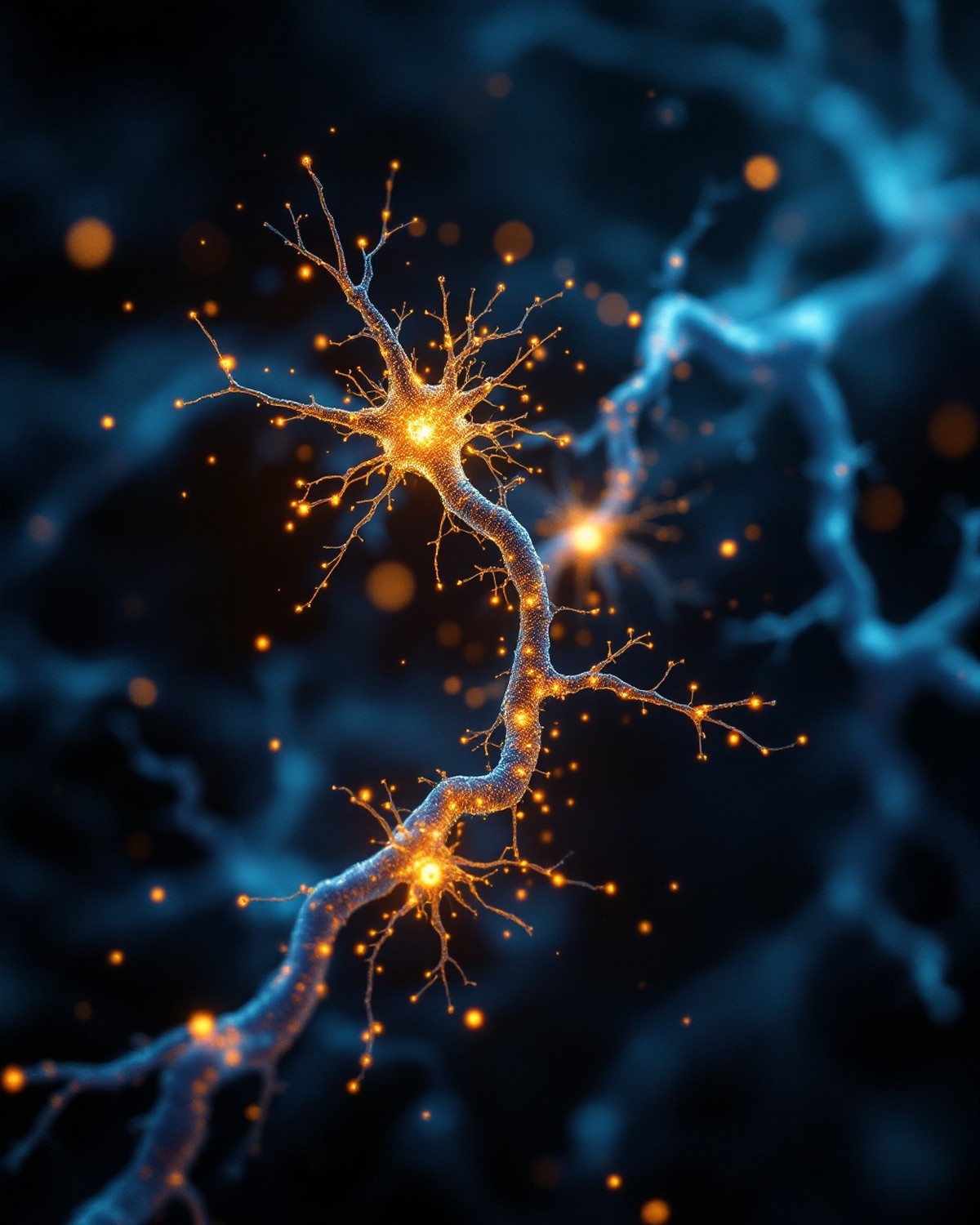
Do psychedelics grow new brain cells? Mostly no — and the distinction matters. Neurogenesis means the birth of genuinely new neurons (in adults, mainly in one small hippocampal region). Neuroplasticity means existing neurons remodeling — growing new dendritic spines, synapses and branches. The robust, replicated psychedelic evidence is for the second thing: LSD, psilocybin and DMT rapidly promote structural plasticity through a 5-HT2A → BDNF → TrkB → mTOR cascade, and a single psilocybin dose grew dendritic spines that lasted a month in mice. Evidence for literally new neurons is much weaker, mostly preclinical, and complicated by the unresolved debate over whether adult human hippocampal neurogenesis meaningfully happens at all. So: rewiring, strongly supported; new cells, overstated.
The most repeated claim about psychedelics and the brain is also the least accurate. “They grow new brain cells” has become received wisdom — on podcasts, in headlines, in casual conversation. The truth is more precise, and honestly more interesting: psychedelics are among the most powerful rewirers of existing neurons science has found, but the evidence that they manufacture brand-new neurons is thin. Getting that distinction right is the whole point of this article, and it’s where its credibility lives.
We’ve traced how the 5-HT2A receptor drives rewiring and how ketamine rebuilds synapses by a different route. This piece is about what that rewiring actually is — and what it isn’t. Here is the honest science of psychedelics, plasticity, and the myth of new brain cells.
The distinction that changes everything
Two words get blurred together in almost every popular account, and separating them is the key to the whole topic. Neurogenesis is the birth of genuinely new neurons from neural stem cells. In adult mammals it’s essentially confined to one region — the dentate gyrus of the hippocampus — and it is the rarer, harder, more contested phenomenon. Neuroplasticity, specifically structural plasticity, is something else: existing neurons remodeling themselves, sprouting new dendritic branches, new spines (the tiny knobs where synapses form), and new synaptic connections. No new cells are born; the wiring is rebuilt. When you read that psychedelics “rewire the brain,” this second thing is what the strong evidence supports — and it’s why researchers coined a whole new word for these molecules: psychoplastogens (Olson, 2018).
The strong evidence: rapid rewiring
The foundational study came from David Olson’s lab in 2018. LSD, DMT and other serotonergic psychedelics increased the complexity of dendritic branches, the density of spines, and the number of synapses in cortical neurons — and the effect ran through a specific molecular chain: 5-HT2A → TrkB → mTOR. In some assays LSD was as potent as ketamine at promoting this growth (Ly et al., Cell Reports 2018). Three years later, a landmark study watched it happen in a living brain. Using two-photon microscopy to image the same neurons over time in mice, Alex Kwan’s group showed that a single dose of psilocybin increased dendritic spine density by roughly 10% within 24 hours — and, crucially, the new spines were still present about a month later, alongside increased excitatory signaling and a reversal of a stress-related behavioral deficit (Shao et al., Neuron 2021). Rapid, real, and durable after one dose — that is the defining signature of a psychoplastogen.
How one dose rewires a neuron
The mechanism is now fairly well mapped, and it has a twist. Because psychedelics are lipophilic (fat-soluble), they slip through the neuron’s membrane and activate a pool of 5-HT2A receptors inside the cell that the brain’s own serotonin — being water-loving — largely can’t reach, which is why serotonin doesn’t trigger the same growth (Vargas et al., Science 2023). There’s an additional route, too: LSD and psilocybin appear to bind the BDNF receptor TrkB directly, with far higher affinity than typical antidepressants (Moliner et al., Nature Neuroscience 2023). Either way the signal converges on the same growth machinery — BDNF → TrkB → mTOR, driving AMPA-receptor trafficking and the protein synthesis that builds new spines. It’s the very same endpoint ketamine reaches through NMDA blockade — convergent rapid plasticity, entered by different doors.
Precisely-Dosed Psilocybin Mushroom TreatsOOTW Psilocybin Mushroom Treats
Precisely-dosed, lab-tested, quality psilocybin mushroom treats — crafted for daily ritual, neural support, and sustained clarity. Journal readers: 10% off your first order with code JOURNAL10 (applied automatically at checkout).
Claim 10% Off →The weaker evidence: actual new neurons
So what about literal neurogenesis — brand-new neurons? The evidence exists, but it’s thinner, mostly from animals and cell cultures, and it’s messy. In mice, psilocybin had dose-dependent, opposite effects on hippocampal neurogenesis: higher doses decreased the number of newborn neurons while low doses trended toward an increase — and, tellingly, the behavioral benefit (faster extinction of conditioned fear) didn’t track neatly with the neuron counts (Catlow et al., Experimental Brain Research 2013). Separately, the ayahuasca molecule DMT was shown to stimulate neural stem cells to proliferate and become new neurons, both in a dish and in the mouse hippocampus — but through the sigma-1 receptor, a different mechanism entirely from the 5-HT2A plasticity pathway (Morales-García et al., Translational Psychiatry 2020). It’s intriguing, genuinely — but it’s a modest, preclinical, mechanistically separate story, not the clean “psychedelics make new brain cells” headline.
And a deeper problem: does it even happen in adult humans?
Here’s the catch that sits underneath the entire “new neurons” claim. Whether meaningful adult neurogenesis happens in the human hippocampus at all is itself scientifically unsettled. In the same year, two major papers reached opposite conclusions: one found that new-neuron production drops to undetectable levels in adults (Sorrells et al., Nature 2018), while the other found it persists into old age (Boldrini et al., Cell Stem Cell 2018). That debate remains unresolved. Which means the very substrate a human “psychedelics grow new neurons” claim would need is on shaky ground before you even add the drug.
The human reality check: BDNF
It’s worth being just as honest about the biomarker everyone reaches for. BDNF — the growth factor at the heart of the plasticity cascade — is often cited as proof that psychedelics rewire the human brain. But the human blood data are mixed and weak. Low-dose LSD produced a small, transient rise in one study, yet full doses of LSD and psilocybin did not reliably raise plasma BDNF in a head-to-head trial — and a meta-analysis of 29 studies found no overall effect of psychoplastogens on blood BDNF, not even for ketamine (meta-analysis, Molecular Psychiatry 2024). The likely explanation is that a blood test is simply a poor window into rapid changes happening deep inside the brain. The animal plasticity evidence is strong; the human molecular confirmation is still an inference, not a settled fact.
AI That Understands The MedicineOOTW Spirit Guide
Set. Setting. Dose. Integration. The questions you can’t bring to your doctor — answered by an AI grounded in every peer-reviewed paper, protocol, and ceremony manual. Private, sober, always there.
Talk to the Spirit Guide → A Sacred 5-MeO-DMT Ceremony · MiamiJoin the OOTW Sacrament
The oldest prayer, remembered — the gentle dissolving of the self into light, held in ceremony by a master facilitator. Sit with our community first: a free, live weekly circle on Zoom. No commitment, simply a conversation.
Join the Weekly Circle →Why rewiring matters: the window
If psychedelics mostly rewire rather than regrow, why would that help with depression, PTSD or addiction? The most compelling idea is a window of heightened learning. In a striking 2023 study, Gül Dölen’s lab found that MDMA, psilocybin, LSD, ketamine and ibogaine all reopened a juvenile “critical period” for social reward learning in mice — and, remarkably, the length of time the window stayed open scaled with each drug’s subjective-effect duration in humans, from about 48 hours for ketamine to weeks for ibogaine (Nardou et al., Nature 2023). This reframes plasticity not as a magic fix but as a temporary state of heightened malleability, during which the brain is unusually able to update entrenched patterns. It’s why researchers keep stressing the same formula: the drug opens the window, but experience and integration are what determine whether anything durable is built while it’s open.
Precisely-Dosed Psilocybin Mushroom TreatsBring the Science Home
Every article here is the why. OOTW’s precisely-dosed, lab-tested, quality psilocybin mushroom treats are the how — crafted to carry the medicine into your daily practice. Journal readers: 10% off your first order with code JOURNAL10 (applied automatically at checkout).
Claim 10% Off →The honest bottom line
Strip away the hype and the picture is clear and, if anything, more remarkable for being accurate. Psychedelics robustly and reproducibly promote structural neuroplasticity — new spines and synapses on existing neurons — rapidly, durably, and largely in the prefrontal cortex, at least in animal models. This is a leading candidate mechanism for their lasting therapeutic effects. Evidence that they generate literally new neurons is much weaker, mostly preclinical, sometimes reduced at high doses, mechanistically distinct, and undercut by the unresolved question of whether adult human neurogenesis meaningfully occurs at all. So the truthful headline isn’t “psychedelics grow new brain cells.” It’s something better: they briefly hand the adult brain back a power it mostly loses after childhood — the power to rewire itself — and what we do with that open window is the part that matters.
OOTW Journal is educational and does not provide medical advice. The plasticity findings described here come largely from animal and cell studies; human confirmation is still emerging, and psychedelics remain controlled substances in most countries, studied in supervised research settings. Nothing here is a recommendation to seek or use any psychedelic. If you are struggling with your mental health, please reach out to a qualified professional.