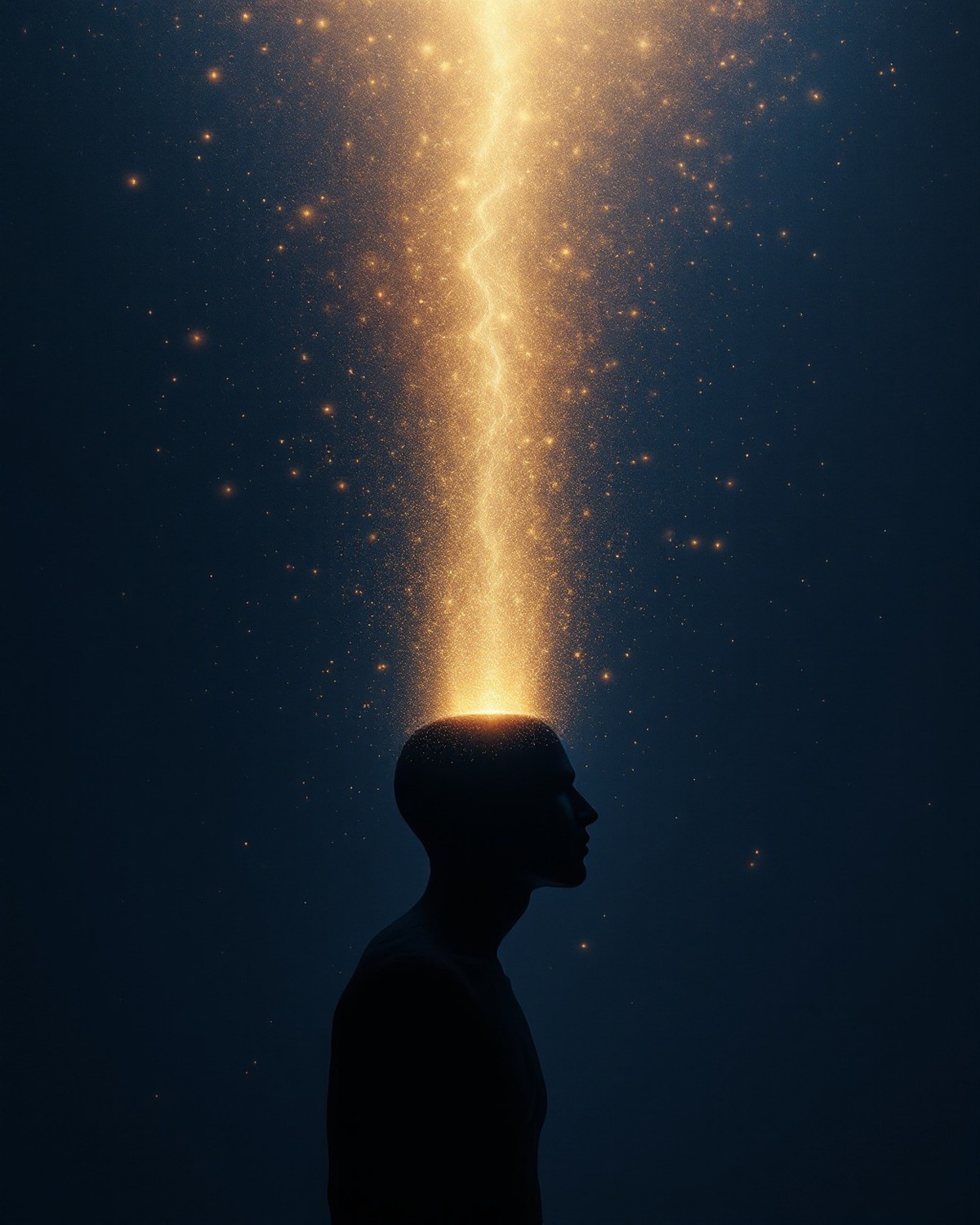
What is a bad trip, neurologically? A “bad trip” is a challenging experience — intense fear, grief, paranoia, or the sense of dying or going insane. It has a real mechanism. A psychedelic strongly activates the 5-HT2A receptor, which loosens the brain’s sensory gating and its top-down control from the prefrontal cortex, lets the amygdala’s emotional salience run unchecked, and can dissolve the sense of self — which the mind can interpret as catastrophe. It is common: in one survey of 1,993 people, 39% called it among the hardest experiences of their life, yet most still found it meaningful (Carbonaro et al., 2016). Difficult is not the same as harmful — but a minority are genuinely harmed, which is why dose, setting, support and screening matter.
The phrase “bad trip” does a lot of damage by being so vague. It flattens everything from a wave of nausea to a cathartic confrontation with grief to a genuine psychiatric emergency into one cartoon idea. The neuroscience is more precise and more useful. A challenging experience is not a malfunction of the drug; it is the same neural openness that produces awe and insight, pointed at something the mind finds threatening. Understanding the machinery does two things at once: it demystifies the fear, and it shows exactly which levers actually change the odds.
What a “bad trip” actually is
Researchers avoid the phrase “bad trip” because it is a value judgement, not a description. The preferred term is a challenging experience, and it has been mapped in detail. The Challenging Experience Questionnaire (CEQ), built from the accounts of people who had been through them, identifies seven distinct factors: fear, grief, death, insanity, isolation, physical distress, and paranoia (Barrett et al., 2016). A challenging experience can be one of these or several at once, mild or overwhelming. Naming them matters, because each has a different neural flavour — the bottomless dread of the “fear” factor is not the same event as the depersonalised terror of “insanity” or the crushing aloneness of “isolation.”
How common is it — and how does it land?
More common than the clinical-trial glow suggests. In the largest survey of its kind, Johns Hopkins researchers asked 1,993 people to describe their single most difficult psilocybin experience. 39% rated it among the top-five most challenging experiences of their entire life; some lasted hours in acute distress. About 11% said they put themselves or others at risk of physical harm, and a minority reported psychological symptoms that lasted beyond the day — a subset serious enough to seek treatment (Carbonaro et al., 2016). And yet — this is the paradox that defines the whole topic — the same people, looking back, overwhelmingly called the experience meaningful or worthwhile, with many rating it among the most personally or spiritually significant events of their lives. A hard experience is not automatically a damaging one. But that survey studied only difficult trips by design, so it is a map of the hard end, not of psychedelics overall.
What happens in the brain when a trip turns hard
The starting gun is the same as for any classic psychedelic: strong agonism at the 5-HT2A receptor, densely expressed on the deep-layer pyramidal neurons of the cortex. From there, three things converge to make an experience feel overwhelming. First, 5-HT2A activation disrupts thalamic gating — the brain’s filter that normally decides which signals reach conscious awareness. With the filter loosened, a flood of sensory, emotional and memory information pours in unscreened (the classic cortico-striato-thalamo-cortical model). Second, the psychedelic weakens top-down control from the prefrontal cortex — the executive system that ordinarily contextualises fear and says this is temporary, you are safe. When that voice goes quiet, raw feeling has nothing holding it in perspective. Third, the brain’s salience and threat machinery, centred on the amygdala, can tag ordinary perceptions as urgently meaningful or dangerous, and there is little executive brake to override it.
When the self dissolves — and it feels like dying
Layered on top is the most disorienting ingredient: the breakdown of the brain’s default-mode network and the dissolution of the sense of self. In a positive trip, this can feel like unity and boundlessness. But the very same loss of the self-model, met with resistance or fear, can be experienced as annihilation — which is precisely why “death” and “insanity” are two of the seven CEQ factors. Brain-imaging work hints at what tips it one way or the other: higher levels of glutamate in the medial prefrontal cortex during the experience were associated with the negatively-experienced version of ego dissolution, while a different profile tracked the blissful version (Mason et al., 2020). The mind is not broken during a bad trip; it is doing exactly what an unfiltered, deregulated, self-less brain does — and interpreting it as catastrophe.
Precisely-Dosed Psilocybin Mushroom TreatsOOTW Psilocybin Mushroom Treats
Precisely-dosed, lab-tested, quality psilocybin mushroom treats — crafted for daily ritual, neural support, and sustained clarity. Journal readers: 10% off your first order with code JOURNAL10 (applied automatically at checkout).
Claim 10% Off →Why “difficult” is not the same as “harmful”
This is the most misunderstood point in the whole conversation. In therapeutic contexts, a challenging passage is often not a failure but part of the mechanism: confronting grief, fear or a buried memory — and moving through it — is frequently where the lasting benefit comes from. Researchers even distinguish a challenging experience from an emotional breakthrough, and it is the breakthrough, not the ease, that best predicts improvement. The intense openness that makes a trip hard is the same openness that makes it transformative. That is not a reason to romanticise terror — uncontained, unsupported panic can cause real harm — but it explains why so many people describe their most difficult trip as also their most valuable, and why skilled guides aim to hold a hard experience rather than abort it.
The real predictors — and which ones you can change
The odds of a trip turning overwhelming are not fixed; several of the strongest predictors are within a person’s control. In the survey data, the risk of harm rose with higher estimated dose, longer duration, and, tellingly, the absence of physical comfort and social support (Carbonaro et al., 2016). Personality plays a role too — higher neuroticism is associated with more challenging experiences (Barrett et al., 2017). This is the modern research validation of a very old piece of wisdom: set and setting. Dose, mindset, physical environment, the trustworthiness of the people present, and preparation are the biggest modifiable levers between a hard-but-meaningful experience and a genuinely dangerous one.
AI That Understands The MedicineOOTW Spirit Guide
Set. Setting. Dose. Integration. The questions you can’t bring to your doctor — answered by an AI grounded in every peer-reviewed paper, protocol, and ceremony manual. Private, sober, always there.
Talk to the Spirit Guide → A Sacred 5-MeO-DMT Ceremony · MiamiJoin the OOTW Sacrament
The oldest prayer, remembered — the gentle dissolving of the self into light, held in ceremony by a master facilitator. Sit with our community first: a free, live weekly circle on Zoom. No commitment, simply a conversation.
Join the Weekly Circle →When it is a genuine red flag
Honesty requires drawing a firm line. Most challenging experiences resolve as the drug wears off, but some risks are real and not to be waved away. Psychedelics can precipitate prolonged psychosis or mania in vulnerable people, which is why a personal or family history of schizophrenia or bipolar disorder is a standard contraindication in every research programme. A small number of people develop Hallucinogen Persisting Perception Disorder (HPPD), lingering visual disturbances after the drug is gone. There are cardiovascular considerations through serotonin receptors, and dangerous interactions with other drugs. And acute panic can lead to genuinely risky behaviour if a person is unsupervised. These are the reasons clinical trials screen carefully, dose in a controlled setting, and keep a trained sitter present from first effects to full return. A challenging experience inside that container is a very different thing from one alone and unprepared.
Precisely-Dosed Psilocybin Mushroom TreatsBring the Science Home
Every article here is the why. OOTW’s precisely-dosed, lab-tested, quality psilocybin mushroom treats are the how — crafted to carry the medicine into your daily practice. Journal readers: 10% off your first order with code JOURNAL10 (applied automatically at checkout).
Claim 10% Off →The honest bottom line
A bad trip is not the drug turning evil; it is the brain’s filters, brakes and sense of self all loosening at once, with the amygdala’s alarm left running and nothing to say this will pass. That state can be terrifying, and for a minority it can do real harm — so the risks, the contraindications and the value of preparation and support are not optional fine print. But the same neural openness is what allows a difficult experience to become a meaningful one, which is why most people who go through the hardest trips of their lives still call them worthwhile. The useful reframe is this: the goal was never to avoid all difficulty, but to make difficulty survivable and integrable — and dose, set, setting, screening and support are how that is done.
OOTW Journal is educational and does not provide medical advice. Psychedelics remain controlled substances in most countries and can be harmful, especially for people with a personal or family history of psychosis or bipolar disorder. Nothing here is a recommendation to use any psychedelic. If you are struggling with your mental health, or if you or someone else is in crisis, please reach out to a qualified professional or, in the US, call or text 988 for the Suicide and Crisis Lifeline.