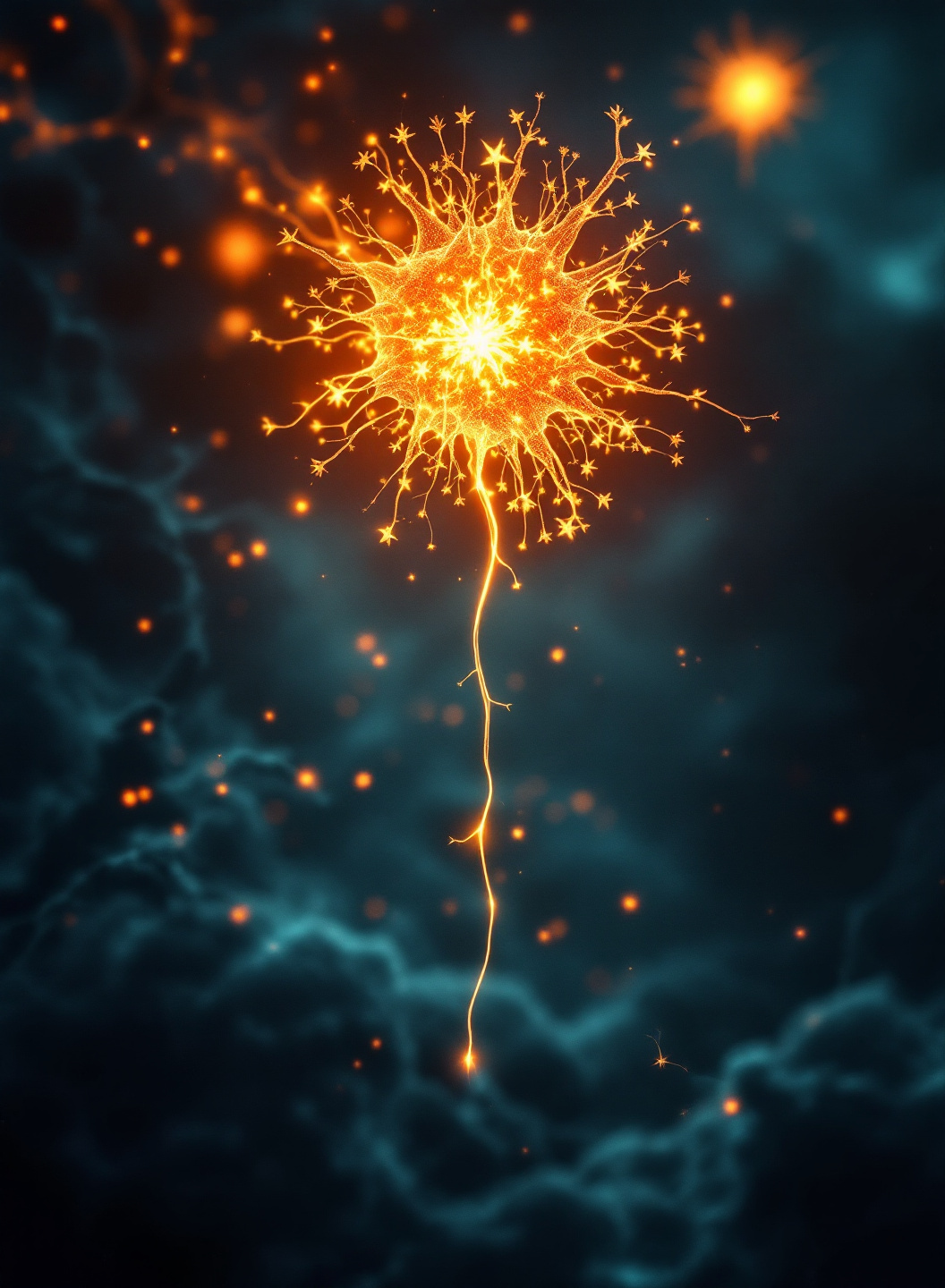
Are psychedelics anti-inflammatory? In cells and animals, remarkably so. The same receptor that produces the psychedelic experience, the 5-HT2A receptor, is a powerful brake on inflammation: activating it with the psychedelic (R)-DOI suppressed TNF-α-driven inflammatory signaling with “extraordinary potency,” at picomolar concentrations far below the dose needed to alter perception (Yu et al., 2008), and the effect held up in living animals (Nau et al., 2013). In the brain, the resident immune cells — the microglia — carry serotonin receptors too, and psilocin, the active form of psilocybin, dials down their reactive oxygen species, nitric oxide, and phagocytic activity in a 5-HT2-dependent way (Kozłowska et al., 2024). Because a growing body of work links chronic neuroinflammation to depression, this hints at a second, non-psychological route to healing. Almost all of this is preclinical.
When we talk about how antidepressants and psychedelics work, we almost always tell a story about signaling — serotonin, receptors, circuits, the electrochemical conversation of neurons. But there is a second population of cells in the brain, nearly as numerous as neurons, that this story leaves out entirely: the glia, and among them the brain’s own immune cells, the microglia. For most of neuroscience’s history these were dismissed as mere glue and housekeeping. We now know they are active participants in mood, memory, and disease — and that some of the most surprising effects of psychedelics may be aimed not at neurons at all, but at them.
The brain’s immune force
Microglia are the resident immune cells of the central nervous system, seeded there before birth and maintained for life. In their resting state they are not idle: they extend and retract fine processes constantly, surveying the brain, sensing damage, and — astonishingly — pruning synapses, physically eating away weak or unused connections to sculpt neural circuits. They are gardeners as much as guards. In a healthy brain, this vigilance is a good thing.
But microglia can shift state. Faced with infection, injury, or chronic stress, they transform — changing shape, multiplying, and releasing pro-inflammatory cytokines such as TNF-α and IL-6, along with reactive oxygen species and nitric oxide. In the short term this is defense. Sustained, it becomes a problem: chronic microglial activation, or neuroinflammation, damages neurons, disrupts the growth factors that keep synapses healthy, and, over time, can prune too aggressively — stripping away the very connections the brain needs.
The inflamed-brain hypothesis of depression
Over the last two decades a substantial body of evidence has linked this smouldering inflammation to mood. Many people with depression show elevated inflammatory markers in blood; giving healthy volunteers an inflammatory challenge can induce depressive symptoms; and a subset of hard-to-treat depression appears to be accompanied by measurable neuroinflammation. The relationship is not simple — not everyone with depression is inflamed, and inflammation is a contributor rather than the sole cause — but the inflammatory hypothesis of depression has become one of the most active frontiers in psychiatry. It reframes some depression not as a pure disorder of thought or chemistry, but as a body-and-brain condition with an immune dimension.
This matters for psychedelics because it opens a second possible mechanism of action. Alongside the now-famous story of growth and plasticity, there may be a quieter, parallel story of calming — of turning down an inflammatory fire that has been keeping the brain from healing. And the evidence that psychedelics can do exactly that is, in the lab, remarkably strong.
Precisely-Dosed Psilocybin Mushroom TreatsOOTW Psilocybin Mushroom Treats
Precisely-dosed, lab-tested, quality psilocybin mushroom treats — crafted for daily ritual, neural support, and sustained clarity. Journal readers: 10% off your first order with code JOURNAL10 (applied automatically at checkout).
Claim 10% Off →The most potent anti-inflammatory no one expected
The pivotal discovery came from the laboratory of Charles Nichols. Studying the 5-HT2A receptor — the same receptor that mediates the psychedelic experience — his team found that activating it with the research psychedelic (R)-DOI powerfully suppressed inflammation driven by TNF-α, a master pro-inflammatory cytokine. The word they used was “extraordinary.” (R)-DOI blocked a cascade of inflammatory markers — the adhesion molecules ICAM-1 and VCAM-1, the cytokine IL-6, nitric oxide synthase, and the master inflammatory switch NF-κB — with IC50 values of only about 10 to 20 picomolar (Yu et al., 2008). To put that in perspective, this is orders of magnitude below the concentration needed to produce psychedelic effects: the anti-inflammatory action is not a by-product of the trip, but a distinct and far more sensitive effect of the same molecule.
Crucially, this was not just a dish-and-pipette curiosity. In a follow-up, the team showed that giving (R)-DOI systemically to whole animals blocked the effects of TNF-α in vivo — suppressing pro-inflammatory gene expression in the aortic arch and small intestine and preventing inflammation from taking hold (Nau et al., 2013). A psychedelic, delivered to a living body, acted as a potent brake on systemic inflammation. This work reframed the field, prompting a wider recognition of psychedelics as candidate immunomodulators — molecules that can rebalance an overactive immune response (Flanagan & Nichols, 2018).
Into the brain: quieting the microglia
The early anti-inflammatory work was largely in blood vessels and the body. The natural next question was whether psychedelics act the same way on the brain’s own immune cells. It turns out microglia express serotonin receptors, including the 5-HT2 family — so they can, in principle, listen to a psychedelic directly.
Recent work suggests they do. In studies of microglial cells, psilocin — the active molecule your body makes from psilocybin — modulated their immune behavior at non-toxic concentrations, significantly reducing their production of reactive oxygen species and nitric oxide and dampening their phagocytic activity, the synapse-eating function that runs amok in neuroinflammatory states. Critically, these effects depended on 5-HT2 receptors, tying the immune action to the same receptor family that carries the psychedelic signal (Kozłowska et al., 2024). Other work in inflammation-activated microglia points the same way, with psilocybin and psilocin suppressing TNF-α while raising levels of the growth factor BDNF — hinting that the calming and the growth-promoting effects may be two faces of one process.
AI That Understands The MedicineOOTW Spirit Guide
Set. Setting. Dose. Integration. The questions you can’t bring to your doctor — answered by an AI grounded in every peer-reviewed paper, protocol, and ceremony manual. Private, sober, always there.
Talk to the Spirit Guide → A Sacred 5-MeO-DMT Ceremony · MiamiJoin the OOTW Sacrament
The oldest prayer, remembered — the gentle dissolving of the self into light, held in ceremony by a master facilitator. Sit with our community first: a free, live weekly circle on Zoom. No commitment, simply a conversation.
Join the Weekly Circle →Two brakes, one receptor
What makes this story elegant is that it may run through the very same doorway as the visionary experience: the 5-HT2A receptor. Activate it in a cortical neuron and you get, over hours, the growth of new dendritic spines. Activate it on an immune cell — or on the microglia of the brain — and you get a powerful anti-inflammatory signal. The same key, turned in different locks, both builds and calms. In the emerging picture, psychedelics may help lift depression along at least two tracks at once: growing the connections that stress had pruned, and quieting the inflammation that had been driving the pruning in the first place.
This is why researchers increasingly describe psychedelics with the language of psychoneuroimmunology — the science of how mind, nervous system, and immune system intertwine. A molecule once understood purely as a tool for altering consciousness looks, at the cellular level, like a rebalancing signal that reaches across all three. And it connects to a broader theme in this series: the deep entanglement of the brain with the body’s defenses, explored in our pieces on the immune system and the gut–brain axis.
Precisely-Dosed Psilocybin Mushroom TreatsBring the Science Home
Every article here is the why. OOTW’s precisely-dosed, lab-tested, quality psilocybin mushroom treats are the how — crafted to carry the medicine into your daily practice. Journal readers: 10% off your first order with code JOURNAL10 (applied automatically at checkout).
Claim 10% Off →The honest cautions
The anti-inflammatory findings are striking and have been replicated across models — but the caveats are substantial and must be stated plainly. Almost all of this work is in cells and animals. The picomolar potency of (R)-DOI was measured in cultured cells and rodent tissue, not in the brains of people with depression, and (R)-DOI is a research chemical, not a therapy. Whether psilocybin or LSD, at the doses used in clinical trials, meaningfully reduce neuroinflammation in humans — and whether that reduction actually contributes to their antidepressant effect — remains an open and actively studied question, not an established fact.
Inflammation is also not a simple villain: the immune response is essential, microglial pruning is necessary for healthy brains, and blunting immunity carelessly carries its own risks. The claim here is narrow and specific: that psychedelics, via 5-HT2 receptors, can rebalance an overactive inflammatory response in preclinical models. And the usual warnings hold in full: psychedelics are controlled substances, raise heart rate and blood pressure, are unsafe for some people, and can trigger serious harm in vulnerable individuals. Nothing here is a recommendation to use them, or a claim that they treat any inflammatory disease.
The mind as an ecosystem
The deepest shift in this science is one of scope. We are learning that a mood is not made by neurons alone — that the felt weather of a mind emerges from an ecosystem of cells, in which immune sentinels, growth factors, and electrical circuits are all in constant conversation. Depression, in this fuller picture, can be a kind of ecological imbalance: connections pruned, growth signals suppressed, an immune force smouldering out of season. What is quietly revolutionary about the psychedelic findings is that a single class of molecules appears able to touch several of these systems at once — not by silencing a symptom, but by nudging the whole ecosystem back toward balance. The brain, it turns out, has an immune system with a memory and a mood of its own. Learning to speak to it gently may be one of the next great chapters of medicine.
OOTW Journal is educational and does not provide medical advice. The anti-inflammatory and immunomodulatory effects of 5-HT2A receptor activation - including the extraordinary potency of (R)-DOI against TNF-alpha and psilocin's dampening of microglial reactivity - are well documented in cell and animal studies, but the extension to reducing neuroinflammation in people or treating any inflammatory or psychiatric disease is an active hypothesis rather than proven fact, and nearly all of this evidence is preclinical. Psychedelics are controlled substances, are not safe for everyone, and nothing here is a recommendation to use them.