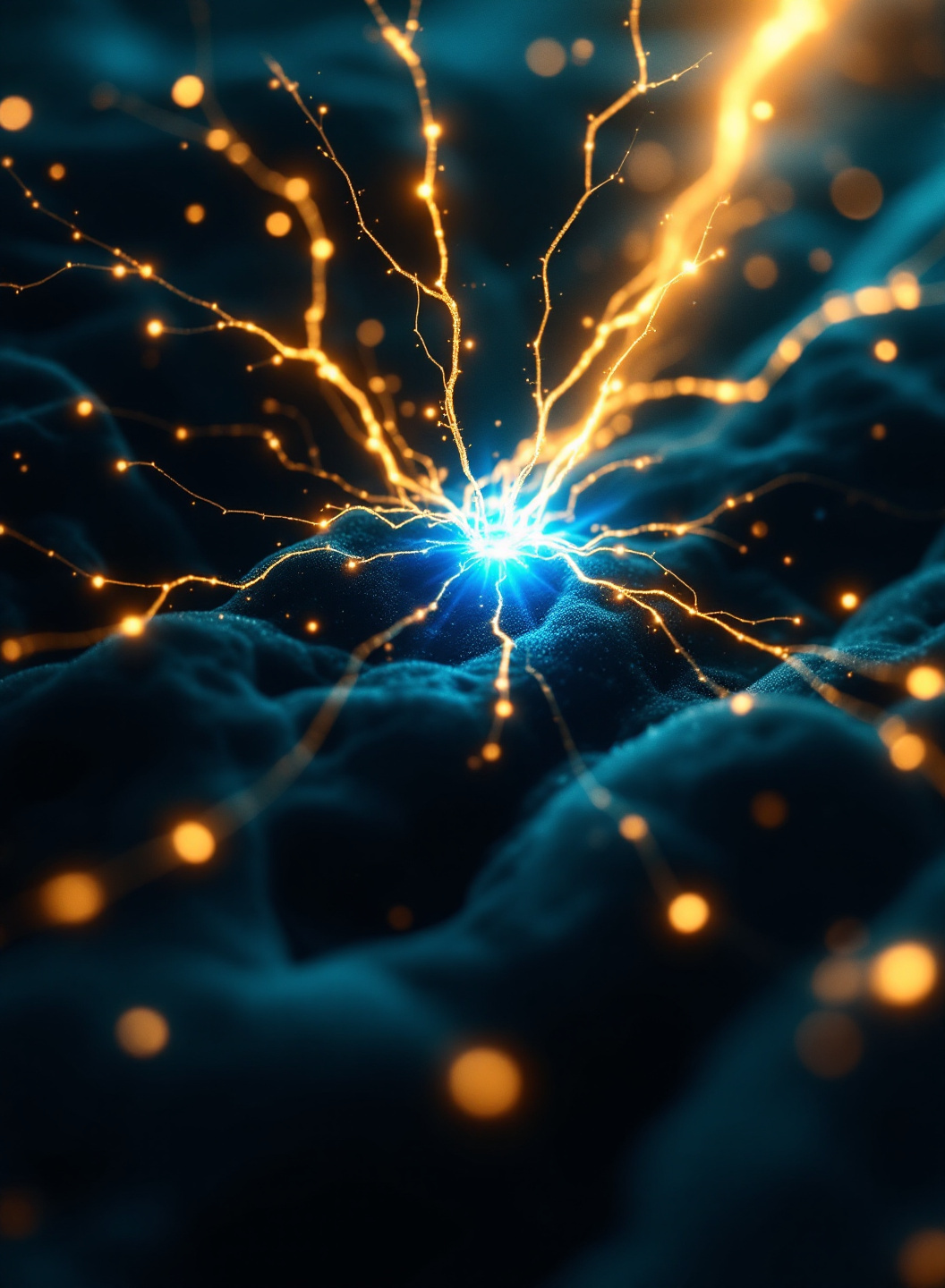
What is the locus coeruleus, and what do psychedelics do to it? The locus coeruleus (LC) is a tiny brainstem nucleus — only a few tens of thousands of neurons — that is the brain’s only source of noradrenaline to the forebrain. It works as the master dial of arousal and attention: according to adaptive gain theory, brief phasic bursts sharpen focus on what matters, while a higher tonic hum promotes disengagement and exploration (Aston-Jones & Cohen, 2005). It also acts as a network reset and novelty detector (Sara, 2009). Classic serotonergic psychedelics reach into it: they suppress the LC’s spontaneous background firing while amplifying its responses to sensory stimuli, an effect that runs through 5-HT2 receptors (Aghajanian & Marek, 1999). The result may be a brain that relays the outside world more vividly — part of why the ordinary can feel newly charged with meaning. Most of this is animal electrophysiology.
Some of the most powerful structures in the brain are also the smallest. We tend to picture the mind’s machinery in the great folded sheets of the cortex, but much of what colors our moment-to-moment experience — whether we feel alert or drowsy, whether the world seems flat or luminous, whether we lock onto one thing or scan restlessly for another — is set far below, in a cluster of cells in the brainstem so small you could miss it. This is the locus coeruleus, and learning what it does, and what psychedelics do to it, changes how you think about attention, wonder, and the felt texture of being awake.
A speck of blue
The locus coeruleus takes its name from the faint blue tint of its cells — a color that comes from neuromelanin, a pigment that accumulates as a by-product of making noradrenaline. There are only a few tens of thousands of these neurons in the human brain, gathered in a pair of tiny nuclei on either side of the brainstem. Yet their reach is extraordinary. From this small hub, fibers fan out to almost the entire brain — the cortex, the hippocampus, the amygdala, the thalamus, the cerebellum, the spinal cord. The locus coeruleus is the only source of noradrenaline to the forebrain, which means that when it speaks, the whole brain listens (Berridge & Waterhouse, 2003).
What it broadcasts is noradrenaline (also called norepinephrine) — the brain’s own version of the molecule at the heart of the fight-or-flight response. But inside the brain, noradrenaline is far more than an alarm bell. It is a volume knob for the entire nervous system: it sets the level of arousal, tunes the sensitivity of neurons to their inputs, and shapes how sharply, or how loosely, we attend to the world.
The arousal dial and adaptive gain
The most influential framework for what the locus coeruleus does is adaptive gain theory, laid out by Gary Aston-Jones and Jonathan Cohen. In it, the LC has two modes. In the phasic mode, it sits at a moderate baseline and fires crisp, brief bursts precisely when something task-relevant appears — a burst of gain that sharpens focus and locks attention onto what matters. In the tonic mode, its baseline firing climbs and the crisp bursts fade; attention loosens, the mind grows restless, and behavior shifts toward disengaging from the current task and exploring alternatives (Aston-Jones & Cohen, 2005).
This is the ancient exploit–explore trade-off written into brainstem chemistry: stick with what is working, or look up and search for something better. It maps neatly onto the old Yerkes–Dodson curve — too little arousal and we are dull and inattentive; too much and we are anxious and scattered; in the sweet spot between, focused and sharp. The locus coeruleus is the dial that slides us along that curve.
The network reset
Noradrenaline from the locus coeruleus does something else, too: it acts as a kind of reset button for the brain’s networks. When something surprising, novel, or important happens, an LC burst floods the cortex with noradrenaline, interrupts whatever pattern of activity was running, and lets a new one form — reorienting attention and helping to stamp the moment into memory (Sara, 2009). This is why the LC is often described as a novelty detector and a driver of learning: it flags the unexpected and tells the rest of the brain, this matters — pay attention, and remember.
Precisely-Dosed Psilocybin Mushroom TreatsOOTW Psilocybin Mushroom Treats
Precisely-dosed, lab-tested, quality psilocybin mushroom treats — crafted for daily ritual, neural support, and sustained clarity. Journal readers: 10% off your first order with code JOURNAL10 (applied automatically at checkout).
Claim 10% Off →The psychedelic connection
Here is where the story turns. The locus coeruleus is densely bathed in serotonin, and it carries the same 5-HT2 receptors that classic psychedelics act upon. In a series of now-classic experiments, Kim Rasmussen and George Aghajanian recorded from LC neurons in animals given hallucinogens such as LSD and DOI. The result was counter-intuitive and revealing: the drugs suppressed the LC’s spontaneous, background firing — yet at the very same time they enhanced the LC’s responses to sensory stimuli. Crucially, both effects were reversed by selective 5-HT2 antagonists, tying them firmly to the psychedelic receptor (Aghajanian & Marek, 1999).
Think about what that combination means. The LC turns down its own restless internal chatter, and turns up its sensitivity to the outside world. It becomes a cleaner, more faithful relay of whatever the senses bring in — less noise, more signal from reality. A touch, a sound, a shift of light that the brain would normally filter out as unremarkable now triggers a fuller noradrenergic response, arriving stamped with the LC’s signature message: this matters. The novelty engine, in other words, begins firing for the ordinary.
Why everything feels newly meaningful
This offers one thread in the tangled question of why psychedelics make the world feel so vivid, fresh, and saturated with significance — the “first day on Earth” quality that so many accounts describe. If the locus coeruleus is the system that tags experiences as salient and worth remembering, then a state in which it responds more strongly to plain sensory input could help explain why a crack in the pavement, a piece of music, or a loved one’s face can suddenly feel unbearably meaningful. The machinery that normally reserves its this matters signal for the genuinely novel is now applying it generously, to everything.
This dovetails with other frameworks in this series. It complements the idea of a more entropic brain, freer and less constrained by its usual priors, and it sits alongside the work of the salience network, which decides moment to moment what deserves our attention. Noradrenaline is one of the deep chemical currents feeding those higher-level dynamics — and like the calming vagus nerve, it reminds us that the felt quality of consciousness is set as much in the ancient brainstem as in the thinking cortex.
AI That Understands The MedicineOOTW Spirit Guide
Set. Setting. Dose. Integration. The questions you can’t bring to your doctor — answered by an AI grounded in every peer-reviewed paper, protocol, and ceremony manual. Private, sober, always there.
Talk to the Spirit Guide → A Sacred 5-MeO-DMT Ceremony · MiamiJoin the OOTW Sacrament
The oldest prayer, remembered — the gentle dissolving of the self into light, held in ceremony by a master facilitator. Sit with our community first: a free, live weekly circle on Zoom. No commitment, simply a conversation.
Join the Weekly Circle →The honest cautions
The core findings here are robust, but their scope must be stated plainly. Almost all of the direct evidence on how psychedelics change locus coeruleus firing comes from animal electrophysiology — recordings from the brains of rats and cats, not from people having a psychedelic experience. The link from “the LC relays sensory input more strongly” to “this is why the world feels meaningful” is a reasonable and much-discussed hypothesis, not a proven chain of cause and effect. The felt richness of a psychedelic state is surely built from many systems at once — serotonergic, glutamatergic, and network-level — and noradrenaline is one contributor among several, not the whole story.
It is also worth resisting the temptation to reduce a profound experience to a single tiny nucleus. The locus coeruleus is a crucial node, but it is a node in a vast web. And the usual cautions hold in full: psychedelics are controlled substances, raise heart rate and blood pressure through this very noradrenergic system, are unsafe for some people, and nothing here is a recommendation to use them.
The spotlight operator
If the cortex is the stage where the drama of consciousness plays out, the locus coeruleus is the operator in the wings working the spotlight — deciding how bright the beam, how tight the focus, and where it swings next. Most of the time it works quietly and selectively, reserving its brightest light for the genuinely new. What psychedelics seem to do, in part, is loosen that selectivity — turning down the operator’s own fidgeting and turning up the responsiveness of the beam, until the light falls generously on things we had long stopped seeing. The blue spot is small enough to overlook. But it may be one of the quiet places where the ordinary is turned, for a while, back into wonder.
OOTW Journal is educational and does not provide medical advice. The locus coeruleus as the brain's sole noradrenaline source, adaptive gain theory, and the finding that hallucinogens suppress spontaneous LC firing while enhancing sensory-evoked responses via 5-HT2 receptors are all documented in the cited work - but most of this evidence is from animal electrophysiology, and the link to the felt meaning of a psychedelic experience is a hypothesis, not established fact. Psychedelics are controlled substances, raise heart rate and blood pressure, are not safe for everyone, and nothing here is a recommendation to use them.