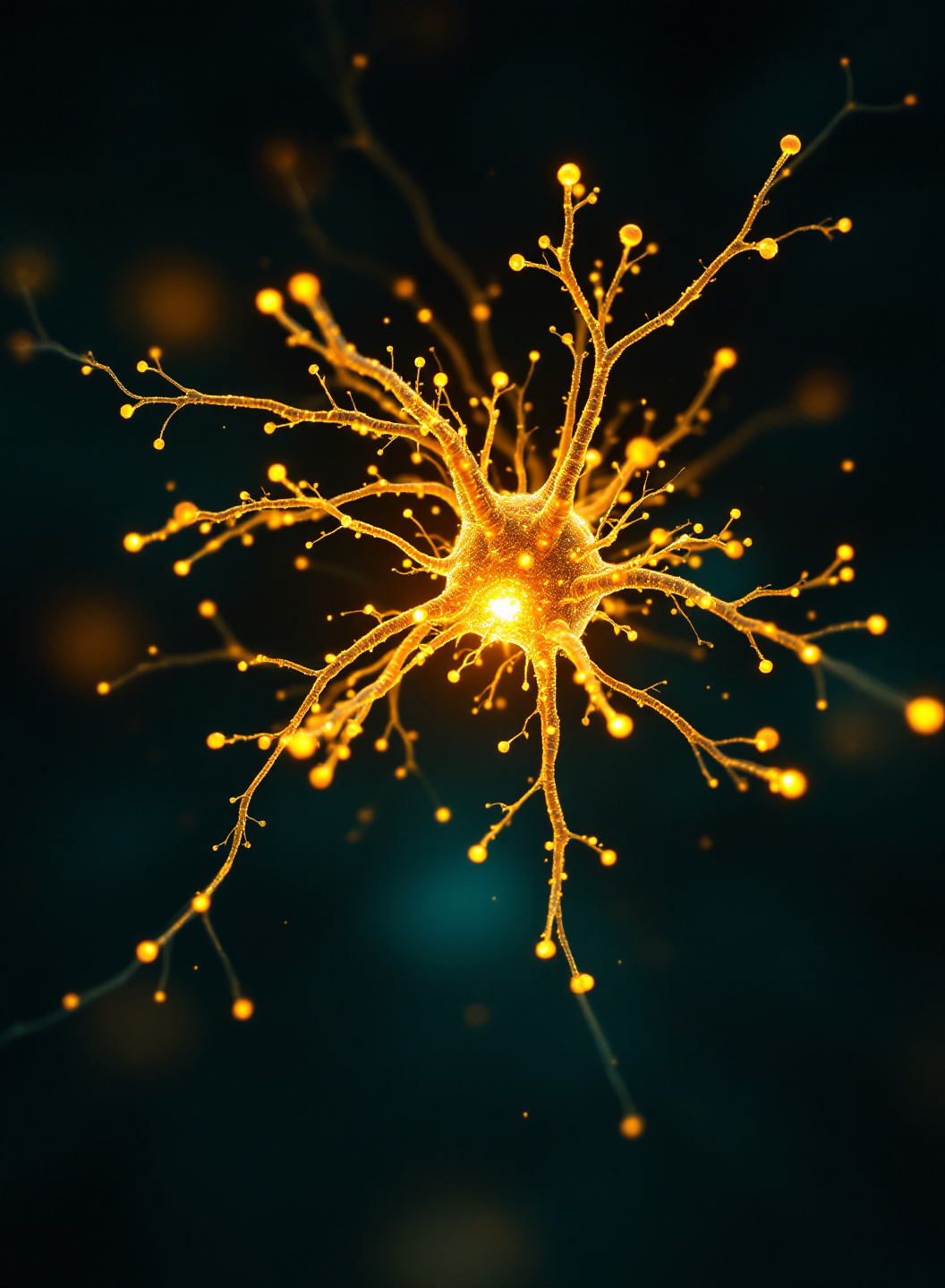
What do psychedelics do to the brain’s structure? They promote structural neuroplasticity — the physical growth of new connections. Neurons communicate across synapses, most of which sit on tiny protrusions called dendritic spines; chronic stress and depression cause these spines to wither, especially in the prefrontal cortex. In cultured neurons and in animals, psychedelics such as LSD, DMT, and DOI increase dendritic branching, spine density, and synapse number (Ly et al., 2018), and a single dose of psilocybin drives a roughly 10% increase in spines in the mouse frontal cortex within a day that persists for at least a month (Shao et al., 2021). Work with ketamine showed these newly formed spines are required for the sustained antidepressant effect (Moda-Sava et al., 2019).
For a long time we imagined the adult brain as essentially finished — its wiring laid down in youth, fixed thereafter, capable of learning but not of real structural change. That picture is wrong. The brain is remodeling itself constantly, growing and pruning the microscopic contacts between neurons throughout life. Nowhere is this more consequential than in mental health, because we now know that conditions like depression are, in part, disorders of structure — a loss of connections — and that some of the most promising new treatments work by helping the brain build them back. To understand why psychedelics have electrified neuroscience, you have to zoom in to the smallest unit of that rebuilding: the dendritic spine.
What a dendritic spine is
Picture a single neuron as a tree. Its branches are dendrites, and along them bristle thousands of tiny protrusions, each a fraction of a micron across — the dendritic spines. Almost every excitatory synapse in the brain, every point where one neuron passes an excitatory signal to another, lands on one of these little spines. They are the physical handshake of thought, the smallest bricks of the brain’s wiring.
Spines are not static. They appear and disappear over hours and days; they change shape, swelling from thin, filopodium-like feelers into stable, mushroom-headed connections as a synapse strengthens. This constant sculpting — spines forming, enlarging, shrinking, vanishing — is the structural face of learning and memory. When you master a skill or lay down a memory, somewhere in your cortex spines have grown and stabilized. The number and strength of your spines is, in a real sense, the material record of your connections to the world.
Depression as an atrophy
This is why the discovery that depression has a structural signature was so important. Chronic stress and depression are associated with the loss of dendritic spines and the retraction of dendrites in the prefrontal cortex and hippocampus — regions central to mood, motivation, and self-regulation. The neurons do not die so much as pull inward, shedding the connections that link them to their neighbors. In this view, the flatness and disconnection of depression is mirrored, at the microscopic scale, by a brain that has physically disconnected from itself.
Conventional antidepressants, the SSRIs, can slowly encourage some of this plasticity back over weeks, which may be part of why they take so long to work. But the finding that reframed the field was that certain drugs can trigger this rebuilding fast — and that psychedelics are among the most powerful of them.
Precisely-Dosed Psilocybin Mushroom TreatsOOTW Psilocybin Mushroom Treats
Precisely-dosed, lab-tested, quality psilocybin mushroom treats — crafted for daily ritual, neural support, and sustained clarity. Journal readers: 10% off your first order with code JOURNAL10 (applied automatically at checkout).
Claim 10% Off →The window: a single dose that grows the brain
In 2018, a team led by David Olson published a landmark study with a deliberately provocative title: Psychedelics Promote Structural and Functional Neural Plasticity. Testing LSD, DMT, and the research psychedelic DOI on cortical neurons, they found that the drugs increased the complexity of dendritic branching, raised the number of spines per length of dendrite — LSD nearly doubling it — and promoted the formation of new synapses. Strikingly, some of the psychedelics were more potent and efficacious than ketamine, the era’s benchmark rapid-acting antidepressant, at driving neurite growth (Ly et al., 2018). The team coined a word for compounds that do this: psychoplastogens — molecules that rapidly promote structural plasticity.
Then, in 2021, a group led by Alex Kwan watched it happen in a living brain. Using two-photon microscopy to image the same neurons over time in mice, they gave a single dose of psilocybin and saw dendritic spines in the frontal cortex grow — spine size and density rising about 10% — and they saw it fast: the new spines appeared within 24 hours, driven by an increased rate of spine formation. Most remarkably, the change endured. A month later, many of the new spines were still there, and the psilocybin-treated animals showed reduced stress-related behavior and stronger excitatory neurotransmission (Shao et al., 2021). A single dose had opened a window of rewiring that outlasted the drug in the body many times over — a possible structural trace, the authors suggested, for the long-lasting effects people report.
Ketamine, and the proof that spines matter
How do we know these new spines are not just a side effect — that they actually do something? The cleanest answer came from work on ketamine. Researchers showed that ketamine, like psychedelics, rapidly restores dendritic spines lost to chronic stress in the prefrontal cortex. Then they did something ingenious: using a light-based technique to selectively erase the newly formed spines after the drug had already lifted the animals’ behavior, they found the antidepressant-like effect collapsed — the animals relapsed (Moda-Sava et al., 2019).
The logic is worth pausing on. The drug’s initial mood effect did not depend on the new spines — but sustaining that effect did. The spines were the scaffold that held the improvement in place. It is one of the most direct demonstrations we have that structural plasticity is not incidental to how these medicines work, but central to it. Grow the connections and the benefit endures; erase them and it slips away.
AI That Understands The MedicineOOTW Spirit Guide
Set. Setting. Dose. Integration. The questions you can’t bring to your doctor — answered by an AI grounded in every peer-reviewed paper, protocol, and ceremony manual. Private, sober, always there.
Talk to the Spirit Guide → A Sacred 5-MeO-DMT Ceremony · MiamiJoin the OOTW Sacrament
The oldest prayer, remembered — the gentle dissolving of the self into light, held in ceremony by a master facilitator. Sit with our community first: a free, live weekly circle on Zoom. No commitment, simply a conversation.
Join the Weekly Circle →How a molecule becomes a spine
What links a psychedelic binding a receptor at the cell surface to a spine sprouting minutes to hours later? The emerging pathway runs through the same receptor that drives the visionary experience — the 5-HT2A receptor — but into the cell’s growth machinery rather than its perceptual circuits. Activating 5-HT2A engages signaling involving the brain’s premier growth factor, BDNF, and its receptor TrkB, which in turn switches on the mTOR pathway, a master regulator of the protein synthesis a neuron needs to build new structure. In short: receptor to growth factor to the assembly line that manufactures a spine. This is the molecular bridge explored in our piece on BDNF and psychoplastogens.
Two further threads deepen the picture. First, the plasticity may not be a fleeting flash: a single exposure to a psychedelic can produce prolonged epigenomic and synaptic changes in the cortex, altering how genes are read for far longer than the drug is present (de la Fuente Revenga et al., 2021) — a molecular echo that may help explain why one session can matter for weeks. Second, and provocatively, the growth may be separable from the hallucination. Chemists have built non-hallucinogenic analogs — psychoplastogens like tabernanthalog — that still promote spine growth and antidepressant-like effects in animals without producing a full trip, raising the tantalizing possibility of the rewiring without the voyage. Whether that trade is truly possible — and whether it would work as well in people, for whom the subjective experience may itself be therapeutic — is one of the field’s central open questions (Calder & Hasler, 2023).
Precisely-Dosed Psilocybin Mushroom TreatsBring the Science Home
Every article here is the why. OOTW’s precisely-dosed, lab-tested, quality psilocybin mushroom treats are the how — crafted to carry the medicine into your daily practice. Journal readers: 10% off your first order with code JOURNAL10 (applied automatically at checkout).
Claim 10% Off →The honest cautions
The structural-plasticity findings are among the most robust in psychedelic science — replicated across labs, drugs, and methods — but the caveats are real. Almost all of the direct spine-imaging work is in rodents and cell cultures; we cannot watch spines grow in a living human brain, so the leap from mouse cortex to human recovery is an inference, not a direct observation. More plasticity is also not automatically better: a window of heightened rewiring is a window in which experience writes deeply, which is precisely why set, setting, and integration matter — a brain primed to rewire in the wrong context could consolidate the wrong things.
The idea that spine growth is the mechanism of psychedelic healing in humans is a compelling, well-supported hypothesis, not a settled fact; the relationship between structural plasticity, the subjective experience, and lasting clinical benefit is still being untangled. And the practical warnings stand: psychedelics are controlled substances, can raise heart rate and blood pressure, are not safe for everyone, and can precipitate serious harm in vulnerable people. Nothing here is a recommendation to use them.
Rewiring, not rescue
The deepest shift in this science is a change of metaphor. We once spoke of correcting a chemical imbalance, as if the brain were a solution to be re-dosed. The dendritic-spine story tells us something more hopeful and more demanding: that recovery can be a matter of rebuilding — of a brain that had physically contracted under suffering learning to extend itself again, spine by spine, connection by connection. Psychedelics, in this light, are not a rescue delivered from outside so much as a key that reopens the brain’s own capacity to grow. What gets built in that opened window — and whether it holds — still depends on everything that surrounds it. But the discovery that the adult brain, even a depressed one, can be coaxed to grow new connections in a single day is, quietly, one of the most extraordinary findings in modern neuroscience.
OOTW Journal is educational and does not provide medical advice. Psychedelic-induced structural plasticity - increased dendritic spine density and synaptogenesis - is well documented in cell and animal studies, and the requirement of new spines for ketamine's sustained effect is directly demonstrated in mice, but the extension to human clinical benefit is an active hypothesis rather than proven fact, and nearly all direct spine imaging is preclinical. Psychedelics are controlled substances, are not safe for everyone, and nothing here is a recommendation to use them.